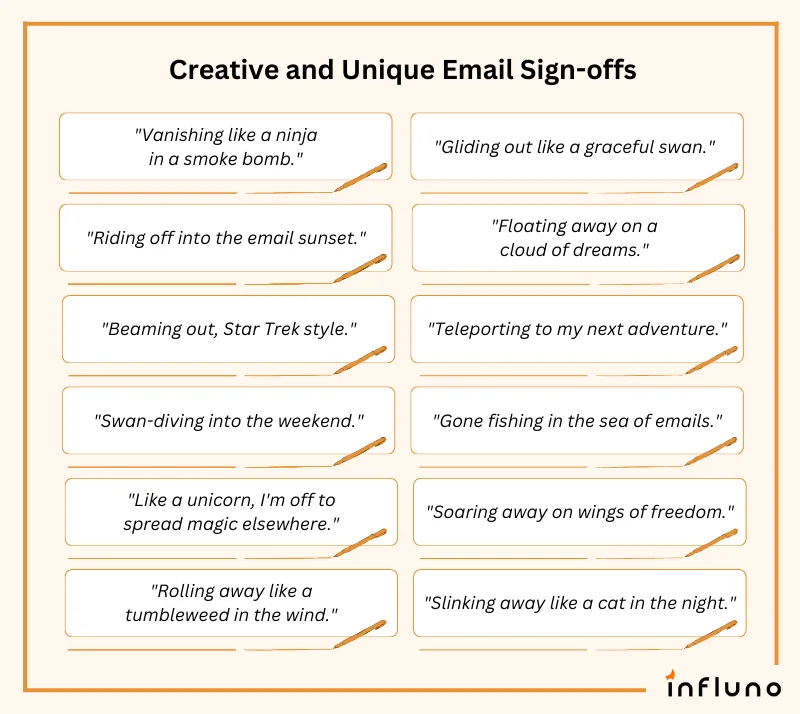
In the ceaseless digital din of our modern lives, the email sign-off stands as a sovereign gatekeeper—a subtle yet potent flourish that can either embolden your voice or diminish it to a whisper. Like the final note of a symphony, it reverberates after the last word, shaping perceptions and altering the tone of the relationship. Crafting an email sign-off that commands respect without tipping into rudeness is an art form, a linguistic dance on a razor’s edge. It is a declarative statement cloaked in civility, a nuanced assertion of presence and authority.
The Email Sign-Off as a Diplomatic Sword
Imagine the sign-off as a diplomatic sword: sharp enough to cut through apathy and passive disregard, yet sheathed in velvet to avoid offense. This duality demands finesse—one must strike a balance between assertiveness and graciousness. A sign-off is not merely a goodbye; it is an invocation, an act of communication that transcends the banal farewell. It signals your self-respect, the boundaries you uphold, and your awareness of the interpersonal dynamics at play.
In corporate and activist circles alike, the wrong sign-off can unravel weeks of painstaking dialogue; conversely, the right one can fortify alliances and invite collaboration. It infuses your words with an air of command, letting the reader know that you hold space and expect it to be honored.
Beyond “Best Regards”: The Language That Resonates
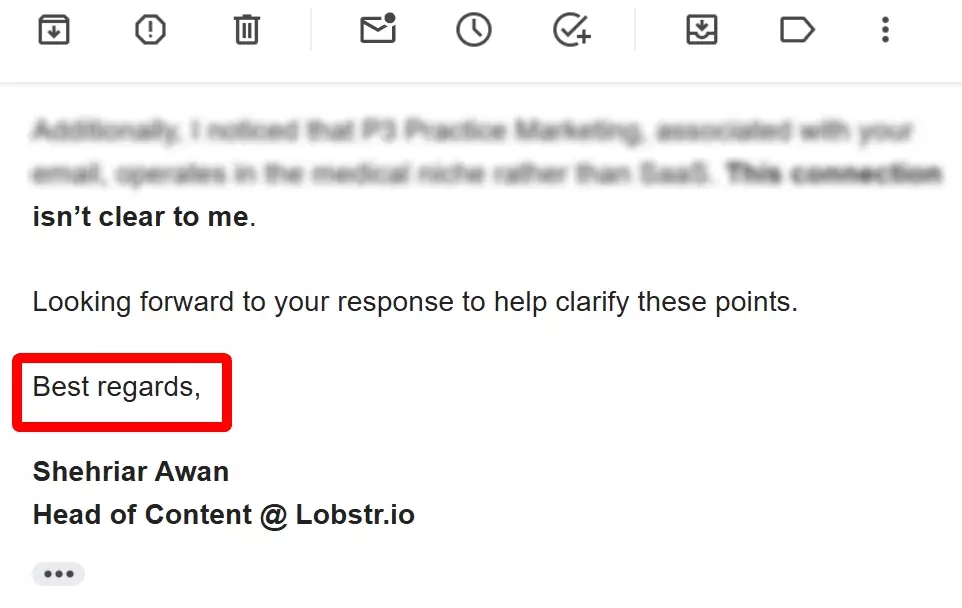
“Best regards” has become the pedestrian handshake of email culture—pleasant, yet painfully devoid of distinction. This banal phrase flattens potential energy, rendering the sender as forgettable as a knock on a hollow door. To wield language that commands respect requires venturing beyond tired clichés and toward sign-offs that radiate intentionality.
Consider the phrase “With conviction.” It vibrates with purpose and certainty, evoking an image of a person standing firm in their values. Or “In solidarity,” which telegraphs a shared cause and a pledge of unwavering support. Phrases like these transcend mere politeness; they assert identity and invite reciprocal acknowledgment. They are imbued with substance, not just style.
Harnessing Tone: The Subtlety of Power
The true power of a sign-off lies in its tonal nuances. It must be simultaneously authoritative yet warm, commanding yet approachable. Tone is the invisible armor that shields your communication from sounding either arrogantly dismissive or desperately ingratiating.
“Respectfully,” for example, walks this narrow path elegantly by acknowledging deference without weakness. “Warmly,” on the other hand, softens the edge but at risk of seeming overly familiar. The trick is to select a terminus that mirrors your intention and relationship with the recipient. Tone is contextual; matching it demonstrates emotional intelligence and control—qualities that quietly command respect.
The Impact of Cultural and Contextual Awareness
Commanding respect through an email sign-off is not a universal formula; it must be calibrated to the cultural and professional landscape of your audience. For instance, in hierarchical corporate environments, more formal sign-offs like “Sincerely” or “Yours faithfully” carry weight and signal professionalism. Conversely, in creative or activist spaces, sign-offs such as “In solidarity” or “Onward” resonate deeply, fostering a sense of communal mission.
Ignoring context is a perilous misstep. A tone that is too casual in a formal setting can diminish your standing, while excessive formality with peers can erect barriers rather than bridges. Contextual agility—the ability to read the room and adjust your linguistic armor accordingly—is a superpower in digital communication.
The Unique Appeal of a Thoughtful Sign-Off
A powerful email sign-off is akin to a signature brushstroke on a canvas, rendering the entire message memorable and decisive. It encapsulates your persona in a few words, transforming mere text into a forceful impression. This is the unique appeal of a well-chosen sign-off: it humanizes the digital exchange while asserting your presence unmistakably.
Such an ending leaves the recipient with a lasting emotional resonance, often unnoticed but always influential. When your sign-off commands respect, it punctuates your message with unspoken confidence—a finesse that separates the timid from the tenacious, the ordinary from the extraordinary.
Practical Examples: Finessing Your Sign-Off
To craft a sign-off that commands respect, consider these exemplary phrases:
- “With unwavering commitment” — underscores dedication and seriousness of intent.
- “In partnership” — fosters collaborative strength and mutual respect.
- “Onward with purpose” — ignites momentum and shared resolve.
- “Standing firm” — conveys steadfastness and resilience.
- “Yours in strength” — blends warmth with assertiveness.
Each of these phrases transcends the mundane and breathes life into the closing lines of your digital missives. Beyond words, match your tone and context to forge a sign-off that bleeds authenticity and commands attention.
Conclusion: The Sign-Off as Your Quiet Revolution
To wield an email sign-off that commands respect without being rude is to engage in a quiet revolution. It is to claim your space in the inbox—not as a supplicant, but as an equal participant in the ongoing dialogue. This seemingly small component holds outsized power to alter impressions, maintain dignity, and propel causes forward.
Like a maestro concluding a masterwork, your sign-off is the final flourish that should inspire, assert, and invite respect. It is a subtle weapon against invisibility and disregard. Master it, and your emails will no longer just be read—they will be noticed, remembered, and esteemed.










Leave a Comment