Have you ever sat through a seminar, carefully crafting your thoughts, only to be overshadowed by an abrupt interruption? It’s a subtle, yet profoundly telling phenomenon that many women encounter in academia and professional settings. What if someone decided to quantify this experience—counting how often men interrupt during discourse—and suddenly that data shook the world? This is not just about statistics; it’s about exposing tacit power dynamics lurking beneath polite conversation.
The Quiet Tyranny of Interruption
Interruptions are often dismissed as trivial social faux pas, but when viewed through a critical lens, they become emblematic of a deeper systemic issue. In seminars, conferences, and meetings—the very arenas meant to foster intellectual exchange—interruption functions like a covert wielding of verbal territory. Men frequently commandeer the speaking space, cutting off women mid-sentence, often without acknowledgment or apology. This isn’t mere rudeness; it’s an audible assertion of dominance.
Imagine the frustration of consistently being drowned out. It’s like trying to plant seeds in barren soil; no matter how fertile the ideas, they struggle to take root. The repetitive nature of such disruptions erodes confidence and silences potential innovations. How pervasive is this? And how disruptive to the intellectual ecosystem does it become? These questions compel us to leverage empirical investigation.
She Took on the Challenge: Quantifying Interruptions
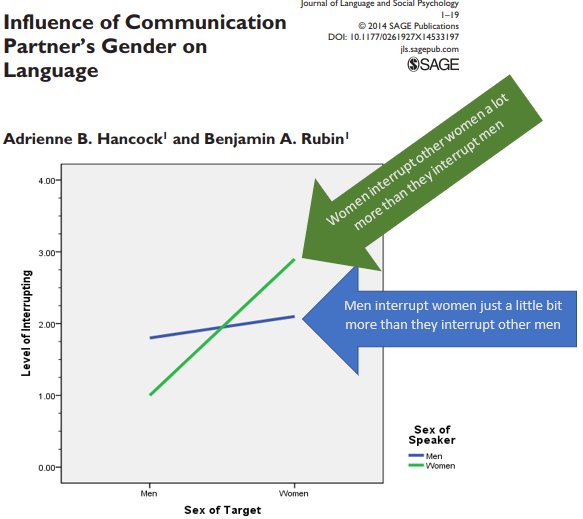
In an audacious undertaking, a scholar armed with curiosity and determination decided to observe and measure the frequency of interruptions by gender in seminar settings. This wasn’t casual observation but a meticulous cataloging—each interruption documented, each voice tracked. The resulting chart was more than bars and numbers; it was a mirror held up to the room’s power dynamics.
The startling revelation? Men interrupt far more frequently than women, underscoring an entrenched pattern of conversational dominance. The chart didn’t just visualize data; it animated the silent struggles many women face, providing graphical testament to the imbalance.

Why does this matter? Because acknowledging the problem is the first step toward dismantling it. The data disrupts the narrative that such interruptions are random or unintentional, framing them instead as part of a recurring systemic imbalance.
Beyond Numbers: The Social Implications of Being Interrupted
Data alone, while powerful, does not tell the full story. The social consequences of interruptions shape professional trajectories, self-esteem, and workplace dynamics. Every interruption chips away at a woman’s ability to fully assert her expertise. Over time, this diminishes visibility and undermines professional credibility. It is a slow accumulation of microaggressions that acts as a barrier to equality and inclusion.
Interruptions also reinforce gendered stereotypes: the notion that women are less authoritative or less knowledgeable. When women speak less in seminars—either because they are interrupted or self-censor to avoid disruptions—their absence is erroneously interpreted as a lack of competence.
Challenging the Status Quo: A Call for Mindful Dialogue
Recognizing this epidemic of interruption galvanizes the need for deliberate cultural shifts. The seminar room, as a microcosm of society, must become a space where equitable speech is not just encouraged but enforced through norms and mindfulness. Facilitators have crucial roles as gatekeepers who can ensure conversations are inclusive and respectful, interceding when necessary.
Moreover, awareness campaigns and training programs that unpack the unconscious biases fueling interruptions can recalibrate behaviors. Interrupting, after all, is seldom random—it’s embedded in social conditioning. Bringing this behavior into the light allows participants to self-regulate and amplify marginalized voices.

The playful yet provocative challenge posed is this: can we imagine a seminar where the cadence of conversation genuinely reflects equity, where voices rise on merit and not on muscle? It is both a practical and symbolic frontier.
Transforming Interruption into Invitation
Reconceptualizing interruptions as opportunities rather than assaults can herald a paradigm shift. What if every interruption was immediately accompanied by a deliberate invitation for the interrupted person to continue? Such a small but deliberate gesture recalibrates power dynamics and signals respect.
This transformation requires collective commitment—a cultural re-wiring of conversational etiquette. It demands courage from those interrupted to reclaim their space and from interrupters to cultivate humility and restraint.
The Viral Impact and the Road Ahead
When the chart comparing interruption frequencies went viral, it sparked a worldwide conversation. People recognized the patterns they had long sensed but never quantified. The virality was not just about the numbers; it was about validation and visibility. It empowered women and allies to call out interruption, leading to a groundswell of activism focused on conversational equity.
Yet, the challenge persists. Documentation and awareness alone cannot eradicate ingrained habits. The future lies in persistent cultural evolution, policy implementation, and redesigning how we hold space for discourse. The seminar room can become a crucible for change—a place where intellectual rigor is matched by social justice.
Ultimately, the question remains playful but potent: will we continue to tolerate the tyranny of interruption, or will we champion a revolution of listening? The choice is not just about who talks—it’s about who gets heard.






Leave a Comment