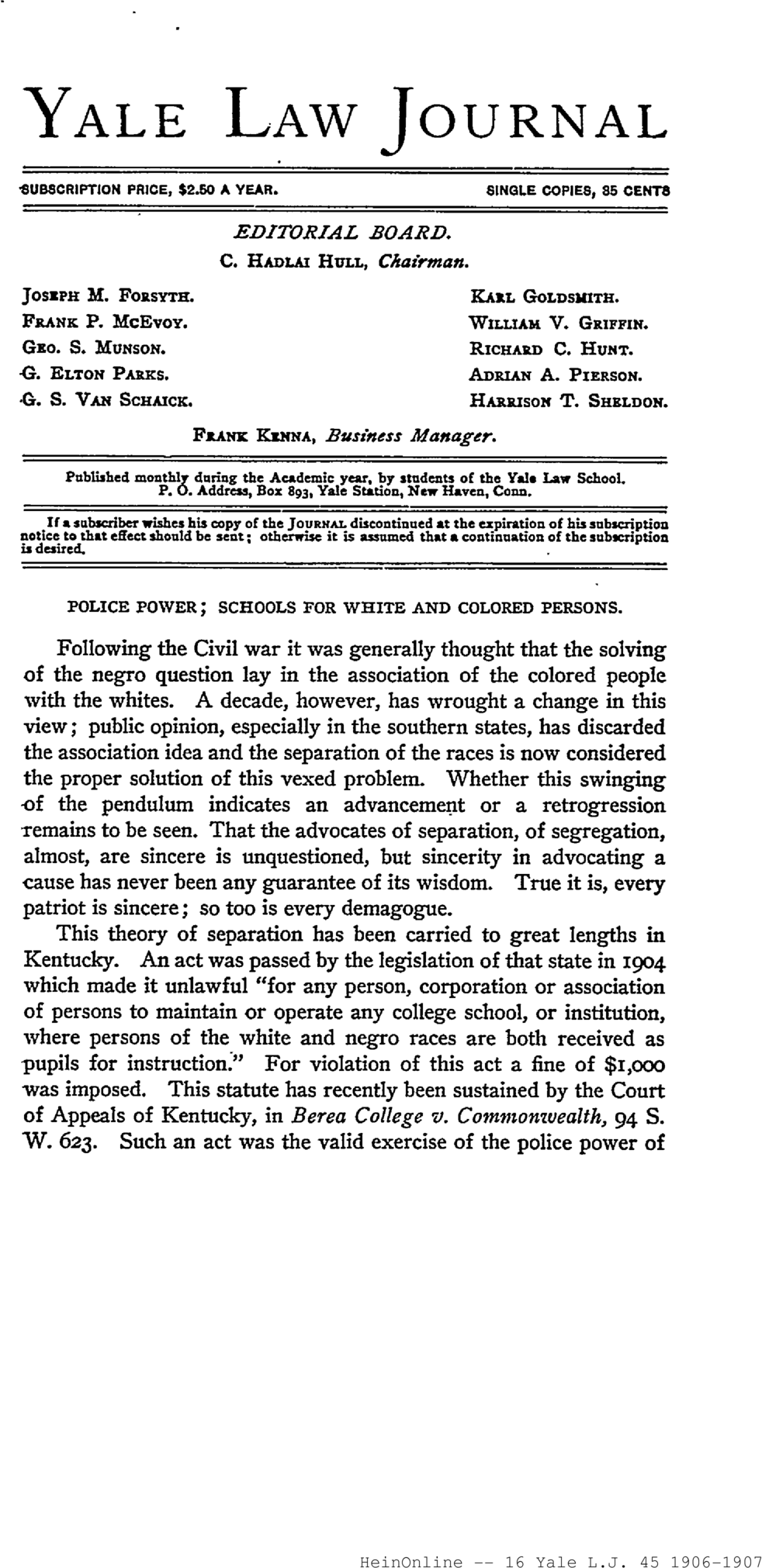
The legal academy, a hallowed hall of precedent and pronouncements, often feels like an echo chamber, amplifying the voices of those already in power. Within this domain, the Yale Journal of Law & Feminism emerges not as a mere publication, but as a defiant siren, calling out to those adrift on the sea of patriarchal jurisprudence. It is a lighthouse, illuminating the treacherous shoals where the law intersects with gender, power, and social justice. Why does this particular journal matter? Because it dares to dismantle the very scaffolding upon which much of legal thought is constructed, revealing the gendered biases hidden within the mortar and brick.
The very notion of law as an objective, neutral arbiter is a myth, a carefully cultivated fiction that masks the ways in which legal systems perpetuate inequality. The Yale Journal of Law & Feminism, like a skilled surgeon, dissects this illusion, exposing the anatomy of power that underpins legal decisions. It challenges the reader to confront uncomfortable truths about the role of law in maintaining and reinforcing gender hierarchies.
Its unique appeal lies in its interdisciplinary approach. It’s not solely a repository for legal scholarship, but a nexus where law, feminist theory, critical race theory, queer theory, and other disciplines converge. This intellectual alchemy allows for a richer, more nuanced understanding of the complexities of gender and law. It transcends the limitations of siloed academic disciplines, creating a space for genuine intellectual cross-pollination. One might even call it an intellectual agora, a marketplace of ideas where diverse perspectives clash and coalesce.
One must ask, however, why is this still necessary? In an era where gender equality is ostensibly a widely held value, why must a journal dedicated to feminist legal analysis persist? The answer, alas, is that the façade of equality often conceals deep-seated inequalities. The law, far from being gender-blind, frequently reflects and reinforces patriarchal norms, often with devastating consequences for women and marginalized groups.
Deconstructing the Legal Canon: A Heretical Act
The journal dares to question the very foundation of legal doctrine. It doesn’t just accept precedent as gospel; it interrogates the biases embedded within legal history and tradition. This act of intellectual heresy is essential for dismantling the structures of oppression that are often legitimized by appeals to tradition. By questioning the canon, the journal creates space for new voices and perspectives to be heard.
Amplifying Marginalized Voices: A Chorus of Resistance
The journal serves as a platform for voices that are often silenced or marginalized in mainstream legal discourse. It prioritizes scholarship from women of color, queer scholars, and other underrepresented groups, providing a vital outlet for their perspectives and experiences. These voices are not just adding to the conversation; they are reshaping it, challenging the dominant narratives and offering alternative frameworks for understanding the law.
Challenging the Male Gaze: Reframing Legal Analysis
So much of legal analysis is conducted through a male gaze, a perspective that assumes male experiences and perspectives are universal and normative. The Yale Journal of Law & Feminism disrupts this gaze, forcing readers to confront the ways in which gender shapes legal reasoning. It challenges the assumption that objectivity is possible, arguing that all knowledge is situated and influenced by the knower’s social location. The journal promotes a more critical and self-aware approach to legal analysis, one that recognizes the limitations of traditional methods and seeks to incorporate diverse perspectives.
Beyond Legal Doctrine: Interdisciplinary Explorations
The journal’s strength lies not only in its legal analysis, but also in its embrace of interdisciplinary scholarship. It draws on insights from feminist theory, critical race theory, queer theory, and other fields to provide a more holistic understanding of the relationship between law and gender. This interdisciplinary approach allows for a more nuanced and sophisticated analysis of complex legal issues. It demonstrates that law cannot be understood in isolation, but must be situated within a broader social and political context.
Impact and Influence: Seeds of Change
The Yale Journal of Law & Feminism is not just an academic exercise; it has a tangible impact on legal discourse and policy. Its articles are cited in legal briefs, judicial opinions, and legislative debates, influencing the way that law is understood and applied. The journal also plays a role in shaping legal education, introducing students to feminist perspectives on law and encouraging them to think critically about the role of law in perpetuating inequality. It’s a small garden, perhaps, but one cultivated with meticulous care, yielding fruits of profound consequence.
The Persistent Need: Unfinished Business
Despite the progress that has been made in the fight for gender equality, the need for feminist legal scholarship remains as urgent as ever. The law continues to be used to discriminate against women and other marginalized groups, and new challenges are constantly emerging. The Yale Journal of Law & Feminism provides a crucial space for scholars and activists to analyze these challenges and develop strategies for addressing them. It is a constant reminder that the fight for justice is never truly over.
The Specter of Backlash: A Constant Vigil
Moreover, the journal serves as a bulwark against the inevitable backlash that follows any significant social progress. As feminist ideas gain traction, they are often met with resistance from those who benefit from the status quo. The journal provides a space for feminist scholars and activists to defend their gains and push for further change in the face of opposition. It is a constant reminder that progress is not linear and that vigilance is essential.
Beyond the Binary: Embracing Complexity
The Yale Journal of Law & Feminism is not just concerned with issues affecting women; it also addresses the ways in which gender intersects with other forms of oppression, such as race, class, and sexual orientation. It recognizes that gender is not a monolithic category and that the experiences of women vary widely depending on their social location. The journal promotes an intersectional approach to legal analysis, one that takes into account the multiple and overlapping forms of discrimination that people face.
Transformative Potential: A Vision for the Future
The journal is not just about critiquing the existing legal system; it is also about envisioning a more just and equitable future. It provides a space for scholars and activists to develop alternative legal frameworks and policies that promote gender equality and social justice. It inspires readers to imagine a world where the law is used to empower and uplift all people, regardless of their gender or other social identities. It is a testament to the transformative potential of feminist legal thought. It’s more than a journal; it’s a blueprint, albeit one perpetually under revision, for a more equitable tomorrow.
In conclusion, the Yale Journal of Law & Feminism is far more than just a repository of legal scholarship. It’s a crucible where conventional wisdom is melted down and recast into more equitable forms. It’s a crucial intervention in a field that often operates as a self-perpetuating engine of inequality. Its significance lies not only in the quality of its scholarship but also in its unwavering commitment to challenging the status quo and amplifying marginalized voices. It is a vital resource for anyone who believes in the power of law to promote social justice.
It serves as a reminder that the pursuit of justice requires constant vigilance, critical self-reflection, and a willingness to challenge the very foundations upon which our legal system is built. In a world awash in complacency, the Yale Journal of Law & Feminism dares to be uncomfortable, to provoke, to challenge. It is a vital voice in a world that desperately needs to hear it. It is, without hyperbole, a beacon of hope in the often-dark landscape of legal discourse.







Leave a Comment