
In an era where technology is supposed to be the great equalizer, the humble voice recognition software remains stubbornly, infuriatingly biased. It’s not just a glitch in the system—it’s a systemic erasure, a digital gag order that disproportionately silences women’s voices, accents, and even the cadence of their speech. The irony? These tools are marketed as the future of seamless human-computer interaction, yet they fail spectacularly when confronted with the very people they claim to serve.
The Invisible Hand of Bias in AI’s Ear
Voice recognition software, from the most rudimentary smartphone assistants to the most sophisticated enterprise solutions, operates on a foundation of data. And like all data, it reflects the biases of those who curate it. Historically, tech industries have been dominated by men—predominantly white, middle-class men—who design systems with their own voices in mind. The result? A digital landscape where a deep, resonant baritone is the default, and everything else is an afterthought.
Studies have shown that voice recognition systems misidentify words spoken by women up to 70% more often than those spoken by men. Why? Because the algorithms are trained on datasets overwhelmingly populated by male voices. Women’s higher-pitched tones, softer consonants, and even the hormonal fluctuations that subtly alter their speech patterns are treated as anomalies rather than variations of human expression. It’s not just a technical failure; it’s a cultural one, where femininity is rendered invisible in the very tools meant to amplify human capability.

The struggle of voice recognition software to accurately capture female voices is a reflection of deeper societal biases.
When the Algorithm Hears a Woman, It Hears Noise
But the problem isn’t just about accuracy—it’s about perception. Voice recognition software doesn’t just mishear women; it often fails to recognize them as legitimate users at all. In 2019, a viral video showed a woman’s voice commands being ignored by a smart speaker while her male partner’s identical commands were executed flawlessly. The software didn’t just struggle—it refused to engage. This isn’t an isolated incident. Women report that their voices are frequently dismissed as background chatter, static, or even “unclear,” while men’s voices are treated as the gold standard of intelligibility.
This isn’t a coincidence. It’s a learned behavior, baked into the algorithms by the same engineers who, consciously or not, associate authority with masculinity. The result is a feedback loop: women are less likely to use voice-activated technology because it doesn’t work for them, so the data remains skewed, reinforcing the cycle. The software doesn’t just reflect bias—it perpetuates it, turning every interaction into a reminder that women’s voices are, at best, an afterthought.
The Gendered Language of Digital Assistants
Even when voice recognition software does work for women, it often does so in ways that reinforce harmful stereotypes. Digital assistants like Siri, Alexa, and Google Assistant default to female voices, not because women are inherently more “helpful,” but because society has conditioned us to associate femininity with subservience. These assistants are designed to be deferential, their responses framed as suggestions rather than commands, their tone often infantilized. A woman’s voice is deemed appropriate for a servant, but not for a leader.
This isn’t just a quirk of design—it’s a reflection of how women are perceived in the real world. The same algorithms that struggle to understand a woman’s voice are perfectly capable of mimicking one, because the issue isn’t technical. It’s ideological. The software is trained to recognize authority as male, compliance as female, and anything in between as an error to be corrected.
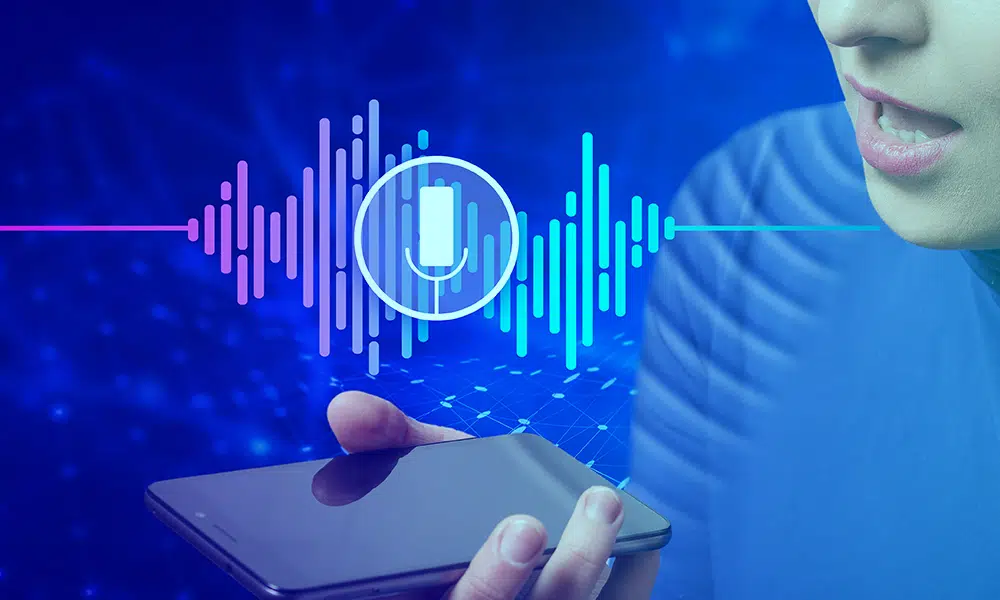
Voice recognition technology holds immense potential, but its limitations reveal deep-seated biases in how we design and deploy AI.
The Cost of Being Misunderstood
The consequences of this bias extend far beyond inconvenience. For women in professions that rely on voice-activated tools—doctors, lawyers, journalists, customer service representatives—the stakes are high. A misheard word can lead to misdiagnoses, legal errors, or lost opportunities. For women of color, whose accents and speech patterns are even more likely to be dismissed as “unclear,” the barriers are compounded. The software doesn’t just fail to understand them; it actively undermines their authority.
And let’s not forget the psychological toll. Every time a voice recognition system falters at a woman’s command, it sends a subtle message: your voice doesn’t matter. Your words are less important. Your presence is an interruption. Over time, this erosion of trust in technology can seep into real-world interactions, reinforcing the idea that women must modulate their voices, simplify their speech, or even suppress their natural cadence to be heard.
Breaking the Cycle: Can Technology Be Redeemed?
So what’s the solution? The first step is acknowledging that this isn’t a technical problem—it’s a cultural one. Fixing voice recognition software requires more than just better algorithms; it requires a reckoning with the biases that shape those algorithms. Companies must diversify their training datasets, ensuring that women’s voices, accents, and speech patterns are represented. They must audit their systems for bias and commit to transparency in how their technology is developed.
But real change won’t come from Silicon Valley alone. It will come from demanding accountability. From women refusing to accept tools that don’t work for them. From users who recognize that technology isn’t neutral—and that the fight for equality extends to the digital realm. The next time your voice assistant fails to understand you, ask yourself: is this really a glitch, or is it a feature of a system that was never designed for you?
The challenges faced by female users of voice recognition technology highlight the need for systemic change in how AI is designed and deployed.
The future of voice recognition shouldn’t be a world where women have to sound like men to be heard. It should be a world where technology adapts to the diversity of human expression, where every voice—regardless of pitch, accent, or gender—is recognized as valid. Until then, the software will remain a mirror, reflecting back the biases we’ve failed to dismantle. And that’s a future no one should accept.







Leave a Comment