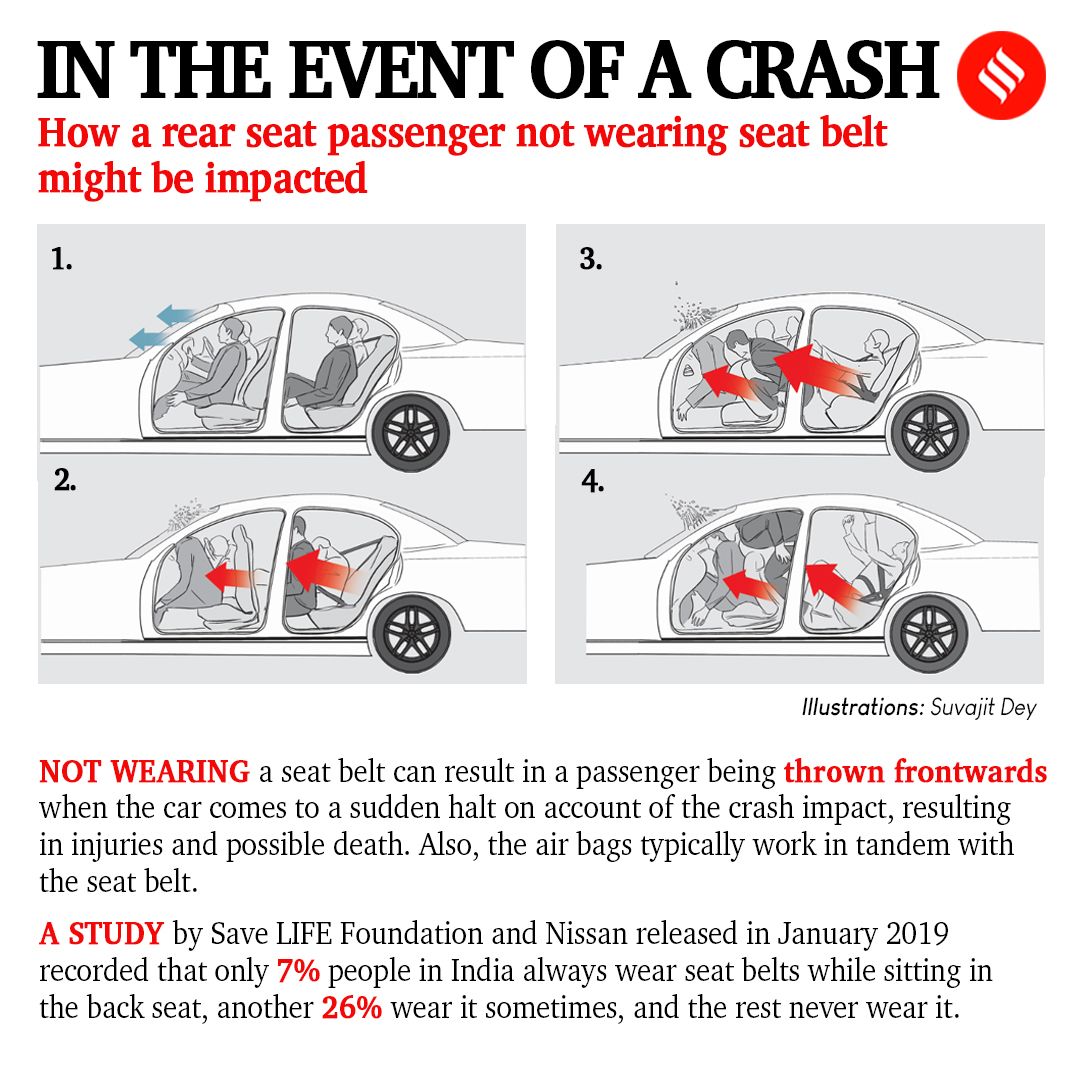
The seatbelt, that unassuming strip of webbing and metal, has long been hailed as a symbol of automotive safety—a guardian of life in a world of steel and speed. Yet beneath its uncritical veneration lies a disquieting truth: the seatbelt is not a universal protector. It is a garment tailored for the male form, a one-size-fits-most relic of an era when crash test dummies were, quite literally, male mannequins in disguise. Women—with their distinct physiology, varied body shapes, and unique vulnerabilities—have been relegated to the role of afterthought in this most quotidian of safety narratives. The result? A silent epidemic of preventable harm, where the very device meant to save lives becomes an instrument of risk. This is not merely an oversight. It is a design failure, woven into the fabric of automotive engineering from the very beginning.
The Male Dummy Problem: How a 50-Year-Old Mistake Became a Life-or-Death Standard
Picture the crash test dummy: a hulking, broad-shouldered figure, frozen in a posture of rigid masculinity. This is the Hybrid III dummy, the gold standard in automotive safety testing since the 1970s. Its dimensions are based on the average American male of the 1970s—a 175-pound, 5-foot-9-inch specimen with a chest circumference of 40 inches. It has no breasts. It has no uterus. It has no hips that flare wider than its shoulders. And yet, for half a century, this male-centric model has dictated the safety of every car on the road, every seatbelt’s tension, every airbag’s deployment threshold.
Women, who statistically have lower bone density, more flexible spines, and a higher center of gravity, are not just smaller versions of men—they are fundamentally different in how they absorb and distribute force. When a woman is involved in a collision, her body is more likely to slide beneath the seatbelt—a phenomenon known as “submarining.” The belt, designed for a male pelvis, fails to anchor properly, allowing her torso to lurch forward while her lower body is wrenched backward. The consequences are brutal: spinal fractures, abdominal trauma, and in the worst cases, decapitation. A 2019 study in *Traffic Injury Prevention* found that women were 47% more likely to suffer severe injuries in crashes than men, even when controlling for factors like seat position and vehicle type. The seatbelt, in this context, is less a shield and more a guillotine—calibrated for a neck it was never meant to spare.
The Illusion of Universality: Why “One Size Fits All” Is a Lie
We are told that seatbelts are designed to fit everyone. Yet the reality is that they are engineered for a narrow slice of humanity—one that does not include the majority of the world’s drivers and passengers. The standard three-point seatbelt, with its diagonal strap and lap belt, assumes a male torso as its baseline. For women, whose breasts and wider hips alter the angle of the belt across the chest, the diagonal strap often rides too high, increasing the risk of internal injuries. The lap belt, meanwhile, is positioned to rest on the soft tissue of the abdomen rather than the sturdy pelvis—a mistake that can turn a survivable crash into a catastrophic one.
Even the language of safety is complicit in this erasure. Terms like “universal fit” and “standardized protection” imply that women are included in the design process, when in truth they are an afterthought. The automotive industry has known this for decades. In the 1990s, Volvo conducted internal tests showing that women were at higher risk of injury due to seatbelt misalignment. Yet the company, despite its reputation for safety, did little to address the issue at a systemic level. The problem was not technical—it was ideological. Safety, it seemed, was a privilege reserved for the male body.
The Subtle Violence of Poor Design: How Seatbelts Become Instruments of Harm
Consider the act of buckling up. For a man, it is a mechanical ritual—strap across chest, belt across hips, click into place. For a woman, it is a negotiation with physics. The diagonal strap may press against her sternum or, worse, her neck, depending on her height and breast size. The lap belt may dig into her abdomen, compressing organs and increasing the risk of internal bleeding. In a sudden stop, her body may jackknife over the belt, fracturing ribs or rupturing her spleen. The seatbelt, in these moments, is not a savior. It is a torturer, its design indifferent to the contours of her body.
This is not hyperbole. It is biomechanics. A 2021 study in *Crash Prevention and Safety Promotion* found that women are 1.5 times more likely to suffer moderate to severe injuries in frontal collisions than men, even when seated in the same position. The difference? The seatbelt. The same device that restrains a male body with surgical precision becomes a blunt instrument when applied to a female form. It is as if the automotive industry has taken the female body and, in its quest for standardization, rendered it disposable.
The Forgotten Half: Why Women’s Safety Is Still an Afterthought
The seatbelt is not the only safety feature that fails women. Airbags, too, are calibrated for male bodies, deploying with a force that can snap a woman’s neck or rupture her uterus. Crash test dummies are still predominantly male, with female models only recently introduced—and even then, they are often scaled-down versions of the male standard, rather than designs based on actual female anatomy. The result is a safety landscape where women are treated as an anomaly, a deviation from the norm rather than a fundamental part of it.
This is not just a problem of engineering. It is a problem of culture. The automotive industry, like so many others, has long operated on the assumption that the default human is male. Women are an addendum, a niche market to be accommodated only when resources allow. The seatbelt, then, is not just a flawed product—it is a symptom of a deeper systemic failure, one that prioritizes the male body as the standard against which all others are measured.
A Call for Radical Redesign: What Would Safety Look Like If Women Mattered?
Imagine a seatbelt designed for the female body. Not a scaled-down version of the male model, but a reimagining of restraint itself. A belt that contours to the chest, distributing force across the sternum rather than the neck. A lap belt that anchors to the pelvis, not the abdomen. A system that accounts for the unique vulnerabilities of women—lower bone density, higher rates of osteoporosis, the presence of reproductive organs. This is not science fiction. It is basic human-centric design.
Some progress has been made. In 2022, the National Highway Traffic Safety Administration (NHTSA) introduced a new female crash test dummy, the WorldSID 5th percentile female. But its adoption has been slow, and its implementation piecemeal. The automotive industry, ever resistant to change, has dragged its feet. Why? Because safety for women is not seen as a market imperative. It is seen as a cost.
The seatbelt, then, is more than a piece of fabric and metal. It is a metaphor for a society that treats half its population as an afterthought. It is a reminder that progress is not inevitable—it is a choice. And the choice to prioritize women’s safety is one that the automotive industry has, for too long, refused to make.
The Road Ahead: How to Demand a Seatbelt That Fits All
The fight for safer seatbelts is not just about engineering. It is about power. It is about who gets to decide what safety looks like. Women must demand representation in crash test protocols. They must demand that female bodies be considered in every stage of design. They must refuse to accept a status quo that treats their lives as collateral damage in the name of standardization.
This is not a radical demand. It is a basic one. Safety should not be a privilege. It should not be a luxury reserved for those who fit the mold. It should be a right—one that extends to every body, every shape, every form. The seatbelt, that most mundane of devices, is a place to start. But it is only the beginning. The real work lies in dismantling the assumption that the male body is the default. The real work lies in building a world where safety is not designed for some. It is designed for all.






Leave a Comment