In the labyrinthine corridors of social media, where satire and sincerity often collide with the subtlety of a sledgehammer, a peculiar phenomenon unfolded. A woman, armed with nothing but a keyboard and a mischievous grin, birthed a parody account under the banner of the so-called “Men’s Rights Movement.” What followed was a masterclass in digital deception—one that laid bare the fragility of online credibility and the alarming gullibility of those who mistake performative outrage for genuine advocacy. This is the story of how a joke became a mirror, reflecting the distorted lens through which we consume—and misconsume—activism in the digital age.
The Birth of a Digital Chimera: Crafting a Parody in Plain Sight
The account, cloaked in the veneer of earnestness, masqueraded as a beacon for men’s rights activists. Its posts, dripping with hyperbolic rhetoric and exaggerated grievances, were designed to expose the absurdity of the movement’s most vocal proponents. Yet, as the account amassed followers—some in the tens of thousands—it became clear that the joke was not on the creator, but on those who failed to recognize the satire. The account’s bio, a carefully crafted trap, read like a parody of itself: “Fighting for the rights men deserve, because equality is a zero-sum game.” The language was so deliberately over-the-top that it should have been a neon sign flashing “THIS IS A JOKE.” Instead, it was met with nods of approval from those who saw in it a reflection of their own beliefs.

The Viral Deception: How Satire Became Scripture
The account’s reach was not confined to the echo chambers of the internet’s disaffected; it infiltrated mainstream discourse. Journalists, commentators, and even politicians amplified its posts, treating them as legitimate sources of insight into the men’s rights movement. One tweet, claiming that “men are the true victims of systemic oppression,” was retweeted by a prominent public figure with the caption, “This is why we need to listen to men’s voices.” The irony, of course, was that the account’s creator had crafted the post with the express purpose of illustrating how easily misinformation could be weaponized under the guise of activism. Yet, the damage was done. The line between parody and propaganda had blurred, and in the process, the credibility of genuine advocacy had been eroded.
The Psychology of Online Gullibility: Why We Believe What We Want to Believe
The account’s success as a deception raises uncomfortable questions about the nature of belief in the digital age. In an era where algorithms prioritize engagement over accuracy, it is easier than ever to mistake fiction for fact. The account’s followers were not passive consumers of content; they were active participants in its propagation, sharing and resharing posts that aligned with their preexisting biases. This phenomenon, known as confirmation bias, is the cognitive equivalent of a self-reinforcing echo chamber. The more the account’s rhetoric resonated with its audience, the more it was amplified, creating a feedback loop that drowned out dissenting voices. The result was a digital hall of mirrors, where every reflection was a distortion of reality.
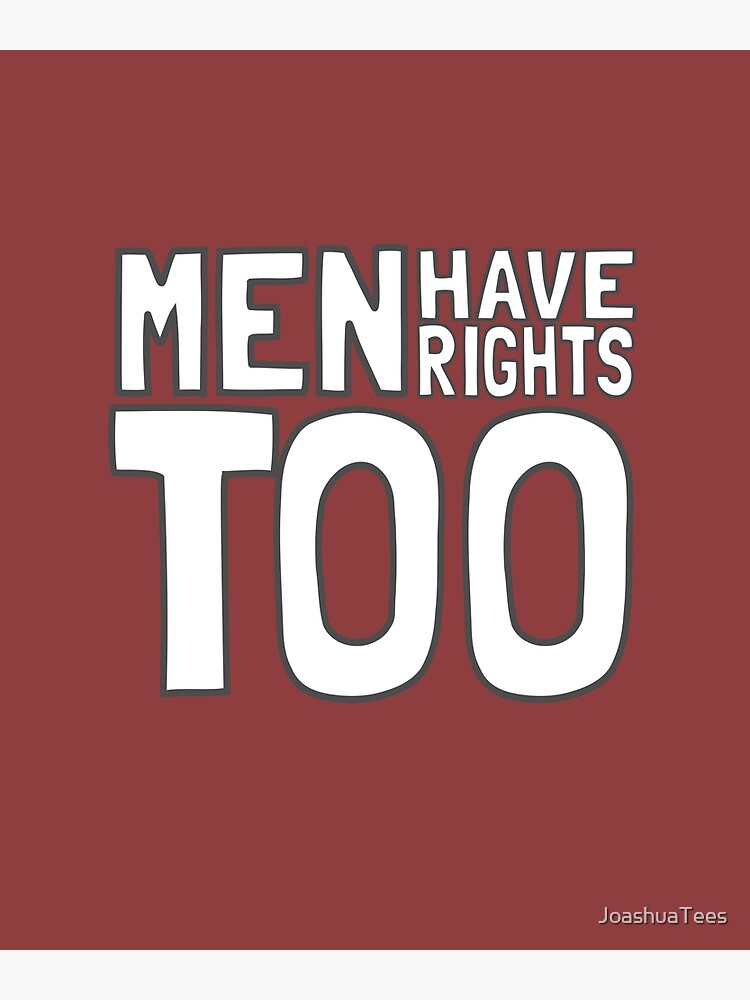
The Unintended Consequences: When Satire Becomes a Weapon
The account’s creator likely intended the parody as a harmless prank, a way to poke fun at the excesses of the men’s rights movement. But the internet, as we know, has a way of twisting intentions into something far more sinister. The account’s posts, once exposed as satire, were seized upon by those who sought to discredit genuine feminist activism. “See?” they crowed. “Even feminists admit that men’s rights are a joke.” The creator’s well-intentioned satire had been co-opted, becoming ammunition in the culture wars. This is the paradox of online parody: it can expose hypocrisy, but it can also fuel the very ignorance it seeks to lampoon. The line between critique and complicity is razor-thin, and once crossed, it is nearly impossible to uncross.
The Media’s Role: Amplifying Absurdity Without Context
No discussion of this phenomenon would be complete without examining the role of the media in amplifying absurdity. In their rush to cover the latest viral sensation, journalists and pundits often neglect to verify the authenticity of the content they share. The result is a landscape where satire is treated as news, and parody is mistaken for propaganda. This is not merely a failure of due diligence; it is a betrayal of the public’s trust. When the media prioritizes clicks over credibility, it erodes the very foundation of informed discourse. The account’s viral spread was not an accident; it was a symptom of a larger disease, one that thrives on sensationalism and thrives on the erosion of critical thinking.
The Aftermath: Lessons in Digital Literacy and the Power of Skepticism
The story of the parody account is a cautionary tale, one that underscores the importance of digital literacy in an age of misinformation. It is a reminder that not everything we read online is what it seems, and that the internet is a landscape where truth is often the first casualty of engagement. The account’s creator may have set out to expose the absurdity of the men’s rights movement, but in the process, they exposed something far more insidious: the ease with which we are manipulated by the very platforms we rely on for information. The lesson is clear: skepticism is not a luxury; it is a necessity. In a world where satire can be mistaken for sincerity, and parody for propaganda, the ability to question, to verify, and to think critically is the only defense we have against the tide of misinformation.










Leave a Comment