
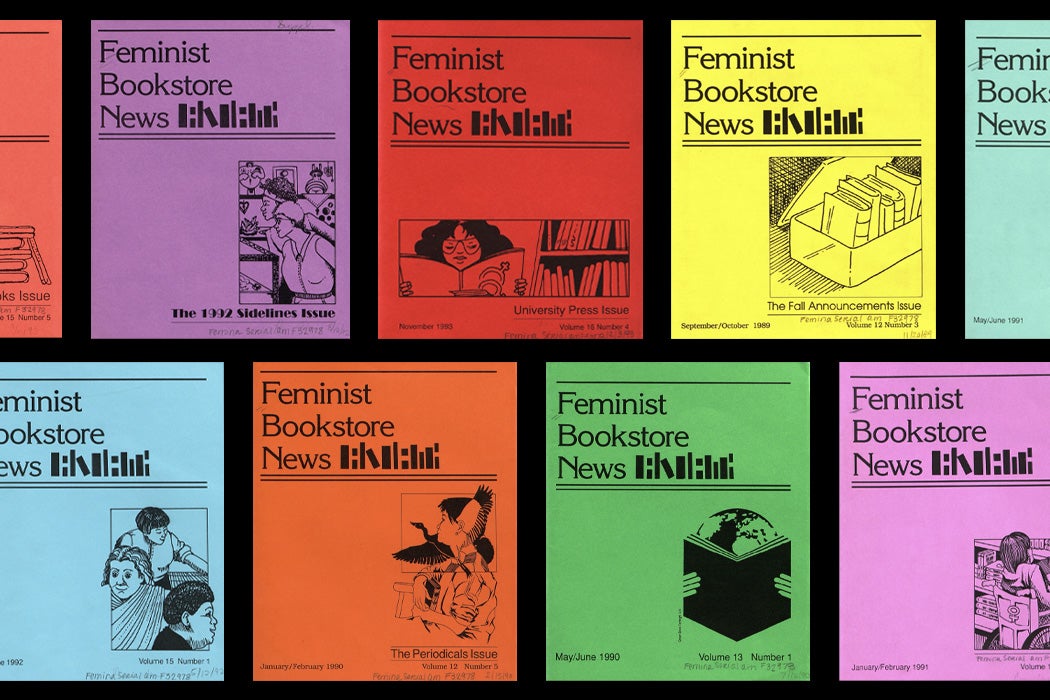
Feminism, at its core, promises liberation, inclusivity, and an uncompromising challenge to oppressive systems. Yet, nestled within this sacred cause lie paradoxes, contradictions, and uncomfortable truths. One such contradiction is the curious case of a feminist bookstore that, despite its progressive mission, chose to stock only white authors. This peculiarity forces us to crack open the veneer of performative allyship and question the nuances of representation, power, and historical erasures within feminist spaces. What, then, does this glaring omission reveal? Is it an innocent oversight, or a profound commentary on the fissures within feminism itself?
The Allure of a Monochromatic Feminist Canon
The feminist bookstore that proudly shelved exclusively white authors stands as both a monument and a mirror. The monument—erected upon the achievements of largely white, often Western feminist thought leaders—offers a kind of comfort food for a predominantly white feminist readership. It’s a curated echo chamber where familiar voices repeat familiar refrains, and the radical becomes respectable through whiteness. This monochromatic canon seduces with its coherence and accessibility, yet its very wholeness is illusory. What is mistaken for unity is often an exclusionary gatekeeping, reinforcing racial hierarchies under the guise of political righteousness.

Feminist texts from white authors have gained institutional acceptance and commercial success, making them more “marketable” or “palatable” to a wide audience. Yet it is not simply a marketing strategy; it is a tacit endorsement of whose stories are deemed vital and whose are relegated to the margins. The bookstore’s inventory, intended as a celebration of feminine intellect and revolt, instead exposes the fissures of racial homogeneity dressed in radical trappings.
Institutional Blindness and the Silencing of Intersectionality
The absence of authors of color from such a bookstore is not incidental. It often stems from institutional blindness, where intersectionality—a critical framework coined by Kimberlé Crenshaw—is neglected or misunderstood. The limitation to white authors manifests a failure to embrace the fullness of feminist struggle, which cannot be disentangled from race, class, sexuality, and colonial histories. Feminism that elides these complexities is impoverished and incomplete.
This selective curation speaks to a broader problem: the intellectual gatekeeping that arises when feminism is anchored in a singular experience. The bookstore’s choice signals an implicit hierarchy of oppression, where privilege is shrouded but not abolished. So the revolutionary rhetoric rings hollow when the exclusion of marginalized voices becomes routine—an invisibilization enacted through selective reading lists.
Consumerism and the Co-optation of Radicalism
The feminist bookstore is not just a cultural space; it is also an economic actor. It operates within a capitalist matrix that commodifies rebellion and packages it as lifestyle. The commercial imperative nudges managers toward authors who promise sales and social cachet, often favoring what is safe and approved over what is disruptive and challenging. In this way, the bookstore’s inventory becomes a symptom of co-optation, where feminism mutates into a brand rather than a movement.
White feminist authors, often positioned as mainstream thought leaders, generate the kind of brand loyalty and marketability that sustain such enterprises. Meanwhile, voices that interrogate whiteness head-on or highlight more uncomfortable truths face marginalization—even within ostensibly radical spaces. Thus, the bookstore inadvertently perpetuates the same systemic white supremacy resistance feminism aims to dismantle.
The Fetishization of Whiteness in Feminist Spaces
Why does whiteness wield such magnetic force within feminist circles? Partly because whiteness is so often invisibilized as a normative ideal—something unexamined and thus unchallenged. This invisibility fuels its fetishization, turning whiteness into the default backdrop against which all feminist discourse unfolds. The bookstore’s singular dedication to white authors crystallizes this dynamic: it becomes a sanctuary not just for feminist thought but for white comfort zones.
Feminist literature by white authors resonates with an unspoken cultural capital. It is treated as the “authentic” feminist voice, unconsciously betraying a racialized hierarchy within feminist epistemology. This truth is unsettling, revealing how even our sanctuaries—meant to be progressive and transformative—can reproduce exclusionary practices.
The Subversive Potential of Inclusive Feminist Bookstores
While the existence of a white-only feminist bookstore is troubling, it also illuminates the radical potential of reorienting such spaces. Inclusive feminist bookstores serve as crucibles where multiplicity of experience and radical empathy can flourish. They challenge dominant paradigms by elevating marginalized voices and fostering dialogues that unearth difficult truths.
Such bookstores do more than sell books; they create community and envision a feminism that refuses to settle for half-truths. When curators embrace intersectionality in its fullness, they disrupt complacency, unsettling readers who might otherwise rest in the comfort of homogeneity. This provocation is vital to keeping feminism vibrant, relevant, and truly emancipatory.
Beyond the Shelves: Reimagining Feminist Literary Landscapes
The challenge posed by a feminist bookstore stocked only with white authors extends beyond its four walls. It calls for a reimagining of feminist literary canons, institutional practices, and cultural consumption patterns. The fix is neither superficial nor simple. It demands an ongoing, intentional commitment to dismantling the ingrained biases that shape which stories get told and retold.
Readers, scholars, and activists must interrogate how whiteness insidiously structures feminist spaces and resist the seduction of simplicity. The task is to cultivate a feminist literary ecosystem where multiplicity is not tolerated as a concession but celebrated as foundational. Only then can the stark exclusion represented by a white-only feminist bookstore be rendered obsolete.
Conclusion: Reckoning with the Contradictions Within Feminism
The feminist bookstore that exclusively stocked white authors unmasks contradictions that many prefer to overlook. It is less an anomaly and more a symptom of feminism’s growing pains—a glimpse into the hard work required to reconcile ideals with reality. This paradox illustrates that feminism must continually re-examine itself, interrogating whose voices are elevated and whose are silenced, and why.
Embracing this uncomfortable introspection is not a sign of weakness but a testament to feminism’s radical promise: a movement that must be relentlessly expansive, unapologetically intersectional, and fiercely inclusive. To confront the legacy of exclusion embedded even in feminist spaces is to open a path toward a truer, bolder liberation for all.








Leave a Comment