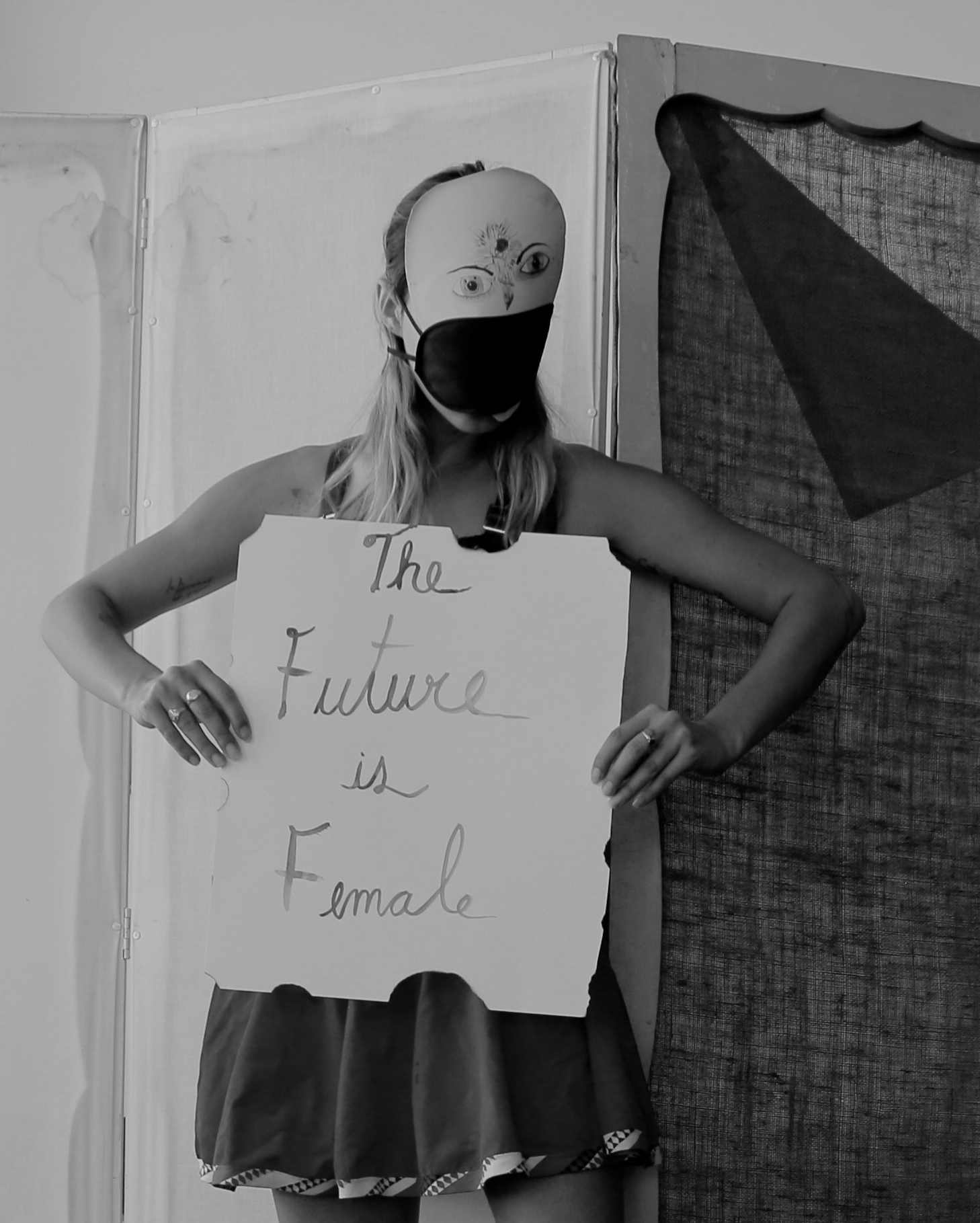
Feminism has always been a chameleon—shifting hues with the tides of history, refusing to be pinned down by the rigid binaries it seeks to dismantle. Yet, as the world grapples with the specter of non-binary identity, a seismic question looms: If genders are non-binary, what becomes of feminism? The answer isn’t a surrender of the movement’s core tenets but a radical expansion of them. This isn’t about abandoning the fight for women’s liberation; it’s about recognizing that liberation itself was never meant to be a gilded cage of womanhood as prescribed by patriarchal norms. The future of feminism isn’t just inclusive—it’s intersectional in the most radical sense, where the boundaries of gender dissolve into a spectrum as vibrant as the struggles that birthed the movement.
The Myth of the Binary: How Patriarchy Weaponized Gender
The gender binary isn’t a natural law—it’s a carceral system, a cage forged in the fires of colonialism, capitalism, and misogyny. For centuries, women were told their worth was tied to their reproductive capacity, their labor confined to the domestic sphere, their bodies policed by laws that treated them as perpetual minors. Feminism emerged as a rebellion against this, but too often, it replicated the binary it sought to dismantle. The archetype of the “oppressed woman” became the rallying cry, while trans women, non-binary people, and gender-nonconforming individuals were sidelined as aberrations. This wasn’t liberation—it was replication.
Consider the way mainstream feminism has historically framed “equality” as assimilation into a male-defined world: women in boardrooms, women in combat, women in suits. But what of those who refuse the suit? What of the bodies that exist outside the neat categories of “male” and “female”? The binary isn’t just a lie—it’s a prison, and feminism’s true radical potential lies in its demolition.
Non-Binary Identity: The Unseen Labor of Reclaiming Self
To be non-binary is to exist in the liminal—a state of perpetual negotiation between societal expectations and the raw, unfiltered truth of one’s being. Every non-binary person is a walking critique of the systems that demand legibility, that punish ambiguity with violence. Their existence isn’t a trend; it’s a revolution in slow motion, a daily act of defiance against a world that insists on categorizing, labeling, erasing.
The labor of non-binary identity is often invisible: the mental gymnastics of explaining one’s pronouns, the exhaustion of correcting misgendering, the grief of being misread in a world that only recognizes two genders. Yet, this labor is the fertile ground from which a new feminism must grow. It demands a feminism that doesn’t just “include” non-binary people but centers their experiences—because their oppression is not a footnote to the feminist narrative; it is the narrative.
The Future Feminism: Beyond Womanhood as a Monolith
Imagine a feminism unshackled from the tyranny of the binary—a feminism that doesn’t just tolerate non-binary identities but celebrates them as the logical endpoint of its own critique. This isn’t a betrayal of women’s rights; it’s an evolution. The suffragettes fought for the vote, but they didn’t fight for the vote to be restricted to cisgender women. The feminists of the ’70s burned bras, but they didn’t burn the idea that liberation could be tied to a single, narrow definition of womanhood.
The future of feminism is queer in the most expansive sense—where the lines between liberation and oppression blur, where the fight for reproductive justice includes the right to bodily autonomy for all genders, where the wage gap isn’t just a women’s issue but a labor issue that affects anyone underpaid for their work, regardless of gender. It’s a feminism that asks: What if the goal isn’t equality within the system, but the dismantling of the system itself?
Intersectionality Revisited: The Non-Binary Crucible
Intersectionality was always meant to be a living theory, not a static checklist. Kimberlé Crenshaw’s groundbreaking work illuminated how race, class, and gender intersect to shape oppression—but what happens when we add non-binary identity to that mix? Suddenly, the conversation shifts from “How do we include?” to “How do we reimagine?” A Black non-binary person navigating healthcare, for example, isn’t just dealing with racism or transphobia—they’re navigating a system that was never designed to see them as anything but a problem to be solved.
This is where feminism must evolve: not just as a movement that adds non-binary voices to the chorus, but as one that rewrites the sheet music. The future of feminism isn’t a coalition of separate struggles—it’s a symphony of shared resistance, where the liberation of one is the liberation of all.
The Promise of a Non-Binary Feminism: A World Unmade and Remade
What would a non-binary feminism look like in practice? It would begin with language—replacing “women’s rights” with “people’s rights,” where necessary, but also inventing new frameworks entirely. It would mean rethinking reproductive justice to include the right to transition, the right to gender-affirming care, the right to exist without fear. It would mean dismantling the idea that feminism is only for those who fit neatly into the category of “woman.”
It would also mean confronting the violence of the binary head-on. Non-binary people face disproportionate rates of homelessness, violence, and suicide—not because of some inherent flaw in their identity, but because of a world that refuses to accommodate them. A non-binary feminism would demand that shelters, hospitals, and workplaces be redesigned with them in mind. It would mean that “feminist spaces” are no longer sanctuaries for a narrow slice of womanhood but havens for all who are marginalized by gender.
The Call to Arms: Why This Matters Now
We are living in a moment where the backlash against non-binary identity is as fierce as the backlash against feminism itself. Laws are being passed to erase trans and non-binary people from public life. Media narratives reduce their existence to a “debate.” And yet, in the face of this, non-binary people persist. They thrive. They create. Their existence is proof that the binary is a house of cards, and the wind of change is already blowing it down.
Feminism’s future isn’t a question of whether it can adapt—it’s a question of whether it will. The movement has always been about breaking chains. Now, the chains are shackling not just women, but all who refuse to be boxed in by gender. The question isn’t “Can feminism survive without the binary?”—it’s Can the binary survive feminism?
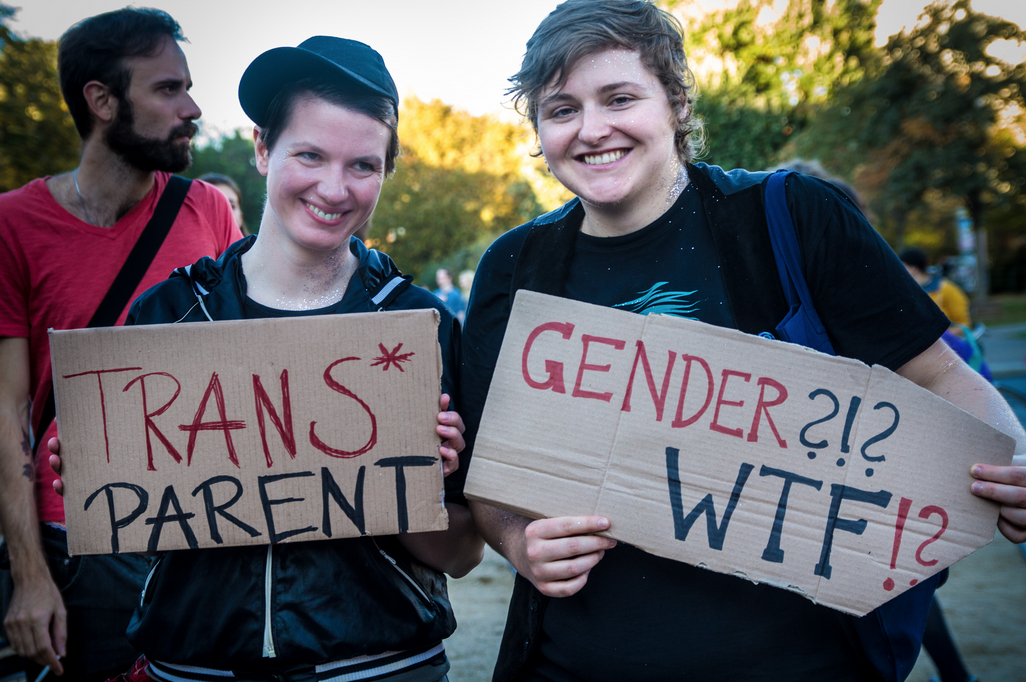
The answer, of course, is no. And that’s the promise—a future where feminism isn’t just a movement for women, but a movement for everyone who has ever been told they don’t belong.





Leave a Comment