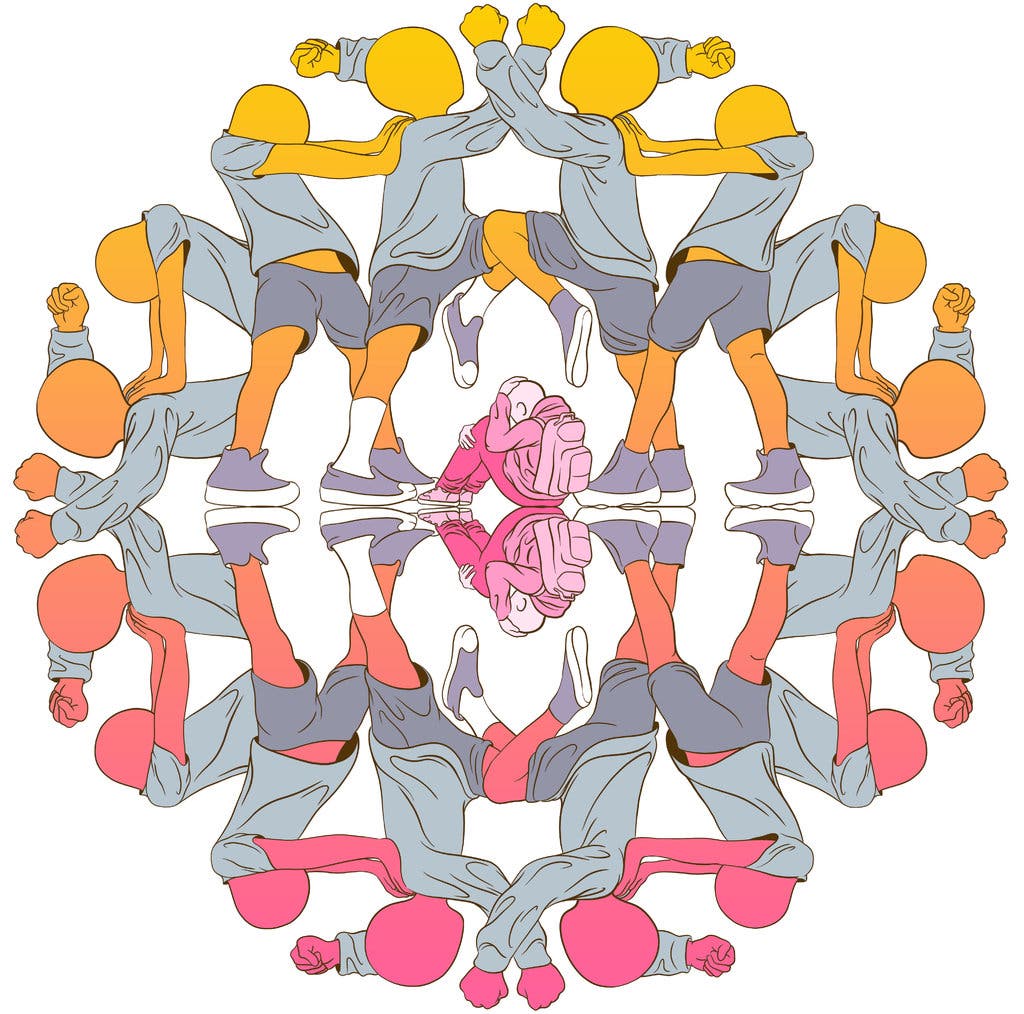
The myth of “boys will be boys” is a pernicious lie, a cultural alibi for violence that has been weaponized for centuries. It’s not just an excuse—it’s a justification. A permission slip for harm. This phrase doesn’t describe behavior; it enables it. It’s the linguistic equivalent of a father handing his son a baseball bat and saying, “Go ahead, swing—just don’t break anything.” Except the bat is systemic oppression, and the “anything” is human dignity. The violence we tolerate in boys isn’t innate. It’s learned. It’s cultivated. And it’s time we stopped pretending it’s inevitable.
The Alchemy of Excuses: How “Boys Will Be Boys” Transmutes Harm into Heroism
Consider the way society lionizes aggression in young men. A boy shoves another on the playground? “He’s just roughhousing.” A teenager punches a peer in a bar fight? “Boys fight—it’s natural.” A grown man assaults a woman? “He was provoked.” Each of these scenarios is framed not as violence, but as a rite of passage. The phrase “boys will be boys” isn’t just an explanation—it’s a narrative device, a way to recast brutality as boyish charm. It’s the same logic that once justified dueling, hazing, and colonial expansion. Violence isn’t a flaw in masculinity; it’s a feature, carefully polished and presented as inevitable.
This alchemy doesn’t happen by accident. It’s the result of decades of cultural conditioning, where aggression is conflated with strength, and empathy is dismissed as weakness. The phrase doesn’t just excuse violence—it romanticizes it. It turns the oppressor into the protagonist of his own story, while the victim is relegated to the role of the obstacle to be overcome. And in this narrative, the boy who commits violence isn’t a problem to be solved—he’s a hero in the making.

From Playgrounds to Prisons: The Escalation of Excused Violence
The “boys will be boys” excuse doesn’t just stay in childhood—it metastasizes. What begins as a shove in the schoolyard evolves into a pattern of behavior that, if unchecked, can lead to incarceration, domestic abuse, or even mass violence. Studies show that boys who are socialized to believe their aggression is natural are more likely to commit crimes as adults. They’re also more likely to tolerate violence in their relationships, whether as perpetrators or bystanders. The excuse doesn’t just normalize harm—it creates a pipeline from childhood bullying to adult predation.
This isn’t just about individual behavior. It’s about systemic failure. Schools that punish girls for “being too emotional” while excusing boys for “being too rough” are complicit in this cycle. Legal systems that reduce sentences for men who claim “heat of passion” defenses are complicit. Media that frames male violence as “tragic” rather than criminal are complicit. The excuse isn’t just a personal failing—it’s a cultural one, and it’s woven into the fabric of institutions that claim to value justice.
The Myth of Innate Masculinity: Why “Boys Will Be Boys” is a Lie
If violence were truly innate in boys, we’d see it across all cultures, in all historical periods. But we don’t. In some societies, boys are raised to be nurturing, cooperative, and emotionally attuned. In others, they’re taught to suppress vulnerability at all costs. The difference isn’t biology—it’s culture. The phrase “boys will be boys” is a lazy shorthand for a much more insidious truth: that we’ve collectively decided certain forms of violence are acceptable in men, while others are not. It’s not about what boys are—it’s about what we allow them to become.
This myth also erases the role of power. When we say “boys will be boys,” we’re not just excusing violence—we’re justifying it. We’re saying that some people’s right to comfort outweighs others’ right to safety. We’re saying that male aggression is a birthright, while female fear is a personal failing. It’s a hierarchy disguised as harmless folklore, and it’s the reason why, for centuries, women have been told to “dress modestly” to avoid assault, while men are told their urges are uncontrollable. The lie isn’t that boys are violent—it’s that we’ve decided their violence is more important than our safety.

Breaking the Cycle: What Accountability Looks Like
Excusing violence doesn’t prevent it—it ensures its continuation. So what does real accountability look like? It starts with language. Instead of “boys will be boys,” we need to say, “This behavior is unacceptable, and we will address it.” It means teaching boys that empathy isn’t a weakness, but a strength. It means holding institutions accountable when they fail to intervene in cycles of harm. It means recognizing that the phrase isn’t just a cliché—it’s a weapon, and every time we repeat it, we hand that weapon to the next generation.
Accountability also means challenging the narratives that glorify male violence. It means refusing to frame abusers as “troubled” while their victims are dismissed as “overreacting.” It means demanding better from the men in our lives—not just when they’re kind, but when they’re capable of cruelty. And it means understanding that the fight against violence isn’t just about punishing the guilty—it’s about dismantling the systems that give them permission to act.
The Cost of Complicity: Why Silence is Violence Too
Every time we laugh off a boy’s aggression as “just how he is,” we’re not just excusing harm—we’re participating in it. Silence isn’t neutrality; it’s complicity. When we normalize the idea that boys are entitled to violence, we’re not just failing to protect victims—we’re training the next generation of abusers. We’re telling them that their feelings matter more than others’, that their discomfort justifies harm, that the world owes them control. And in doing so, we’re ensuring that the cycle continues.
The phrase “boys will be boys” isn’t harmless. It’s a cultural contract that trades human dignity for the illusion of male innocence. It’s the reason why, in a world where women are told to “smile more” to avoid harassment, men are told their fists are inevitable. It’s the reason why, in a world where boys are taught to suppress their emotions, they’re also taught that anger is power. And it’s the reason why, for centuries, we’ve accepted violence as the price of masculinity—when the real cost has always been paid in blood and broken lives.
The myth ends when we stop repeating it. The cycle breaks when we demand better. And the future begins when we finally admit that “boys will be boys” isn’t a fact—it’s a failure of imagination.










Leave a Comment