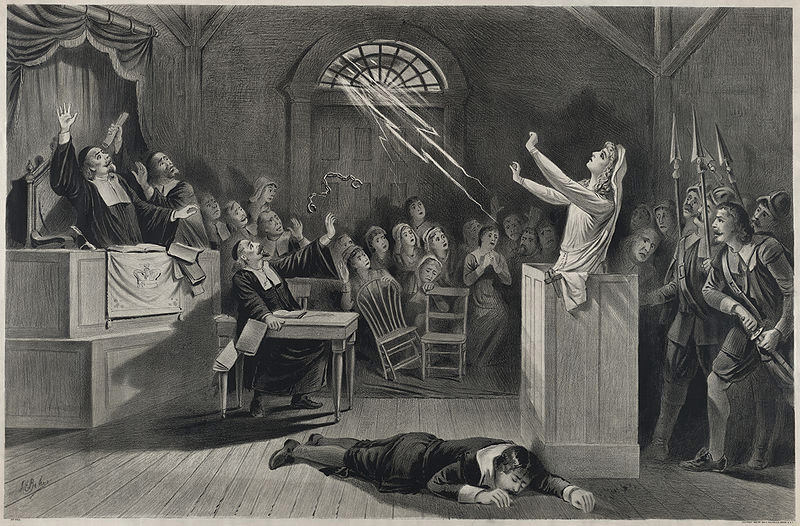
For centuries, the witch trials have been framed as a dark chapter of religious hysteria, a grotesque spectacle of superstition run amok. But what if the real motive was far more sinister—and far more mundane? What if these trials were not about demonic pacts or moral corruption, but about the systematic dispossession of women? The witch trials were, at their core, a legalized mechanism for transferring property from women to men, cloaked in the language of sin and salvation.

The Myth of the Witch: A Construct of Control
The image of the witch—hunched over a bubbling cauldron, cackling as she curses the village—is a cultural caricature, a grotesque parody designed to demonize female autonomy. But this caricature was not born in a vacuum. It was meticulously crafted by patriarchal institutions to justify the seizure of women’s wealth, land, and independence. The witch was not just a scapegoat for misfortune; she was a convenient enemy, a figure onto which society could project its deepest fears about female power. When a woman dared to own property, to inherit land, or to live outside the confines of marriage, she became a threat. And threats, in a system built on male dominance, had to be neutralized.
Consider the case of an elderly widow in 17th-century New England, who found herself accused of witchcraft after refusing to remarry. Her crime? Holding onto the family farm. The accusation was not about her soul—it was about her land. The witch trial was the perfect legal tool: a way to discredit her, strip her of her rights, and transfer her property to a male heir. The language of sin provided the veneer of morality, but the reality was economic. The witch was not a witch at all—she was a woman who refused to be erased.

The witch trials were not just about fear—they were about power.
The Legal Machinery of Dispossession
The witch trials were not random acts of violence; they were a highly efficient legal machinery designed to transfer wealth from women to men. In a society where women’s property rights were already precarious, accusations of witchcraft provided a swift and brutal solution to the problem of female economic independence. When a woman was accused, her property was immediately seized. Her land, her livestock, her savings—all of it was forfeit. The state did not need to prove her guilt; the accusation itself was enough to justify confiscation.
This was not an accident of history—it was a feature of the system. The laws governing witch trials were structured to ensure that the accused would lose everything. In many cases, the property was not even transferred to the state, but directly to male relatives or local elites. The witch trial was, in effect, a legalized form of theft, dressed in the robes of religious righteousness. The more independent a woman was, the more vulnerable she became. A widow with a thriving business? A healer with a reputation for skill? A woman who dared to speak her mind? All of these were potential targets.
The irony is that the witch trials occurred at a time when women’s property rights were already under siege. The rise of capitalism and the enclosure of common lands had left many women without the economic security they once had. The witch trial was the perfect tool to finish the job—to ensure that no woman could ever accumulate enough wealth to challenge the dominance of men.
The Body as Battleground: Witchcraft and Female Autonomy
The witch was not just a threat to property—she was a threat to the very idea of female bodily autonomy. The accusations of witchcraft often centered on the female body: its sexuality, its fertility, its power. A woman who refused to marry, who used contraception, or who bore children out of wedlock was labeled a witch. Her body became a site of control, a territory to be policed and punished. The witch trial was not just about taking her land—it was about taking her life, her choices, her very existence.
This was not a coincidence. The witch was a figure who embodied everything that patriarchal society feared: a woman who was not dependent, not submissive, not silent. She was a woman who dared to exist on her own terms. And so, she had to be destroyed—not just physically, but symbolically. The witch trial was a ritual of erasure, a way to remind all women of the consequences of stepping outside the boundaries of acceptable femininity.
Consider the case of a midwife in medieval Europe, accused of witchcraft after a difficult birth. The accusation was not about her skill—it was about her knowledge. Midwives were often the only women who had access to medical knowledge, who could control the reproductive lives of other women. The witch trial was a way to silence her, to ensure that no woman could ever gain that kind of power again.

The witch trials were a tool of control, designed to keep women in their place.
The Aftermath: A Legacy of Stolen Wealth
The witch trials did not end with the last execution. Their legacy lives on in the economic disparities that continue to plague women today. The property stolen from accused witches was never returned. The land was never reclaimed. The wealth was never redistributed. Instead, it became the foundation of male-dominated economies, built on the backs of dispossessed women. The witch trials were not just a historical footnote—they were a blueprint for how society could systematically disenfranchise women and claim their resources as its own.
This is why the witch trials continue to fascinate us. They are not just a story of superstition—they are a story of power, of greed, of the lengths to which society will go to maintain control. The witch was not a monster. She was a woman who dared to own something—her body, her land, her life—and for that, she was erased. The witch trials were not about evil. They were about economics. And they were about control.
The next time you hear the word “witch,” ask yourself: Who benefited from her destruction? Who gained from her silence? The answer is always the same. The witch trials were not about magic. They were about money. And they were about men.










Leave a Comment