
The myth of the indestructible man is as old as patriarchy itself—a brittle, brittle construct built on the idea that pain is a currency, that suffering is a rite of passage, and that death is merely the price of admission to the club of “real men.” But what if the real fragility isn’t in the body, but in the performance? What if the tough guy isn’t a fortress, but a house of cards, collapsing not from external blows, but from the weight of his own unspoken rules? The data doesn’t lie: men who embody the archetype of the “tough guy”—the enforcer, the protector, the silent sufferer—die younger. And the irony? It’s not because they’re physically weak. It’s because they’re emotionally bankrupt.
The Cult of Stoicism: When Silence Becomes a Death Sentence
There is a particular brand of masculinity that treats emotion like a contagion. To feel is to fail. To cry is to surrender. To admit vulnerability is to forfeit one’s membership in the brotherhood of the unbreakable. This isn’t just a personal failing—it’s a cultural mandate. The tough guy doesn’t just endure pain; he internalizes it, swallows it whole, and lets it fester like an untreated wound. Studies on male longevity consistently point to one glaring truth: men who suppress their emotions die sooner. Not because they’re weak, but because they’re denied the most basic human mechanism for healing.
Consider the language we use to describe emotional suppression in men. We call it “toughness.” We romanticize it. We turn it into a badge of honor. But what we’re really doing is gaslighting an entire gender into believing that their humanity is a liability. The tough guy doesn’t just avoid therapy—he avoids friendship, intimacy, and even self-reflection. He becomes a ghost in his own life, haunting the edges of his own existence while pretending he’s in control.


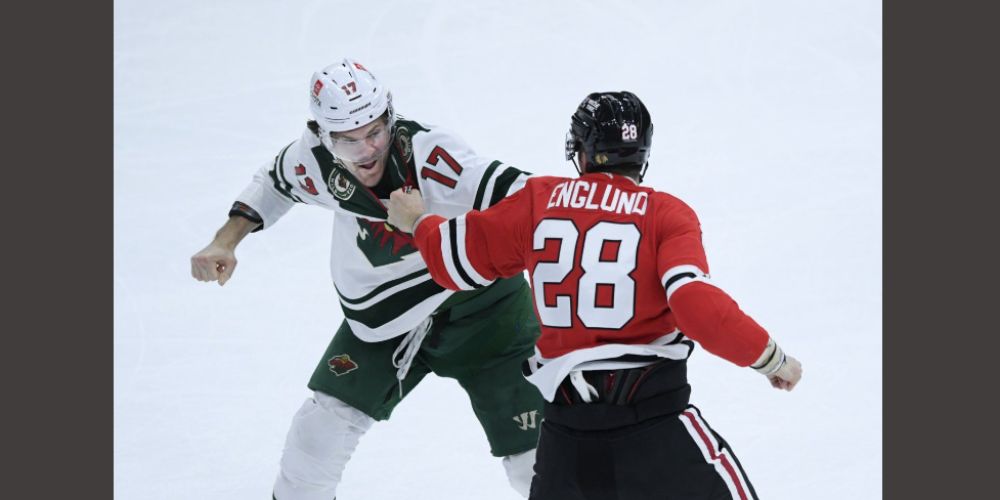
The NHL enforcer, the corporate “alpha,” the soldier who “toughs it out”—they’re all part of the same tragic pantomime. They perform strength while their bodies betray them, not from the hits they take, but from the ones they refuse to acknowledge. The tough guy doesn’t just die younger; he dies lonelier, his final years a slow unraveling of the very myth he was conditioned to uphold.
The Tyranny of the Provider: When Care Becomes a Prison
Another pillar of the tough guy mythos is the expectation that men must be providers—financially, emotionally, physically. The burden of being the rock is not just a role; it’s a life sentence. And like all life sentences, it comes with a hidden clause: you are not allowed to ask for help. The tough guy doesn’t just work himself to the bone; he convinces himself that his worth is measured in exhaustion. Burnout isn’t a warning sign; it’s a badge of honor. Heart disease isn’t a health risk; it’s a rite of passage.
This is the paradox of male sacrifice: the more a man gives, the less he is allowed to receive. He is expected to be a fortress, but fortresses don’t have doors. He is expected to be a rock, but rocks don’t crack under pressure—they shatter silently, leaving no trace of the pressure that broke them. The tough guy doesn’t just die younger; he dies before he’s allowed to live. His life becomes a ledger of debts—owed to his family, his job, his country—and when the balance comes due, he pays in years, in health, in joy.
Worse still, the tough guy’s role as provider often comes at the expense of his own needs. He will skip doctor’s appointments to “save time.” He will ignore chronic pain to “push through.” He will forgo therapy to “tough it out.” And when the body finally rebels—when the heart gives out, when the liver fails, when the mind fractures—he is left with no tools to understand why. The tough guy doesn’t just die younger; he dies without ever having lived on his own terms.
The provider myth is a lie sold to men by a system that benefits from their exhaustion. It’s not strength to work yourself to death. It’s not love to sacrifice your health for someone else’s comfort. It’s not honor to die before you’ve had the chance to be happy. The tough guy’s early demise isn’t a tragedy of biology—it’s a tragedy of belief.
The Loneliness Epidemic: When Brotherhood Becomes a Cage
Men are told that brotherhood is the antidote to weakness. That real men don’t need friends—they need comrades in arms. That vulnerability is a liability, but shared suffering is a bond. And yet, the tough guy’s life is often the loneliest of all. He surrounds himself with people, but he never lets them in. He laughs with his friends, but he never cries. He leans on his brothers, but he never admits he’s struggling. The tough guy doesn’t just die younger; he dies surrounded by people who never really knew him.
This is the cruelest trick of toxic masculinity: it promises connection but delivers isolation. The tough guy is told that his worth is tied to his ability to endure, to fight, to never ask for help. But the truth is, the tough guy is the most fragile of all. He is a man who has been trained to see friendship as a weakness, intimacy as a betrayal, and love as a transaction. He is a man who has been taught that his value lies in what he can give, not in what he can receive. And when the time comes to ask for help, he has no idea how.
The loneliness epidemic among men isn’t just a social issue—it’s a public health crisis. Studies show that men who lack close friendships are more likely to die younger, not because they’re physically weaker, but because they’re emotionally starved. The tough guy’s early death isn’t a failure of his body; it’s a failure of his community. He was never taught how to lean on others. He was never given permission to be vulnerable. And so he dies alone, his last thoughts a silent scream into the void.
Brotherhood, in the traditional sense, is a myth. Real connection isn’t forged in shared suffering—it’s forged in shared honesty. The tough guy’s tragedy isn’t that he died young; it’s that he never learned how to live.
The Unspoken Contract: Death as the Ultimate Performance
At its core, the tough guy myth is a death pact. It’s an unspoken contract between men and the world: you will suffer silently, you will endure without complaint, and when the time comes, you will die on your feet, never on your knees. The tough guy doesn’t just accept this contract—he internalizes it. He believes that his worth is measured in his ability to endure, and that his death will be the ultimate testament to his strength.
But death isn’t a performance. It’s not a grand finale. It’s not a reward for a life well-lived. It’s just the end. And the tough guy’s early demise isn’t a testament to his strength—it’s a indictment of a system that taught him to confuse endurance with virtue. He didn’t die because he was weak. He died because he was never allowed to be anything but strong.
The real tragedy of the tough guy isn’t that he died young. It’s that he never got to live at all. He spent his life performing a role, and when the curtain fell, there was nothing left but an empty stage and a pile of unspoken regrets. The tough guy’s early death isn’t a mystery. It’s a warning. And the only way to heed that warning is to burn the script.
Men deserve better than a life sentence to the myth of toughness. They deserve love. They deserve connection. They deserve the right to feel, to cry, to ask for help. They deserve to live—not as characters in someone else’s story, but as full, complicated, human beings. The tough guy’s early demise isn’t a biological inevitability. It’s a cultural failure. And it’s time we fixed it.










Leave a Comment