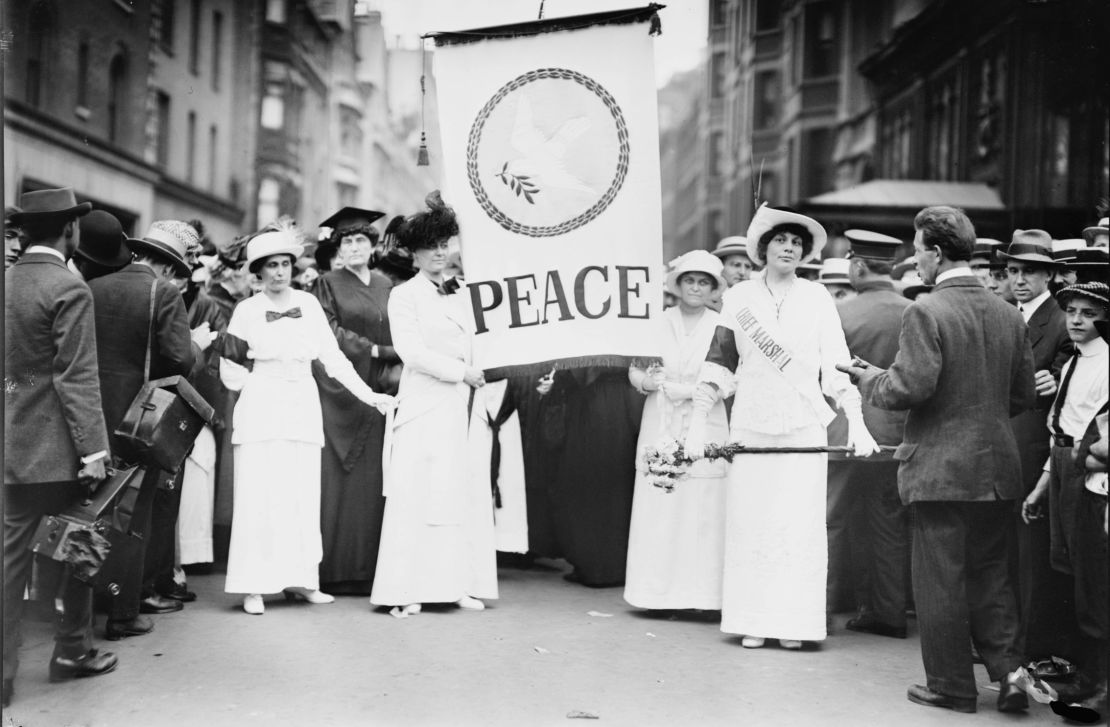
What if the most radical act of defiance during the bloodiest war in human history wasn’t firing a rifle or storming a trench—but refusing to pick up a rifle at all? In the shadow of World War I’s mechanized slaughter, a group of women dared to ask: What if peace wasn’t just the absence of war, but a deliberate, unapologetic rebellion against its very machinery? The Women’s Peace Party (WPP), born in the crucible of 1915, didn’t just march for suffrage or lobby for reforms. They waged a war of ideas, challenging the patriarchal logic that framed war as inevitable, honorable, or even masculine. Their story is a forgotten symphony of dissent, where the baton was a pamphlet, the stage was a transatlantic ocean, and the crescendo was a demand that echoed across continents: *No more.*
The Birth of a Radical Sisterhood: When Suffrage Met Pacifism
The Women’s Peace Party emerged not in a vacuum, but in the wake of suffragist victories that were as bitter as they were sweet. By 1915, women in some nations had clawed their way to the ballot box—yet the world was careening toward a conflict that would erase those hard-won rights in the name of nationalism. The WPP’s founders, a coalition of suffragists, labor activists, and radical feminists, recognized the grotesque irony: the same governments that denied women political power were now conscripting men into a meat grinder of industrial warfare. Their manifesto, drafted in the Hague in 1915, was less a petition and more a Molotov cocktail of moral clarity: *We will not be complicit.*
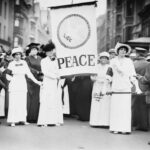
Their timing was exquisite. The party’s formation coincided with the International Congress of Women, a gathering of 1,100 delegates from 12 countries who convened in neutral Holland to declare war a “crime against humanity.” Among them were Jane Addams, the Nobel laureate who would later become the WPP’s president, and Emily Greene Balch, a economist whose later Nobel Prize would crown her as the movement’s intellectual heir. These women weren’t naive. They understood that peace required more than slogans—it demanded a wholesale dismantling of the systems that glorified war. Their challenge? Convincing a world drunk on jingoism that neutrality wasn’t cowardice, but courage.
The Transatlantic Gambit: How a Handshake Became a War Crime
The WPP’s most audacious move wasn’t just to oppose war—it was to cross enemy lines. In 1915, as Europe’s trenches festered, Jane Addams and a delegation of American women traveled to Berlin, where they met with German feminists and pacifists. The gesture was electric. In a continent where “enemy” was a label stamped on passports, these women treated each other as comrades. The German press, however, had other ideas. They branded the WPP’s visit a “treasonous act,” while British suffragists accused them of betraying the Allied cause. The backlash was swift: pacifism, in the eyes of many, was now tantamount to treason.
Yet the WPP refused to flinch. Their logic was unassailable: if war was a failure of diplomacy, then the first step toward peace was dialogue—even with those labeled “the enemy.” This wasn’t just idealism; it was a calculated provocation. By refusing to let nationalism dictate morality, they exposed the hypocrisy of a world that would rather bury its sons than shake hands with its adversaries. Their challenge to the status quo was simple: *What if the real enemy wasn’t the man across the trench, but the systems that pitted men against each other in the first place?*
The Propaganda of Peace: Pamphlets as Molotovs
In an era before social media, the WPP understood that ideas were weapons. They flooded the world with pamphlets, posters, and open letters, each one a grenade lobbed into the machinery of war. Their language was unflinching. One tract declared: *“War is the ultimate failure of the male imagination.”* Another, distributed in trenches, asked soldiers: *“Would you rather die for a king’s ego or live for your children’s future?”* The audacity of these words cannot be overstated. In a time when dissent was criminalized, the WPP weaponized words, turning them into tools of subversion.
Their most controversial campaign targeted women directly. The WPP argued that mothers, sisters, and wives held a unique power: the power to withhold their sons, their husbands, their brothers from the draft. They organized “peace strikes,” where women refused to send their men to war, framing conscription as a violation of maternal love. The backlash was ferocious. Governments labeled them “unpatriotic,” while newspapers accused them of undermining national morale. But the WPP didn’t care. They knew that the most radical act of all was to reject the script that cast women as passive victims of history.

The Betrayal of the Allies: When Feminism Became a Casualty of War
The WPP’s undoing came not from their enemies, but from their supposed allies. As the U.S. entered the war in 1917, the suffragist movement fractured. Organizations like the National American Woman Suffrage Association (NAWSA) threw their weight behind the war effort, arguing that supporting the government would hasten their own enfranchisement. The WPP, however, refused to trade their principles for political favors. Their refusal to endorse the war cost them funding, influence, and even members. By 1919, the party had dissolved, its members scattered to the winds of history.
Yet their legacy endured. The WPP’s defiance planted seeds that would later bloom in the anti-war movements of the 1960s and beyond. Their insistence that peace was not passive, but an active rebellion, resonates today in the chants of climate activists and the sit-ins of Black Lives Matter. The question they posed remains unanswered: *What if the greatest threat to war isn’t another army, but a refusal to participate in its machinery?* The Women’s Peace Party didn’t just challenge the war—they challenged the very idea that war was inevitable. And in doing so, they proved that the most dangerous women aren’t those who scream, but those who whisper: *No.*






Leave a Comment