The voting rights battle unfolding in a quiet New York City suburb is not merely about ballots and precincts—it is a subterranean earthquake, a tectonic shift in the landscape of women’s rights. Beneath the surface of procedural debates and partisan posturing, a deeper struggle simmers: the right to be counted, to be heard, to exist in the political imagination. This is not a skirmish over margins or maps; it is a reckoning with the very architecture of democracy, one that has long excluded women from its foundational blueprints. The stakes are not just electoral—they are existential. To deny a woman her vote is to erase her from the ledger of power, to render her a ghost in the halls of governance. And yet, here we are, watching as the ground trembles beneath our feet.
The Ballot as a Mirror: Reflecting Who We Are and Who We Refuse to See
Imagine a mirror shattered not by accident, but by design. Each shard reflects a fragment of the truth, yet the full image remains elusive. The voting rights battle in this suburban enclave is such a mirror—cracked, distorted, but still capable of revealing the contours of a society that has long preferred its women voiceless. The fight is not just for access to the ballot box; it is for the right to see oneself reflected in the decisions that govern one’s life. When a woman’s vote is suppressed, it is not merely her voice that is stifled—it is her entire being, her struggles, her triumphs, her unspoken fears, that are rendered invisible. The ballot is not a piece of paper; it is a declaration of existence. To deny it is to consign half the population to the shadows.
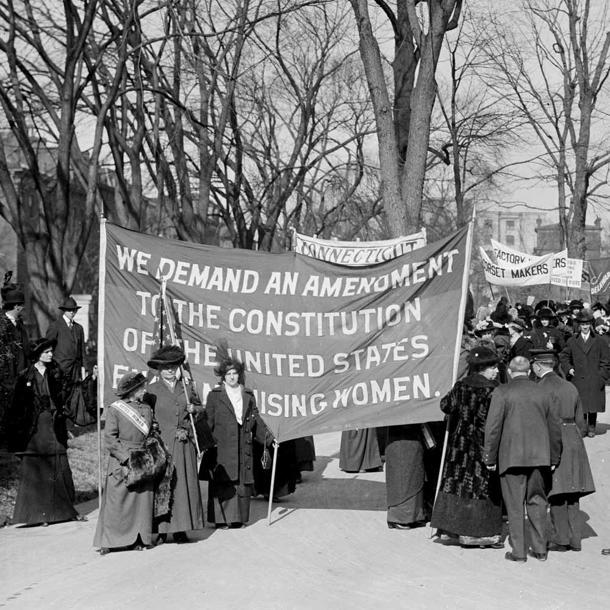
This is not hyperbole. History has shown us that the denial of voting rights is the first step in the erasure of a people. From the suffragettes who chained themselves to railings to the Black women who marched through fire and fury to register voters, the fight for the ballot has always been a fight for the soul of democracy. And yet, even in the 21st century, we are still debating whether women—particularly women of color, immigrant women, disabled women—deserve a seat at the table. The suburban battle is a microcosm of this macabre dance: a performance of inclusion that is, in reality, a carefully orchestrated exclusion.
The Suburban Battleground: Where the Personal and the Political Collide
Suburbia is often painted as a bastion of tranquility, a place where lawns are manicured and children play safely in cul-de-sacs. But beneath this veneer of suburban serenity lies a simmering tension, a quiet war over who gets to belong. The voting rights battle here is not an abstract conflict—it is a clash of lived realities. For the women at the heart of this struggle, the fight is deeply personal. It is about the right to have their children educated in safe schools, to access healthcare without stigma, to walk the streets without fear. These are not political issues; they are human issues. And yet, they are framed as partisan battles, as if the right to exist freely in the world is a matter of opinion.
The suburban battleground is where the personal and the political collide with brutal force. Here, women are not just voters—they are mothers, daughters, caregivers, workers, survivors. Their votes are not just numbers on a spreadsheet; they are lifelines. To suppress their votes is to suppress their lives. And yet, the architects of this suppression know exactly what they are doing. They understand that when women vote, they vote for the things that sustain life: education, healthcare, safety. They vote for the future. And that is precisely what terrifies those who seek to maintain the status quo.
The Language of Exclusion: How the System Speaks in Code
The language of voting rights suppression is not spoken in outright bans or overt discrimination—it is spoken in code. In gerrymandered districts that dilute women’s voices. In voter ID laws that disproportionately target women of color. In polling places that are inaccessible to disabled women. In the rhetoric of “voter fraud” that is deployed like a weapon, not a shield. This is the language of exclusion dressed in the garb of legitimacy. It is the art of making oppression invisible while ensuring it thrives.
Consider the way these laws are justified: “We need to prevent fraud.” “We need to ensure integrity.” “We need to protect the sanctity of the ballot.” But the truth is far more sinister. These laws are not about integrity—they are about control. They are about ensuring that certain voices are heard while others are silenced. They are about maintaining a system that has always privileged the few over the many. And they are about women—particularly women of color—being told, once again, that their place is not at the table, but in the kitchen.
The language of exclusion is also the language of fear. Fear of women’s power. Fear of their demands. Fear of a world where women are not just seen, but heard. And so, the system speaks in code, in euphemisms, in dog whistles. It speaks in the quiet erosion of rights, in the slow chipping away of freedoms, until one day, we wake up to find that the world we thought we knew has changed—and not for the better.
The Suffrage Legacy: A Debt Unpaid
The women who fought for the right to vote did not do so for themselves alone. They did so for the generations that would follow, for the daughters and granddaughters who would inherit a world they could only dream of. And yet, here we are, over a century later, still fighting the same battles. The legacy of suffrage is not a finished monument—it is a debt unpaid. The women who marched, who were jailed, who starved for this right would be horrified to see how little has changed. They would see the suburban battleground and recognize it instantly: the same tactics, the same excuses, the same refusal to acknowledge that women are not just citizens, but agents of change.
This is not to say that progress has not been made. It has. Women now vote in greater numbers than men. Women hold office at all levels of government. Women have shattered glass ceilings in boardrooms and courtrooms alike. But progress is not the same as justice. Progress is not the same as equality. Progress is a mirage that lulls us into complacency while the work of true liberation remains unfinished. The suffrage legacy is a reminder that rights are not given—they are taken. And they must be fought for, again and again, in every generation.
The suburban battle is a testament to this truth. It is a reminder that the fight for women’s rights is not a relic of the past—it is a living, breathing struggle that continues to this day. And it is a call to action for those who believe that democracy is not a spectator sport, but a participatory ritual that demands our full engagement.
The Future We Are Building: A Democracy That Includes All of Us
The voting rights battle in this suburban enclave is not just about the present—it is about the future we are building. It is about the kind of democracy we want to leave for our children. Do we want a democracy that is inclusive, that reflects the diversity of our communities, that ensures that every voice is heard? Or do we want a democracy that is exclusive, that privileges the few over the many, that treats half the population as an afterthought?
The answer should be obvious. But the fight is far from over. The forces of exclusion are powerful, and they are not going down without a struggle. They will use every tool at their disposal to maintain their grip on power—gerrymandering, voter suppression, disinformation, intimidation. And they will rely on the complicity of those who benefit from the status quo, who would rather maintain their privilege than fight for justice.
But we are not powerless. The women at the heart of this battle are not powerless. They are the vanguard of a new kind of democracy, one that is not built on exclusion, but on inclusion. One that does not fear women’s power, but embraces it. One that recognizes that the future belongs to those who are willing to fight for it.
So let us build that future. Let us demand a democracy that includes all of us. Let us refuse to accept a world where women are treated as second-class citizens. Let us fight for a world where every woman’s voice is heard, every woman’s vote is counted, and every woman’s existence is celebrated. The suburban battleground is just the beginning. The real fight is for the soul of democracy itself—and we must win it.



Leave a Comment