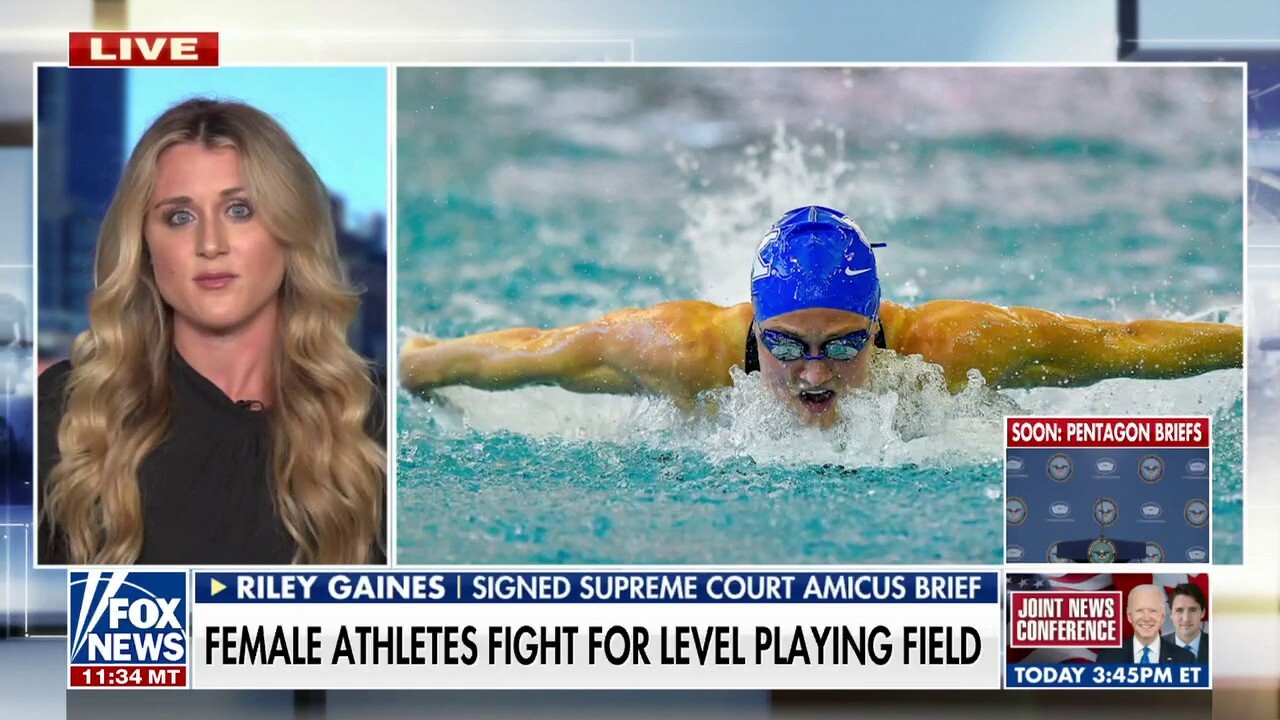
The debate over transgender women in sports has become a battleground where biology, politics, and human rights collide. It’s a conversation that oscillates between cold, hard data and the searing heat of personal narratives. On one side, we have the unyielding march of science, and on the other, the fragile but unassailable dignity of identity. The question isn’t just about who gets to compete—it’s about who gets to define the boundaries of fairness, inclusion, and humanity itself.
The Myth of the “Unlevel Playing Field”: When Biology Becomes a Battleground
For decades, the sports world has operated under the unspoken rule that biology is destiny. Testosterone levels, muscle mass, lung capacity—these are the sacred metrics that determine who belongs on the podium and who is relegated to the sidelines. But what happens when the lines of biology blur? When a person’s body doesn’t conform to the rigid binaries that have governed athletic competition for generations?
The argument against trans women in sports often hinges on the idea that their presence “unlevels” the playing field. Yet this argument crumbles under scrutiny. If we accept that testosterone is the great equalizer, why do we not apply the same logic to cisgender women with naturally higher testosterone levels? Why do we not subject every elite female athlete to mandatory hormone testing, lest they possess an unfair advantage? The inconsistency is glaring, a testament to the fact that this debate is less about fairness and more about policing the boundaries of womanhood itself.
Consider the case of a trans woman who has spent years undergoing hormone replacement therapy (HRT). Her testosterone levels drop to those of an average cisgender woman. Her muscle mass diminishes. Her endurance may even decline. Yet, she is still painted as a threat—a Trojan horse smuggled into the sacred halls of female athletics. The irony? The same people who decry her presence would likely cheer if she were a cisgender woman with a genetic predisposition for athletic dominance. The difference isn’t in the science. It’s in the politics of who we deem worthy of inclusion.

From Labels to Lives: The Human Cost of Dehumanization
Behind every statistic and policy is a human being—a young girl who dreams of running track, a trans woman who just wants to compete, a mother who fears her daughter will be edged out by someone she was taught to see as an “other.” The dehumanization of trans athletes is not an abstract concept; it’s a daily reality for those forced to navigate a world that refuses to see them as anything but a problem to be solved.
Take the story of a trans woman who, after years of transitioning, finally feels comfortable in her body. She joins a local track team, only to be met with stares, whispers, and outright hostility. Her competitors refuse to shake her hand. Her coaches question her motives. The message is clear: she doesn’t belong here. Not because she’s slow. Not because she’s weak. But because she exists in a body that challenges the rigid definitions of what it means to be a woman.
This isn’t just about sports. It’s about the erasure of trans lives in the name of tradition. Every time a policy is written to exclude trans women from female sports, it sends a ripple effect through society. It tells trans youth that their dreams are conditional. It tells cisgender women that their safety is more important than inclusion. It tells the world that some bodies are more deserving of respect than others.
The Specter of Fear: How Anxiety Shapes the Debate
Fear is the invisible hand guiding this debate. Fear of change. Fear of the unknown. Fear of losing power. The specter of the “trans athlete” has become a convenient boogeyman, a way to rally support for policies that have little to do with fairness and everything to do with control.
Consider the language used to describe trans women in sports: “dominance,” “threat,” “unfair advantage.” These words are not neutral. They are laced with the subtext of a zero-sum game, where one group’s gain must come at the expense of another. But sports are not a finite resource. There is no scarcity of glory, no drought of medals. The fear that trans women will “take over” female sports is as baseless as the fear that women’s suffrage would destroy democracy. History has shown time and again that inclusion does not diminish excellence—it redefines it.
Yet the fear persists. Why? Because it’s easier to demonize than to understand. It’s easier to cling to outdated binaries than to confront the messy, beautiful reality of human diversity. The debate over trans women in sports is not really about sports at all. It’s about who gets to decide who belongs in the room—and who gets shown the door.
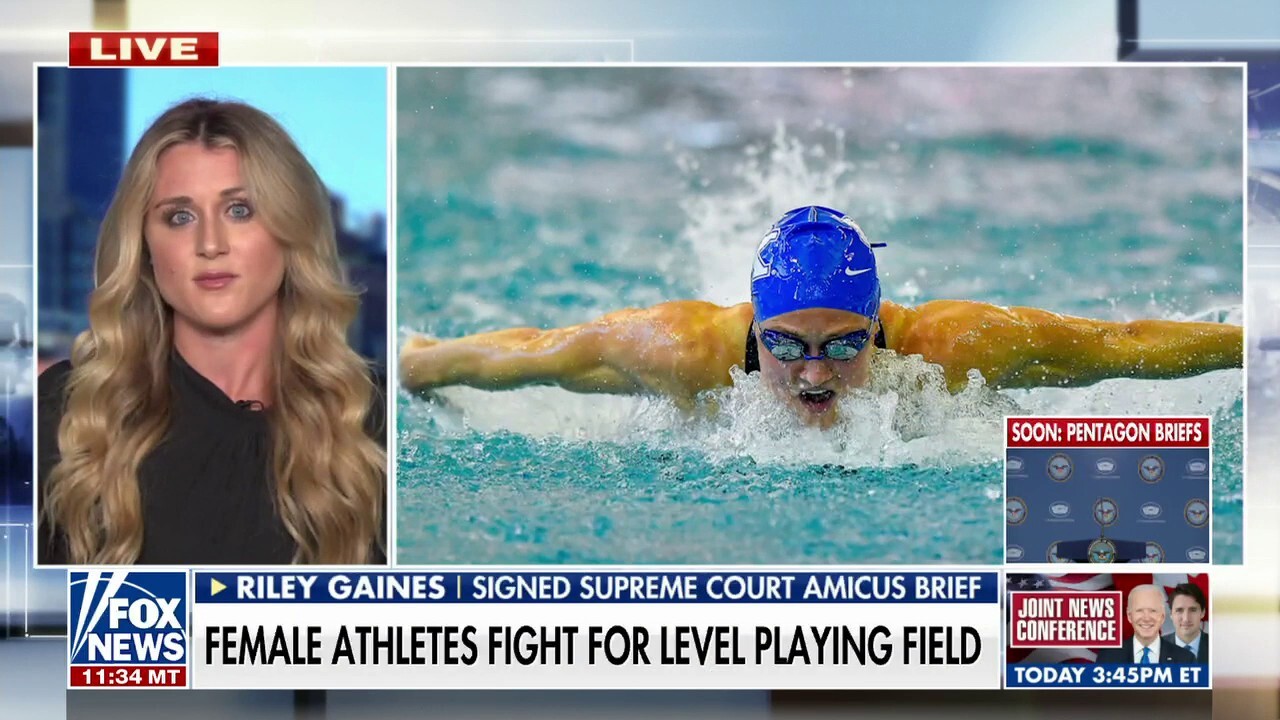
Breaking the Binary: A New Vision for Sports and Society
The solution to this debate is not to double down on exclusion but to reimagine what sports can be. What if, instead of clinging to rigid categories, we embraced a spectrum of competition? What if we recognized that athleticism is not a monolith but a mosaic of bodies, each with its own strengths and challenges?
Some sports organizations have already taken steps in this direction. World Athletics, for example, has banned trans women from elite female competitions, but it has also opened the door to new categories that celebrate diversity rather than police it. This is not a surrender to chaos. It’s an evolution—a recognition that the old ways of thinking no longer serve us.
Imagine a world where sports are not about enforcing boundaries but about pushing them. Where the focus is not on who is excluded but on who is celebrated. Where a trans woman can step onto the track without fear, not because the rules have changed, but because the culture has evolved. This is not a utopian fantasy. It’s a possibility that is within our grasp if we choose to reach for it.
The Power of Representation: Why Visibility Matters
Visibility is the first step toward acceptance. When trans women are visible in sports, they become more than just a talking point—they become human. Their stories challenge the narratives that seek to erase them. Their successes prove that inclusion does not come at the cost of excellence.
Take the case of a trans woman who competes in cycling. Her presence on the starting line is not a threat to the sport; it’s a testament to its resilience. She may not win every race, but her participation forces us to confront the uncomfortable truth that sports are not the exclusive domain of any one group. They belong to all of us.
Representation also matters for the young trans girls watching from the sidelines. When they see someone like them on the field, they are more likely to believe that their dreams are possible. They are more likely to see themselves as athletes, as competitors, as equals. This is not just about sports. It’s about survival.
Conclusion: The Future Is Inclusive, Whether We Like It or Not
The debate over trans women in sports is not going away. It will continue to rage in legislatures, on social media, and in the hearts of those who believe in a world where everyone has a place. The question is not whether we will accept trans women in sports, but how long we will cling to the fear that has kept us from embracing them sooner.
Sports are a microcosm of society—a place where we test the limits of our humanity. The old rules are crumbling. The old fears are fading. What remains is the choice: Will we build a world where everyone belongs, or will we retreat into the comfort of exclusion? The answer is already being written. The only question is whether we will have the courage to read it.










Leave a Comment