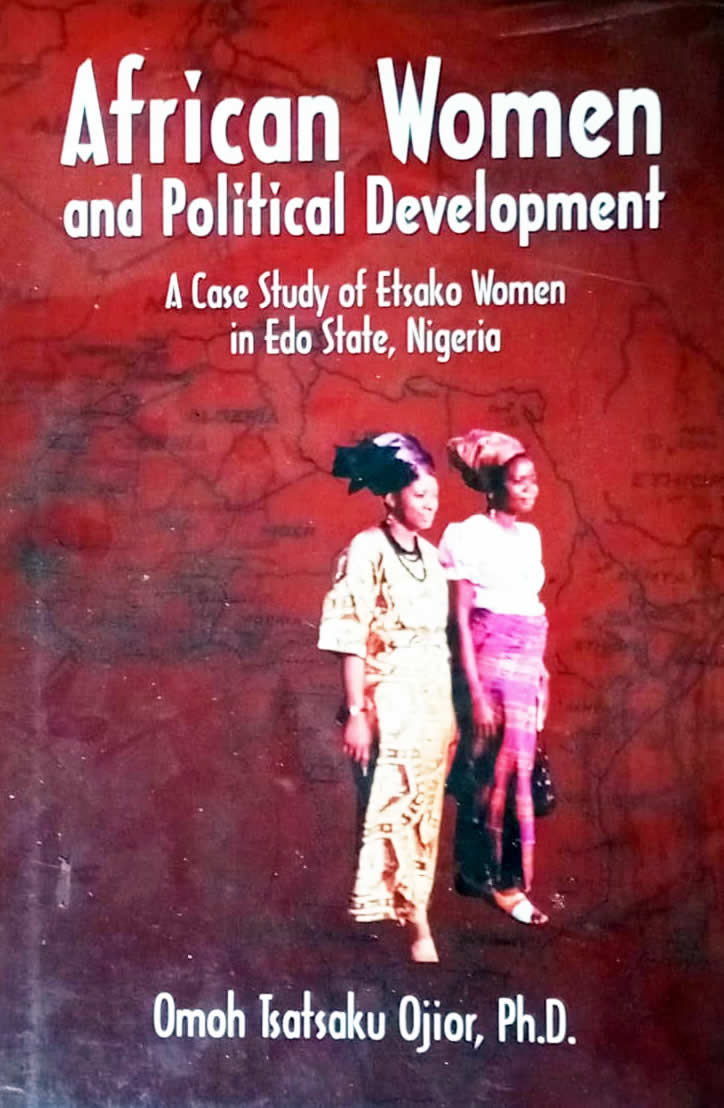
What if I told you that the hallowed halls of political science—those ivory towers of reason and rigor—are, in fact, a boys’ club masquerading as a meritocracy? What if the discipline we’ve been taught to revere as the ultimate arbiter of power, governance, and justice is, at its core, a system designed by men, for men, and about men? The numbers don’t lie. The syllabi don’t either. And yet, we still pretend this imbalance is an accident of history rather than a deliberate architecture of exclusion.
The Canon That Wasn’t Built for Her
Political science, as it stands, is a tapestry woven with the threads of male-dominated thought. From Machiavelli’s ruthless pragmatism to Hobbes’ Leviathan, the foundational texts are not just male-authored—they are *male-centric*. They frame power as a zero-sum game where dominance is the default, where leadership is synonymous with aggression, and where the feminine is either absent or reduced to a footnote. Even when women appear in these narratives, they do so as exceptions to the rule, as anomalies in a system that was never designed to accommodate them.
Consider the way political theory treats the “state of nature.” Hobbes’ brutish, solitary, poor, nasty, brutish, and short existence is a world without women—because, of course, women were never part of the equation. Rousseau’s noble savage? Also devoid of female agency. These aren’t just oversights; they’re erasures. They reinforce the idea that politics is a masculine domain, where women are either passive spectators or disruptive forces disrupting the natural order.

The Data Doesn’t Care About Your Feelings
If the canon is a boys’ club, the data is its membership roster. Study after study reveals the glaring disparities in political science academia. Women make up less than a third of tenured faculty in top political science departments. Their research is cited less frequently. Their voices are drowned out in conference panels, where men still dominate the podium. And when women do publish groundbreaking work, it’s often dismissed as “niche” or “too emotional”—a classic tactic to delegitimize perspectives that challenge the status quo.
But here’s the kicker: the data also shows that when women *are* included in political research, the findings change. Studies on gender and conflict reveal that societies with higher female political representation experience less violence. Research on economic policy demonstrates that female legislators prioritize healthcare, education, and social welfare in ways their male counterparts often overlook. The system isn’t just unfair—it’s *inefficient*. It’s like building a skyscraper and forgetting to include the stairs.
The Classroom: Where the Illusion of Inclusion Fails
Walk into any introductory political science course, and you’ll likely see a syllabus that nods to “diversity” with a single token reading by a woman or a scholar of color. It’s the academic equivalent of sprinkling parsley on a dish to make it look gourmet. The rest of the material? Still a parade of dead white men, their ideas presented as universal truths while the contributions of women are treated as footnotes in the grand narrative.
And let’s talk about the classroom dynamics. How many times have you seen a female student’s idea dismissed in a seminar, only for a male peer to repeat it minutes later and receive praise? How often do women in political science programs face the unspoken expectation to “prove themselves” in ways their male counterparts never have to? The classroom isn’t just a place of learning—it’s a microcosm of the power structures that govern the discipline itself.

The Challenge: What If We Burned It All Down?
So here’s a provocative question: What if we dismantled political science as we know it? Not to replace it with some utopian alternative, but to force a reckoning with its inherent biases. What if we demanded that the canon be rewritten—not with a few “inclusive” additions, but with a fundamental rethinking of what counts as political knowledge? What if we treated the absence of women not as an oversight, but as a deliberate erasure?
This isn’t about tokenism. It’s about recognizing that the discipline’s obsession with “objectivity” has been, in reality, a smokescreen for male subjectivity. It’s about acknowledging that the way we study power has been shaped by those who benefit from its current distribution. And it’s about asking: If political science is supposed to be the science of power, why has it been so blind to the power dynamics that shape its own foundations?
The Way Forward: Or, How to Stop Worrying and Learn to Love the Disruption
None of this is to say that political science is irredeemable. Far from it. But its redemption requires more than just adding a few women to the syllabus or slapping a “gender studies” label on a course. It requires a seismic shift in how we define the discipline itself. It means centering the voices and experiences that have been systematically excluded. It means asking uncomfortable questions about whose knowledge counts—and why.
It also means confronting the backlash. Because let’s be clear: the moment you challenge the status quo, you invite resistance. The claim that “we’re just studying the canon” is a shield against accountability. The insistence that “politics is neutral” is a way to avoid grappling with the fact that neutrality has never been neutral—it’s been complicit.
So what’s the solution? It’s not enough to call for more representation. We need to demand that the discipline itself be reimagined. That means funding research on women’s political participation. That means elevating scholars from the Global South, where women have long been leaders despite the absence of formal political power. That means teaching political theory not as a series of abstract ideas, but as a living, breathing conversation that includes all voices.
And perhaps most importantly, it means recognizing that the “political science gap” isn’t just a problem for women to solve. It’s a problem for the discipline itself—a gaping hole in its credibility, a stain on its claim to objectivity. Close the gap, or admit that political science was never meant to be for everyone.








Leave a Comment