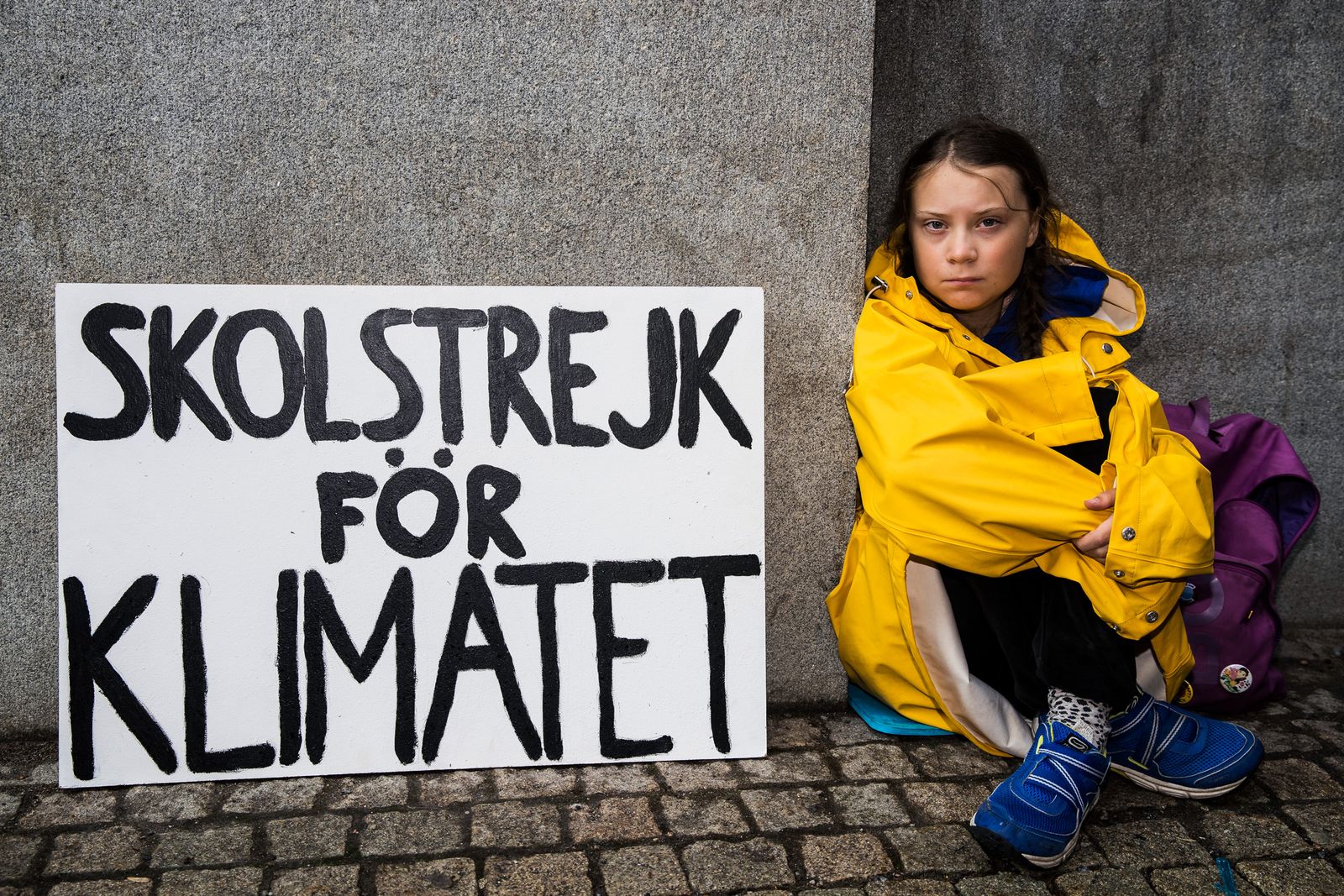
What if I told you that the most seismic shift in climate activism wasn’t sparked by a seasoned politician or a corporate lobbyist, but by a 15-year-old girl with a hand-painted sign and a stubborn refusal to accept the status quo? Greta Thunberg didn’t just ignite a movement—she exposed the rot at the heart of environmentalism: its stubborn refusal to acknowledge that climate justice and gender justice are two sides of the same suffocating coin. The irony? The very institutions that claim to champion sustainability have long treated women’s voices as an afterthought, as if the future of the planet could be negotiated without half the world’s population at the table. But what happens when the girl who started it all takes notice of the women who’ve been fighting this battle long before she was born?
The Invisible Architects of Climate Resistance
Picture this: a global stage dominated by men in suits, debating carbon emissions with the gravitas of chess grandmasters, while women—particularly women of color, Indigenous women, and those from the Global South—have been the unsung architects of climate resistance for decades. They are the farmers in Kenya who’ve watched droughts wither their crops into brittle husks, the activists in the Amazon who’ve risked their lives to protect the lungs of the Earth, the mothers in Flint who’ve fought for clean water while the world looked away. These women haven’t just survived the climate crisis; they’ve been its first responders, its strategists, its martyrs. And yet, their names are rarely whispered in the same breath as Greta’s.
Why? Because the climate movement, like so many others, has been hijacked by a narrative that privileges youth over experience, urgency over intersectionality, and spectacle over substance. Greta’s rise to fame was meteoric, her speeches viral, her defiance magnetic. But her power lies not in her novelty—it lies in the fact that she dared to amplify the voices that had been silenced for too long. The real question isn’t whether Greta took notice of these women; it’s whether the movement she inspired will finally stop treating them as footnotes in its own story.
The Feminist Climate Paradox: Progress at a Snail’s Pace
Here’s the uncomfortable truth: the climate movement has made strides in acknowledging gender, but it’s done so with the enthusiasm of a sleepwalker. Reports, policies, and pledges now sprinkle the word “gender” like confetti at a corporate retreat, yet the reality on the ground remains stubbornly unchanged. Women, who bear the brunt of climate disasters—disproportionately displaced, impoverished, and violated in their aftermath—are still fighting for a seat at the table they helped build. The paradox? The more the movement talks about gender, the less it seems to do about it.
Consider the language: “gender mainstreaming,” “women’s empowerment,” “inclusive decision-making.” These phrases have become the climate movement’s equivalent of virtue-signaling—uttered with solemnity but rarely backed by tangible action. Where are the quotas for women in climate negotiations? Where are the funds earmarked for grassroots feminist organizations? Where is the outrage when Indigenous women land defenders are assassinated for protecting their territories? The movement’s feminist awakening feels less like a revolution and more like a polite nod to an inconvenient truth.
What If Greta’s Movement Had Been Feminist From the Start?
Imagine, for a moment, a climate movement that didn’t just tolerate feminism but was built on its principles from day one. A movement where care work—the unpaid labor of women and girls who stitch together communities in the face of disaster—was recognized as the backbone of resilience. A movement where the voices of those most affected by climate change weren’t just invited to speak but were given the power to lead. A movement where solidarity wasn’t performative but transformative.
This isn’t a utopian fantasy. It’s a blueprint that already exists in the work of women like Hindou Oumarou Ibrahim, who has spent decades advocating for Indigenous knowledge in climate solutions, or Winona LaDuke, who has fought to protect Indigenous lands from fossil fuel extraction. These women aren’t waiting for Greta to notice them—they’re waiting for the movement to catch up to their vision. The challenge isn’t whether Greta will take notice; it’s whether the movement she inspired will stop treating feminism as an add-on and start treating it as the foundation.
The Backlash: When Feminism Becomes a Threat
Of course, no revolution comes without resistance. The moment feminism becomes more than a buzzword, the backlash is swift and brutal. Women who dare to demand more than performative allyship are labeled “divisive,” “unrealistic,” or worse—“too emotional.” Climate activists who center gender justice are accused of diluting the “real” issue, as if the oppression of half the world’s population is a distraction from the melting of the ice caps. The irony? The same people who decry “identity politics” are often the first to dismiss the lived experiences of those who’ve spent their lives fighting for survival.
This backlash isn’t just ideological; it’s structural. The institutions that control climate funding, research, and policy are still overwhelmingly male, still overwhelmingly white, still overwhelmingly resistant to change. They’d rather co-opt feminist language than cede power. They’d rather host a panel on “women in climate” than actually listen to what women have to say. The real test of Greta’s movement—and all climate movements—won’t be how loudly they proclaim their feminist credentials, but how they respond when feminism becomes inconvenient.
A Call to Arms: What Comes Next?
So where do we go from here? The answer isn’t to pit Greta against the women who’ve been fighting this battle for generations. It’s to recognize that their struggles are not separate but intertwined. The climate crisis isn’t just about rising temperatures; it’s about rising inequality, rising patriarchy, rising colonialism. And the solutions won’t come from boardrooms or UN summits alone—they’ll come from the streets, the farms, the forests, the homes where women have been holding the world together for centuries.
Greta’s movement didn’t just change the conversation about climate change; it exposed the gaps in the conversation itself. The next step isn’t to fill those gaps with more words or more reports or more empty promises. It’s to dismantle the structures that created them. It’s to ask: Who gets to speak? Who gets to lead? Who gets to decide what justice looks like? And most importantly—who gets left behind?
The climate movement has a feminist awakening ahead of it. The question is whether it will be a fleeting moment of self-congratulation or the beginning of a real transformation. The women who’ve been fighting this battle long before Greta was born are watching. And they’re not waiting for permission to lead.








Leave a Comment