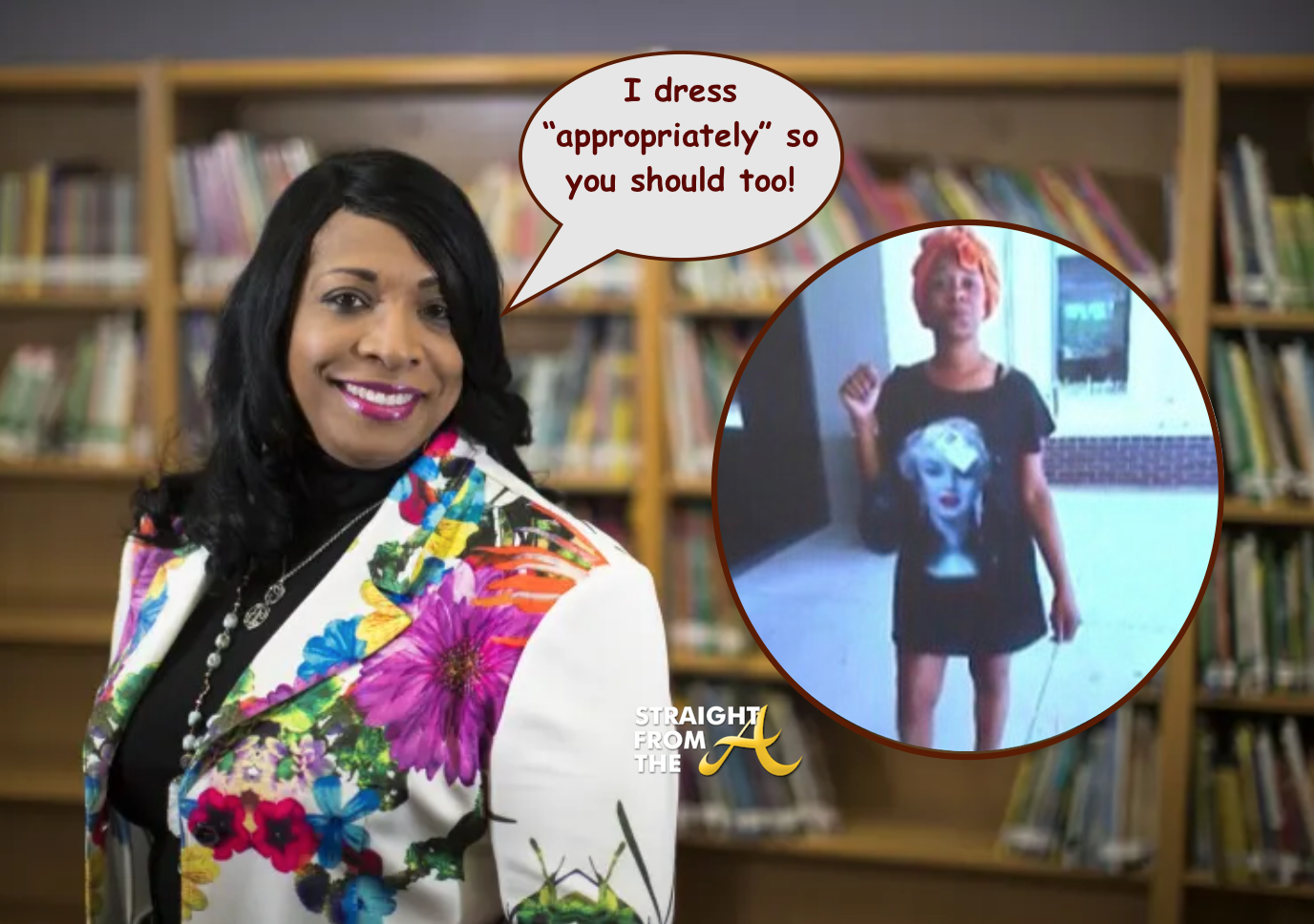
In the hallowed corridors of academia, where the hum of fluorescent lights often drowns out the whispers of rebellion, a quiet revolution unfolded one ordinary morning. A new principal strode into the building, her heels clicking against the linoleum like a metronome counting down to systemic change. She didn’t come with a grand manifesto or a PowerPoint presentation. She came with a single, unyielding conviction: the dress code was broken, and it was time to fix it.
The Dress Code as a Silent Oppressor
For decades, school dress codes have lurked in the shadows of educational institutions, masquerading as guardians of discipline while enforcing archaic standards of modesty and conformity. They target girls disproportionately, policing their bodies under the guise of “professionalism” or “distraction prevention.” A girl’s shoulders, her hemline, the length of her skirt—these become battlegrounds where authority asserts its dominance over autonomy. The message is clear: young women’s bodies are public property, subject to scrutiny and correction, while their male counterparts roam free in baggy jeans and hoodies, their attire never scrutinized with the same fervor.
The irony is suffocating. Dress codes, in their rigid enforcement, reveal a deeper truth: they are not about education. They are about control. They are about teaching girls that their bodies are inherently disruptive, that their presence must be managed to avoid the “distraction” of male desire. This is not discipline. This is subjugation dressed in bureaucratic language.
The First Day: A Statement in Stilettos
She arrived on that first day not in a prim blazer or a stiff collared shirt, but in a tailored dress that graced her knees with effortless elegance. No blazer. No cardigan draped over her shoulders like a shroud of conformity. Just a woman unapologetically occupying space, her presence a silent rebuke to the dress code’s hypocrisy. The staff stared. The students whispered. And in that moment, the principal didn’t need to say a word. Her attire was a manifesto.
She didn’t issue a memo or call a meeting. She didn’t need to. The power of her example spoke volumes. By simply existing in her own skin—unencumbered by the arbitrary rules that had shackled generations of women before her—she exposed the dress code for what it was: a relic of a system that polices women’s bodies while pretending to uphold “standards.”
The Unspoken Rules of Institutional Control
Dress codes are not neutral. They are the visible tip of an iceberg of institutional control, where the policing of appearance serves as a proxy for the policing of behavior. A girl in a short skirt is not just breaking a rule; she is challenging the very notion that her body is subject to external judgment. The dress code becomes a tool to enforce compliance, to teach young women that their worth is tied to their adherence to arbitrary norms rather than their intellect, their creativity, or their ambition.
But compliance is a cage. And cages, no matter how gilded, are still cages. The principal’s defiance was not just about clothing. It was about dismantling the illusion that women must shrink themselves to be taken seriously. It was about rejecting the idea that a woman’s body is a problem to be solved rather than a presence to be respected.

The Ripple Effect: When One Woman Leads
Her defiance was contagious. Teachers began to question the dress code’s fairness. Students started pushing back against its most draconian measures. The principal didn’t just change a policy; she shifted a culture. And in doing so, she revealed the fragility of systems built on control. Dress codes, like all oppressive structures, rely on compliance to maintain their power. Once that compliance wavers, the entire edifice begins to crumble.
But the resistance was not without its detractors. Critics clamored that she was undermining discipline, that she was setting a dangerous precedent. They missed the point entirely. Discipline is not about control. It is about mutual respect. It is about creating an environment where students feel seen, not scrutinized. Where teachers are empowered to teach, not police. Where the focus is on learning, not on whether a girl’s skirt is “too short.”
The Deeper Fascination: Why Dress Codes Hold Our Attention
There is a peculiar fascination with dress codes, one that transcends their mundane appearance. They are a microcosm of larger societal struggles—over autonomy, over gender, over the right to exist unapologetically in one’s own body. Dress codes force us to confront uncomfortable truths: that authority often polices women more harshly than men, that “professionalism” is a subjective standard wielded like a weapon, and that the bodies of young women are treated as public property.
This fascination is not just about clothing. It is about power. It is about who gets to decide what is acceptable, what is modest, what is “appropriate.” And it is about the quiet rebellions that challenge those decisions. The principal’s defiance was not just about a dress code. It was about reclaiming agency in a system designed to strip it away.
The Long Game: Beyond the Principal’s Office
Her actions were a spark, but the fire of change requires more than a single moment of defiance. It requires sustained effort, collective action, and an unwavering commitment to dismantling oppressive systems. Dress codes will not disappear overnight. But they can be challenged. They can be rewritten. They can be rendered obsolete by a generation of young women who refuse to be policed.
The principal’s legacy is not just in the policy she changed, but in the culture she began to shift. She showed that change is possible when one person refuses to accept the status quo. She showed that leadership is not about enforcing rules, but about questioning them. And she showed that sometimes, the most powerful statement is the one made without a single word.
The dress code is broken. And it is time to fix it—for good.











Leave a Comment