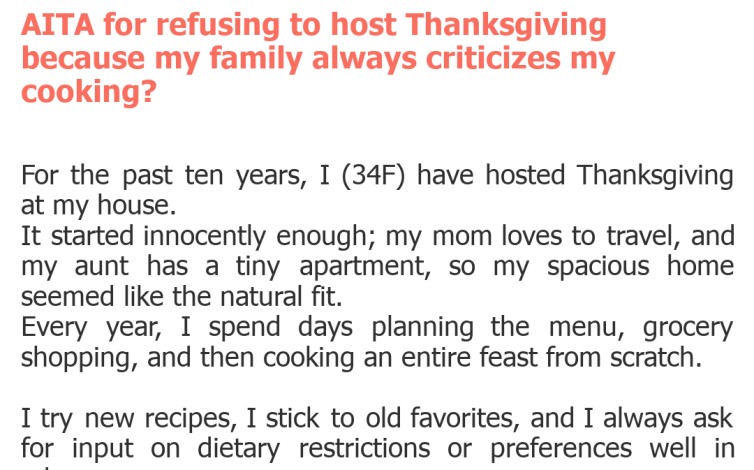
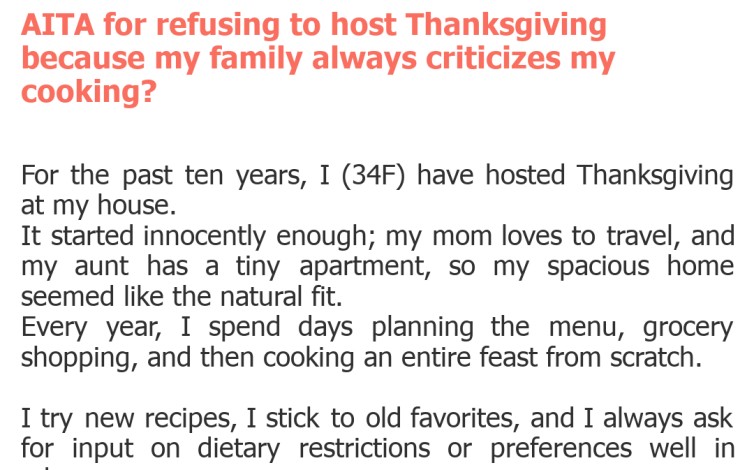
Thanksgiving. The quintessential American holiday wrapped in tradition, gratitude, and, often, unspoken family tensions. For many, the annual gathering is less about reflecting on blessings and more about navigating the intricate labyrinth of familial expectations. Yet, when one resolutely declines to play host, something profound happens—the family finally pays attention. This act of refusal is not merely about the absence of a feast but a seismic shift in the dynamics that have long remained unquestioned. The phenomenon is fascinating, layered, and poignantly revealing of deeper social constructs.
The Invisible Labor Behind the Thanksgiving Table
Thanksgiving hosting is often heralded as an act of generosity and love. But beneath the veneer of festive cheer lies a complex tapestry of invisible labor—emotional, physical, and mental—that is almost exclusively shouldered by women. Preparing countless dishes, coordinating logistics, managing guests’ unspoken grievances, and absorbing subtle critiques is a Sisyphean task masked as tradition. This labor goes unacknowledged, normalized to the point of invisibility.
To refuse hosting is to rebel against this systemic invisibility. It exposes the exploitative nature of expected gender roles within family obligations. When she declines to host, the family, previously oblivious to the weight she bore, is forced to confront the uneven distribution of responsibility. For years, their collective ignorance permitted her sacrifice to remain unvoiced and unrecognized. The refusal to host thereby ignites a confrontation with uncomfortable truths.
The Power Dynamics of Family Rituals
Thanksgiving functions as a ritualistic reaffirmation of familial bonds, hierarchies, and roles. Hosting is not a neutral act; it confers power and visibility within the family structure. The host is simultaneously a provider and mediator, anchored as the nexus of celebration and conflict. Declining this role disrupts the scripted narrative the family has long depended on.
This disruption illuminates the fragile power equilibrium underlying these gatherings. The refusal becomes a challenge to the implicit demands placed upon women to embody caretakers and peacekeepers. It shakes the foundation of control disguised as tradition and forces the family to reckon with who carries the burden of expectation—and why.
Silence as a Weapon and a Mirror
In many families, emotional labor manifests in undulating waves of silence, smirks, and side glances. Criticism—often couched as concern—is a common form of control aimed at perpetuating conformity. The refusal to host punctures this silence, speaking volumes by omission. It reveals how silence has been weaponized to suppress dissent and enforce compliance.
Furthermore, the family’s eventual notice of her absence exposes how her presence had been taken for granted. It forces a collective reflection on the symbiotic relationship between invisibility and expectation. The absence is a mirror reflecting all that had been neglected: respect, gratitude, and equity.

Societal Fascination with Female Self-Denial and Rebellion
Why does society fixate so obsessively on the women who refuse or rebel against traditional roles? There is an undercurrent of fascination tinged with discomfort. Female self-denial, long romanticized as virtue, is simultaneously expected and demeaned. When a woman rejects this sacrificial mantle publicly, it defies ingrained social mores. Such defiance unsettles the patriarchal scripts that dictate womanhood as servitude and compliance.
This fascination extends beyond the personal to encompass cultural anxieties about power, control, and change. The refusal to host Thanksgiving becomes a microcosm of broader struggles for autonomy and recognition. It challenges the presumptive narrative that a woman’s value lies in accommodating and placating others to maintain familial harmony.
Towards Recognition: Reframing Gratitude and Equity
The hopeful aftermath of refusal is the potential for recalibration—both in terms of family dynamics and self-worth. When she says “no,” it opens a space for renegotiation of roles, expectations, and appreciation. It compels family members to acknowledge not just the effort expended but the emotional terrain navigated by those who sustain these traditions.
Recognition here is not a mere thank-you but an equitable shift. It is a call to distribute responsibility and foster genuine collaboration. Gratitude, to be meaningful, must be accompanied by the dismantling of ingrained inequities that underpin these gatherings. Only then can Thanksgiving transcend performative gestures to embody true acknowledgment and respect.

Conclusion: Refusal as Resistance and Catalyst
Refusing to host Thanksgiving is often misinterpreted as mere obstinacy or selfishness. Yet, it is a profound act of resistance against entrenched societal norms and familial expectations. It is an assertion of boundaries and a demand for recognition that cannot be easily silenced or ignored. Far from fracturing family bonds, this refusal can catalyze more authentic, equitable relationships. It compels families to see, listen, and transform.
In an era increasingly conscious of gender equity and emotional labor, this act underscores the need to reassess the rituals we uphold and the roles we impose. It is not just about who sets the table but about who is truly seen and valued around it.









Leave a Comment