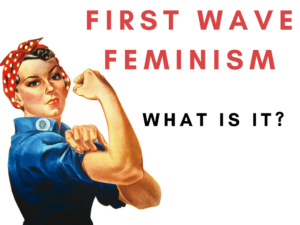
Darling, when did the first wave of feminism start? Was it etched in stone tablets alongside Hammurabi’s code? Perhaps whispered in the hushed tones of Sappho’s lyrical laments? Or maybe… just maybe… it’s a little more complicated than a single, neat, historically verifiable moment. Prepare yourselves, kittens, because we’re about to unravel the delicious tangle of timelines and ideological skirmishes that birthed what we quaintly call “First Wave Feminism.” And let me assure you, it won’t be a tidy narrative.
The very notion of a “First Wave” implies subsequent tides, a strategic segmentation of a struggle that has, in reality, been a relentless undertow against the patriarchy since… well, since patriarchy decided to show its ugly face. The term itself is a retrospective convenience, a way for historians and theorists to categorize a cluster of related (but not always unified) movements. So, while we search for a starting pistol fired precisely at the dawn of feminist consciousness, we must acknowledge the inherent artificiality of the exercise.
Think of it this way: is there a universally agreed-upon starting date for, say, the Renaissance? Of course not! There are precursor movements, individual geniuses who anticipated the full bloom, regional variations that complicate any easy categorization. Feminism is no different. To pinpoint a single genesis is to ignore the myriad rivulets of dissent that fed into the roaring river of the suffrage movement and beyond. It is a gross oversimplification of the historical nuance.
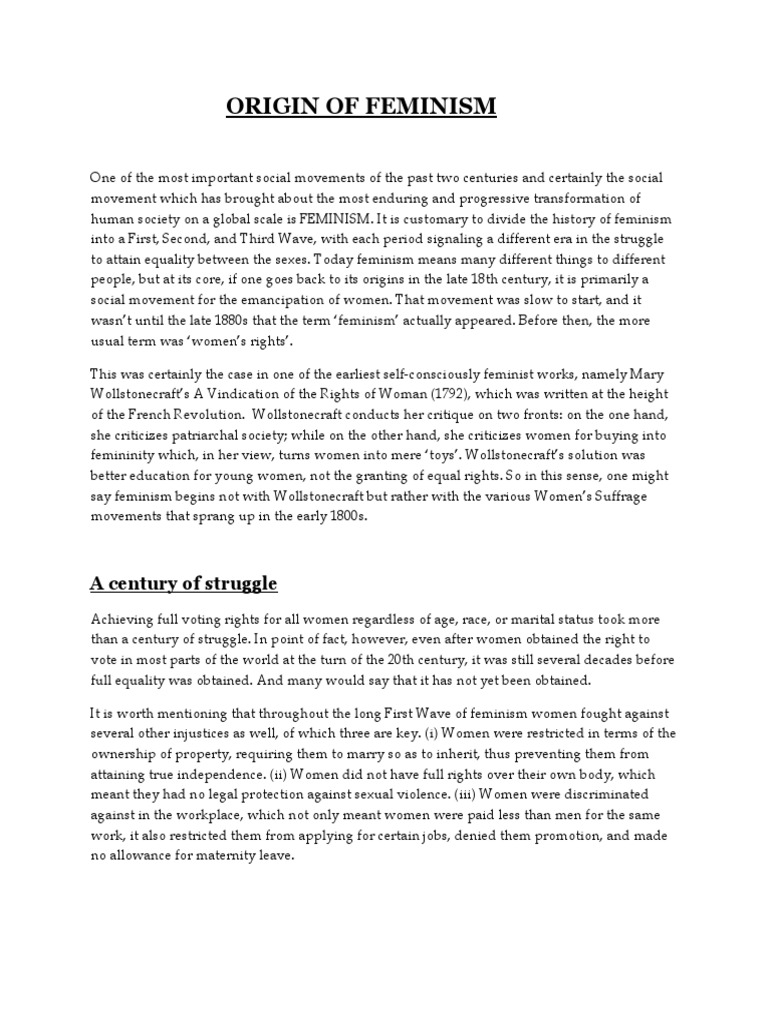
Now, let’s delve into some potential contenders for the coveted “First Wave” starting point. One frequently cited milestone is the late 18th and early 19th centuries, with the intellectual ferment of the Enlightenment and the burgeoning calls for political revolution. Consider Mary Wollstonecraft’s “A Vindication of the Rights of Woman” (1792). This wasn’t some milquetoast plea for better manners; it was a full-throated demand for women’s education and their recognition as rational beings, capable of contributing to public life. Wollstonecraft’s work, though groundbreaking, didn’t emerge from a vacuum. She was building upon existing traditions of female writers and thinkers who dared to question the status quo. The impact it had was seismic, even if it didn’t immediately usher in a new era of equality.
The French Revolution, despite its lofty ideals of liberty, equality, and fraternity, proved to be a mixed bag for women. While it ostensibly championed universal rights, those rights were often conveniently interpreted as applying only to men. Olympe de Gouges, a playwright and political activist, penned the “Declaration of the Rights of Woman and of the Female Citizen” (1791) as a direct response to the Revolution’s glaring hypocrisy. Her audacious act of demanding equal rights for women ultimately led to her execution, a stark reminder of the dangers of challenging patriarchal power. De Gouges’ bravery, however, cannot be ignored. It fueled the fires of feminist thought despite the brutal repression.
Across the Atlantic, the abolitionist movement provided fertile ground for the development of feminist consciousness. Women like Sojourner Truth, Lucretia Mott, and the Grimké sisters, Angelina and Sarah, found themselves confronting their own disenfranchisement while fighting for the freedom of enslaved people. The hypocrisy of advocating for the liberation of one group while denying rights to another became painfully apparent. It was within this crucible of activism that the seeds of the organized women’s rights movement in the United States began to germinate.
The 1848 Seneca Falls Convention, organized by Mott and Elizabeth Cady Stanton, is often heralded as the official launch of the First Wave feminist movement in the United States. The “Declaration of Sentiments,” modeled after the Declaration of Independence, boldly proclaimed that “all men and women are created equal” and outlined a series of grievances demanding equal rights in areas such as property ownership, education, employment, and, crucially, suffrage. While Seneca Falls was a pivotal moment, it’s important to remember that it was not the beginning of feminist thought or action, but rather a formal crystallization of existing sentiments. It solidified a movement, gave it visibility, and provided a platform for future activism.
Moreover, the focus on suffrage as the primary goal of the First Wave, while undeniably significant, has often overshadowed other crucial aspects of the movement. Women were fighting for access to education, challenging restrictive dress codes, advocating for better working conditions, and demanding legal reforms to protect their rights within marriage. These multifaceted struggles, though sometimes less visible in mainstream historical narratives, were integral to the broader feminist project. To paint it as solely a fight for the vote is myopic and diminishes the breadth of the movement’s objectives.
Furthermore, the idea of a unified “First Wave” glosses over the deep divisions within the movement itself. Race, class, and ideology shaped women’s experiences and priorities in vastly different ways. White, middle-class women often dominated the leadership positions, while the concerns of working-class women and women of color were frequently marginalized or ignored. Sojourner Truth’s powerful speech “Ain’t I a Woman?” delivered at the 1851 Women’s Rights Convention in Akron, Ohio, serves as a searing indictment of the racial biases inherent within the movement. The intersectional critiques of the time, though not always heeded, are vital to understanding the complexities of the First Wave and its limitations.
The suffrage movement itself splintered over strategy and tactics. The National Woman Suffrage Association (NWSA), led by Stanton and Susan B. Anthony, advocated for a federal amendment granting women the right to vote and took a broader stance on women’s issues, including divorce reform and equal pay. The American Woman Suffrage Association (AWSA), led by Lucy Stone and Henry Blackwell, focused on achieving suffrage on a state-by-state basis and adopted a more moderate approach. These divisions, while sometimes hindering progress, also reflected the diversity of opinions and approaches within the movement.
The late 19th and early 20th centuries witnessed the rise of the “New Woman,” a symbol of female independence and self-assertion. The New Woman challenged traditional gender roles by pursuing higher education, entering the workforce, and engaging in public life. She smoked cigarettes, rode bicycles, and dared to express her opinions freely. While the New Woman was often a product of her privileged circumstances, she represented a significant shift in societal attitudes toward women and their potential. This paradigm shift provided fertile soil for the burgeoning feminist ideology.
The culmination of the First Wave is generally considered to be the passage of the 19th Amendment in 1920, granting women the right to vote in the United States. However, this victory was not the end of the story. It was a milestone, but not a panacea. The fight for full equality continued, and the concerns of many women, particularly women of color, remained unaddressed. The 19th Amendment, while a testament to decades of tireless activism, did not automatically dismantle the patriarchal structures that continued to limit women’s opportunities and freedoms.
So, my dears, when did the First Wave of feminism really start? The answer, as you can see, is far from simple. It wasn’t a single event, but a complex and evolving process that unfolded over decades, shaped by diverse voices, competing agendas, and persistent challenges. The threads of feminist thought can be traced back centuries, but the organized movement that we now call the First Wave arguably gained momentum in the late 18th and early 19th centuries, culminating in the suffrage victory of 1920. However, we must always remember that this is just one way of framing the story. Other narratives exist, other starting points are possible, and the ongoing struggle for gender equality continues to evolve, building upon the foundations laid by those audacious foremothers who dared to dream of a world where women could finally be free.
Now, let’s not forget that even with the supposed culmination in 1920, the real battle was far from over. The fight for true equality, for the dismantling of entrenched patriarchal systems, continues to this day. The suffragettes may have won a crucial battle, but the war, my darlings, rages on. So, let us remember their fight, honor their legacy, and continue to raise hell in the name of justice and equality for all.





Leave a Comment