What if the very institutions tasked with saving lives in a crisis were the ones who needed saving first? What if the heroes weren’t the ones in uniform, but the ones who had spent years quietly stitching together networks of care where none existed? This is the story of how one woman turned the chaos of disaster into a feminist manifesto—and how the federal government came knocking at her door.
The Spark in the Storm: How a Feminist Network Was Born
It began with a single text message during a hurricane warning. Not an alert from the National Weather Service, but a frantic ping from a neighbor in a low-income housing complex. The elevators were out. The power was flickering. And the local shelter? Already at capacity. This was the moment that crystallized the problem: disaster relief wasn’t failing people—it was ignoring them. The systems in place were designed for the mythical “average citizen,” a genderless, classless, able-bodied ideal that bore no resemblance to reality.
She had spent years studying feminist urbanism, the idea that cities—and by extension, disaster response—were built for men who commuted to offices, not women who balanced caregiving, jobs, and survival. When the storm hit, she activated a network she’d spent a decade cultivating: a web of local organizers, undocumented workers, queer youth, and retired nurses. They didn’t wait for FEMA. They moved in the gaps. They brought supplies to apartment buildings FEMA’s maps had labeled “uninhabited.” They translated evacuation orders into Spanish, Arabic, and ASL. They remembered the names of the elderly woman who refused to leave her third-floor walk-up without her oxygen tank.
 The irony? This network wasn’t just effective—it was joyful. Disaster relief, as she practiced it, wasn’t a grim march of bureaucracy. It was a dance of mutual aid, where every hand that passed a meal or a flashlight was also holding space for grief, rage, and dark humor. The women at the center of this work weren’t just first responders. They were architects of a new social contract, one written in the margins of FEMA’s paperwork.
The Government Came Knocking: Why FEMA Needed a Feminist
It took three disasters and a viral tweet for the federal government to take notice. The tweet read: “FEMA’s disaster relief hotline is down. Call [her number] instead.” Within 48 hours, her phone was ringing off the hook—not just from survivors, but from exhausted FEMA contractors who admitted, sotto voce, that their systems were drowning in paperwork while people starved. The agency had spent billions on logistics, but nothing on the human infrastructure that kept communities alive.
What followed was a surreal courtship. FEMA officials, used to PowerPoint presentations and congressional hearings, found themselves in a room with women who spoke in metaphors about “care webs” and “trauma-informed logistics.” They were asked to explain why their model worked: because it assumed people were already experts in their own survival. Because it centered the most vulnerable, not the most visible. Because it treated disaster not as an exception, but as a continuation of systemic oppression.
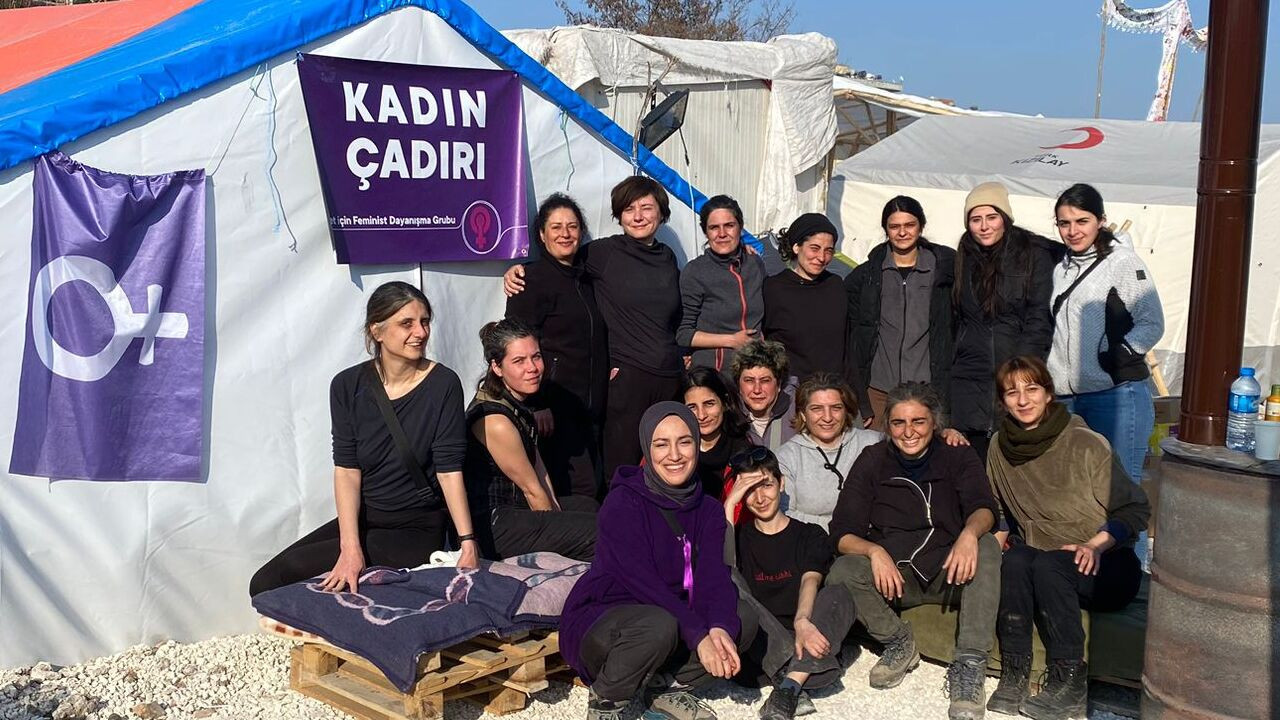 The challenge was immediate: How do you scale a feminist network without diluting its radical roots? FEMA wanted metrics. They wanted efficiency reports. They wanted to know how many people had been “served.” But her network resisted quantification. How do you measure the value of a grandmother who convinced a traumatized teenager not to jump off a bridge? How do you tally the hours spent holding space for a grieving mother who lost her child in the flood?
The Paradox of Institutionalizing Care
This is where the playful question becomes a thorny dilemma: Can a feminist disaster relief network survive being absorbed by the very systems it was designed to critique? The answer isn’t a simple yes or no. It’s a negotiation. FEMA agreed to fund her model—but only if she agreed to train their staff. The catch? She insisted the training include role-playing exercises where FEMA employees had to navigate the world as a disabled woman, a single mother, or a non-English speaker. The room fell silent when one participant, a 20-year veteran, broke down crying after realizing how many barriers she’d never noticed.
But the real test came when a new disaster struck. This time, FEMA was ready—or so they thought. They had her playbook. They had her contacts. They even had her language. And yet, when the levee broke, the first calls weren’t to FEMA. They were to the women in her network, who had already set up a pop-up clinic in a church basement, who had pre-positioned supplies in the homes of the most vulnerable, who had spent months building trust where FEMA had only ever built forms.
The lesson? Feminist disaster relief isn’t a service you can outsource. It’s a relationship. It’s the difference between a FEMA trailer park and a community garden where survivors grow food together. It’s the difference between a hotline that routes calls to an overworked call center and a network where every voice is heard, every story is honored, and no one is left behind.
The Future: A Disaster Without Heroes
What would it look like if disaster relief wasn’t a spectacle of heroes and victims, but a collective act of care? If the first responders weren’t the ones in uniforms, but the ones who had spent years stitching together the fabric of their communities? This is the world she’s fighting for—not a world where FEMA calls for help, but a world where no one needs to call for help at all.
The challenge now is to make this model obsolete. To build a society where disaster isn’t a crisis, but a moment of reckoning—a chance to finally recognize that the people who hold communities together are the ones who deserve the resources, the respect, and the power to shape their own survival.
So here’s the question we must all answer: Are we building a world that can weather the storm—or are we finally learning to dance in the rain?




Leave a Comment