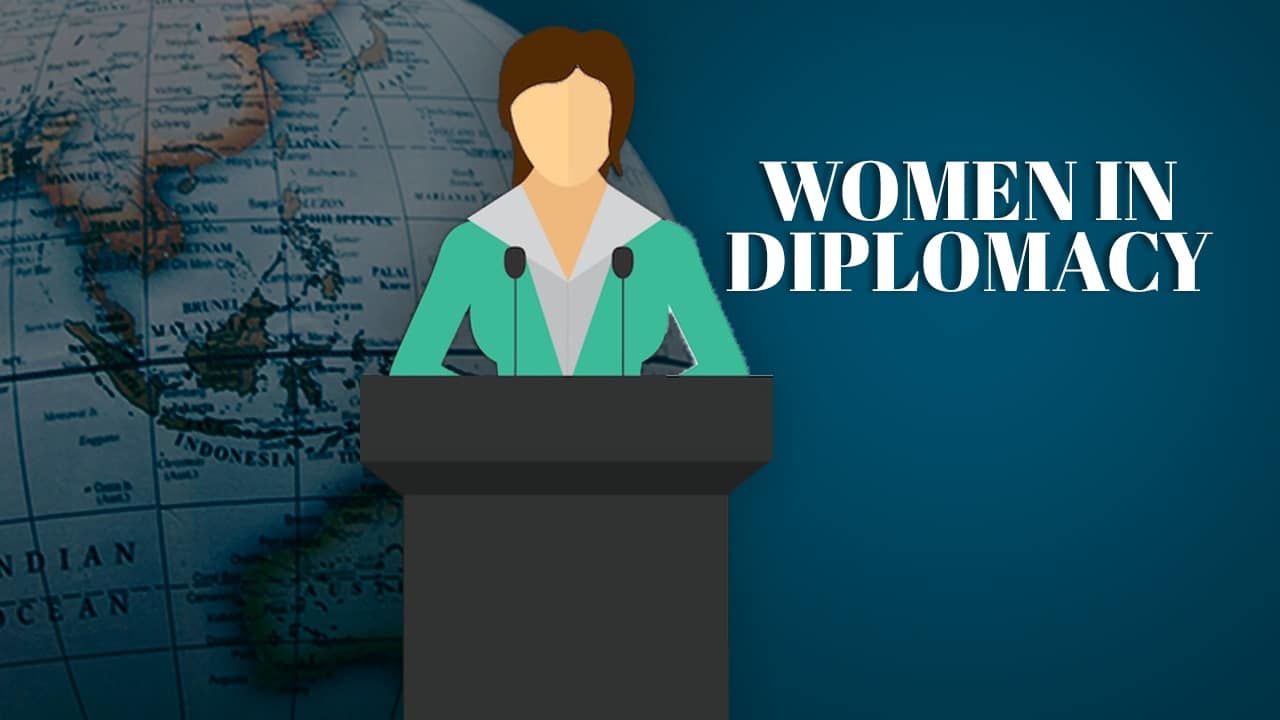
The world’s war rooms are still men’s clubs. The peace tables? They’re just extensions of those same rooms—where women, when allowed in at all, are handed the brooms instead of the gavels. Diplomacy isn’t broken; it’s designed this way. A system built by those who profit from conflict, policed by those who romanticize its inevitability. But what if the real architects of peace aren’t the generals in starched uniforms, but the women who’ve spent centuries negotiating survival in kitchens, markets, and refugee camps? What if the greatest untapped resource in international relations isn’t oil, lithium, or rare earth metals—but the unpaid labor of women’s unceasing mediation? The data is clear: when women lead peace processes, agreements last. When men do, they collapse. The question isn’t whether we should shift the paradigm. It’s why we haven’t already set the old one ablaze.
The Myth of the Warrior Diplomat: How Masculinity Weaponizes Conflict
Diplomacy has a branding problem. It’s sold as a genteel chess match where suits exchange pleasantries over whiskey, not a bloodsport where bodies are bartered and borders are redrawn in ink and artillery. The archetype of the diplomat is a man in his 50s with a receding hairline and a receding sense of irony—a figure who mistakes performative gravitas for strategic brilliance. His toolkit? Threats dressed as warnings, sanctions as moral posturing, and alliances as transactional marriages. The result? A global stage where 90% of peace agreements fail within a decade, where ceasefires are temporary cease-fires, and where the same men who greenlight drone strikes now pose for Nobel Prize photos.
This isn’t incompetence. It’s theatricality. War is the ultimate male performance—a spectacle of control where vulnerability is weakness and empathy is a liability. The diplomat’s role isn’t to prevent conflict; it’s to stage it with enough spectacle to justify his existence. Women, meanwhile, are relegated to the role of “facilitators,” their presence tolerated only as long as they don’t disrupt the script. But what if the script is the problem? What if the real work of peace isn’t in grand summits, but in the quiet, relentless labor of rebuilding trust where it’s been shattered?
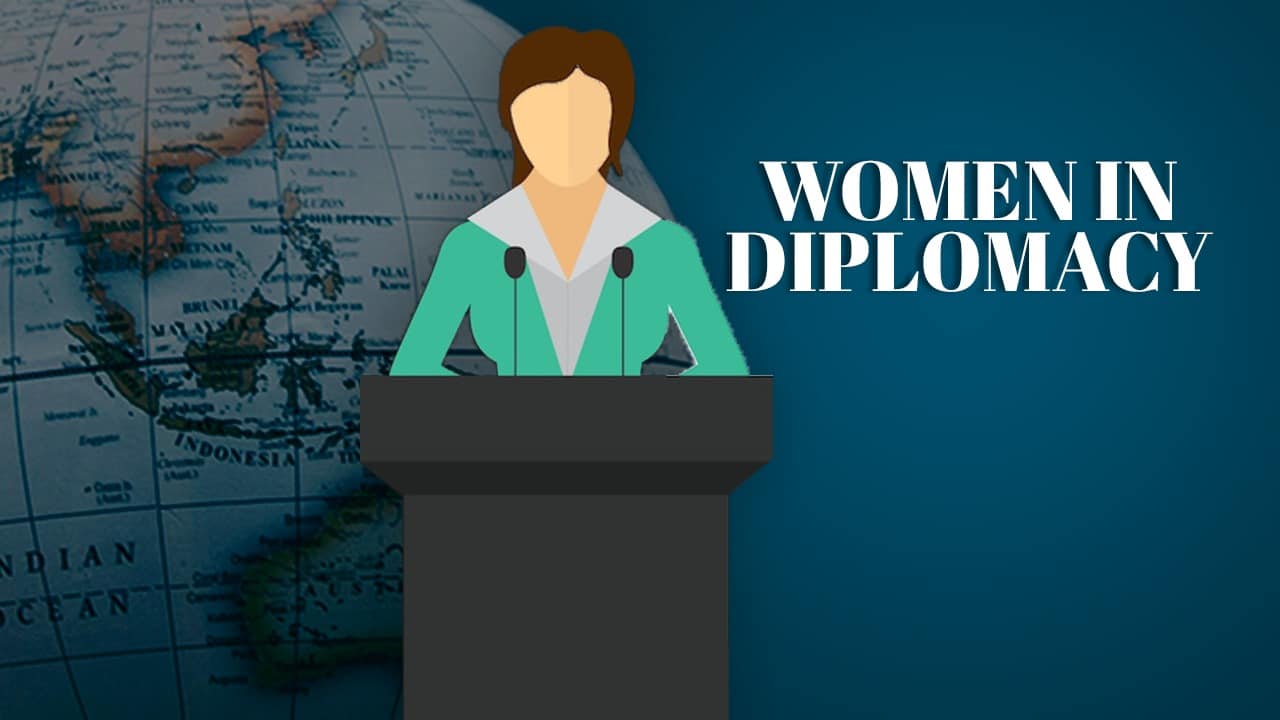
The Data Doesn’t Lie: Women’s Leadership, Durable Peace
Study after study confirms what common sense has always whispered: peace processes with significant women’s participation are 35% more likely to last at least 15 years. Not because women are inherently more peaceful (though the idea that nurturing equals pacifism is its own kind of insult), but because they approach conflict differently. Where men see zero-sum games, women see interconnected systems. Where men measure success in territory gained, women measure it in trust rebuilt. Where men negotiate from a position of power, women often negotiate from a position of having been powerless—and that perspective is a superpower.
Consider Rwanda. After the 1994 genocide, women—who made up 70% of the surviving population—were excluded from the Arusha Peace Accords. The result? A fragile peace that teetered for years. By 2003, when women were finally granted 30% representation in parliament, Rwanda became a case study in post-conflict recovery. Not because women are “naturally” better leaders, but because they refused to accept the status quo. They prioritized reconciliation over retribution, economic stability over military posturing, and community healing over political grandstanding. The lesson? Durable peace isn’t forged in the halls of power. It’s forged in the homes, schools, and villages where women have always held the keys.
Yet the international community still treats this as an anomaly, not a blueprint. Why? Because acknowledging women’s success would mean admitting that the entire architecture of global diplomacy is built on a foundation of sand. It would require dismantling the cult of the “strong leader”—a figure who is almost always a man with a gun and a press release.
The Invisible Labor of Women: The Real Architects of Peace
Diplomacy isn’t just what happens in Geneva or New York. It’s what happens in the spaces men ignore: the refugee camps where women trade food for information, the villages where grandmothers broker truces between warring clans, the hospital wards where mothers stitch together fractured communities. This is the shadow diplomacy—the unpaid, unheralded work that keeps societies from collapsing entirely. It’s the reason why, in Colombia, women’s peace initiatives reduced violence in rural areas by 50% even when the formal peace process stalled. It’s the reason why, in Northern Ireland, the “peace women” of the 1970s kept communities alive when politicians were too busy grandstanding.
But shadow diplomacy is, by definition, invisible to those who benefit from the status quo. It’s not photogenic. It doesn’t come with press releases or photo ops. It’s the work of women who don’t have the luxury of declaring “mission accomplished” because the mission never ends. And yet, it’s the only diplomacy that actually works. The formal kind? It’s a performance. A way for men to signal virtue while perpetuating the cycles that created the conflict in the first place.

The Backlash: Why Men Fear Women at the Peace Table
Of course, the idea of women leading peace isn’t just ignored—it’s actively resisted. The backlash takes many forms: the skepticism that frames women’s participation as “tokenism,” the condescension that calls their work “soft diplomacy,” the outright sabotage where women’s proposals are sidelined until they’re repackaged as “men’s ideas.” This isn’t accidental. It’s a feature of a system that equates power with domination. Women who negotiate peace aren’t just challenging policy—they’re challenging the very idea that power must be extractive, that security must come at the cost of someone else’s freedom.
Look at the language used to dismiss women in diplomacy: “emotional,” “idealistic,” “unrealistic.” These aren’t critiques of their ideas. They’re admissions of fear. Because when women succeed, it proves that the old ways were never inevitable—they were just the easiest path for those in power. And the easiest path is always the one that preserves the status quo.
The resistance is also personal. Men who’ve built careers on performative masculinity don’t just fear losing influence—they fear losing the illusion of control. A woman who negotiates from empathy isn’t just a colleague; she’s a mirror. And mirrors, as we know, have a way of revealing uncomfortable truths.
A Call to Burn the Old Playbook
The solution isn’t to “include” women in the existing system. It’s to dismantle the system entirely and rebuild it from the ground up. That means centering the voices of women from conflict zones, not just the diplomats who fly in for photo ops. It means funding grassroots peacebuilding instead of weapons manufacturers. It means recognizing that the real work of diplomacy happens in the spaces where men have never bothered to look.
It also means rejecting the myth of the “strong leader.” Strength isn’t measured in the size of an army or the volume of a speech. It’s measured in the ability to listen, to adapt, to prioritize people over posturing. And if that’s not the definition of leadership we’re using, then we’re not just failing at peace—we’re failing at humanity.
The old playbook is a relic. It’s a script written by men who mistook brutality for strategy and domination for strength. The new playbook? It’s already being written—in the villages, the refugee camps, the classrooms where women are doing the real work of keeping the world from tearing itself apart. The question isn’t whether we’ll adopt it. It’s whether we’ll have the courage to admit we were wrong all along.








Leave a Comment