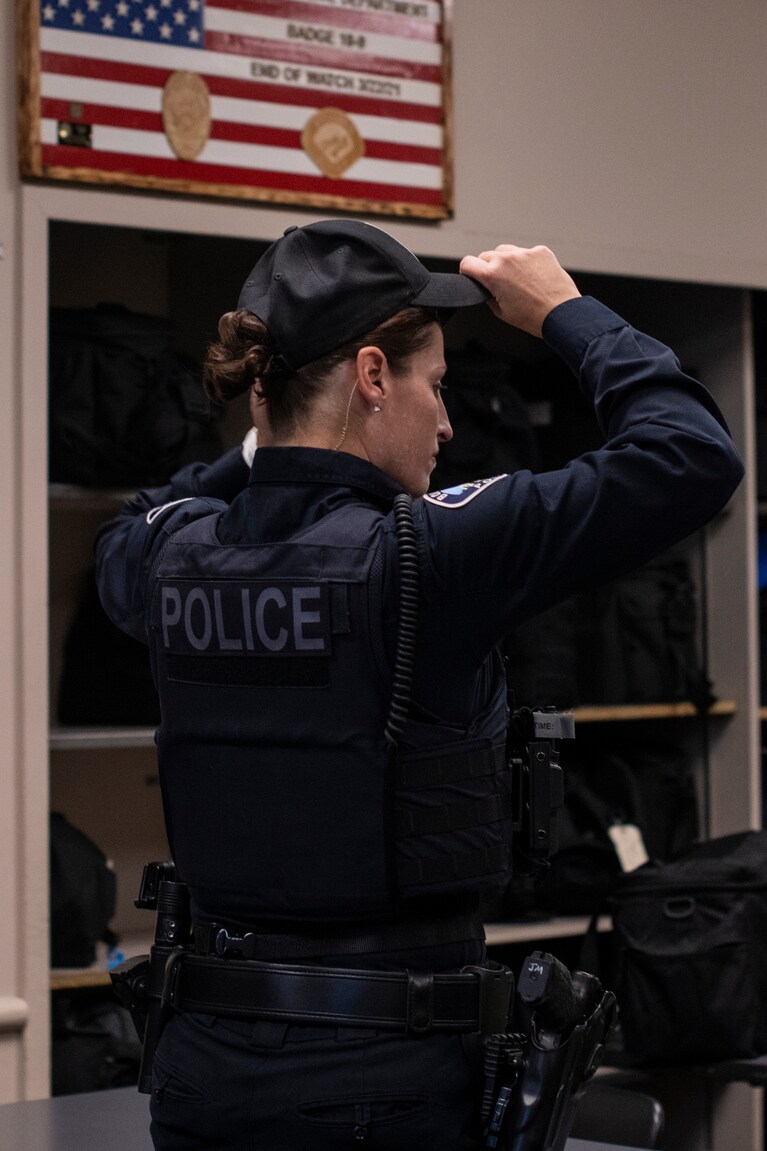
In the hallowed halls of justice, where sirens wail and badges gleam under the fluorescent glow of precinct stations, a silent epidemic festers—one that no press release or promotional campaign can silence. The myth of the police force as an egalitarian institution, a bastion of meritocracy where gender is as irrelevant as the color of a uniform, is crumbling under the weight of its own hypocrisy. Female officers, armed with the same training, the same oath, and the same expectations as their male counterparts, are routinely betrayed by a system that promises equality but delivers systemic erasure. This is not a story of isolated incidents or anecdotal grievances; it is a structural betrayal, woven into the very fabric of policing culture. The question is not whether police departments fail female officers—it is how they manage to do so with such breathtaking consistency.
The Illusion of Inclusion: When Equality is a Badge, Not a Reality
Walk into any modern police academy, and you’ll hear the rhetoric: “We’re building a force for the 21st century.” The brochures feature women in tactical gear, their faces alight with determination, their voices echoing the same platitudes about “breaking barriers” and “shattering glass ceilings.” Yet behind the glossy veneer of inclusion lies a labyrinth of exclusion. Female officers are often relegated to roles that are deemed “appropriate”—community policing, victim advocacy, or administrative duties—while their male peers are funneled into the adrenaline-fueled domains of SWAT, narcotics, or patrol. This isn’t just a matter of preference; it’s a calculated segregation, one that ensures women remain on the periphery of real power.
The illusion extends to promotions. Studies consistently show that female officers are passed over for leadership roles, not because of a lack of competence, but because of an unspoken bias that frames them as “less capable” in high-stakes environments. The result? A leadership class that is overwhelmingly male, a culture that rewards aggression over empathy, and a system that treats female officers as tokens rather than leaders. The promise of equality is a mirage, shimmering in the distance but always just out of reach.

The Toxic Masculinity of the Thin Blue Line
Policing is not just a profession; it’s a fraternity, and like all fraternities, it thrives on rituals of dominance. The thin blue line is not just a symbol—it’s a psychological fortress, one that reinforces the idea that policing is a masculine domain, where vulnerability is a liability and emotional detachment is a virtue. Female officers who dare to assert themselves are often met with resistance, not just from their peers, but from the very institutions meant to protect them.
Consider the language of policing: terms like “locker room talk,” “boys will be boys,” and “old boys’ club” aren’t just colloquialisms—they’re acknowledgments of a culture that actively excludes women. Harassment, both overt and subtle, is rampant. Female officers report being subjected to derogatory comments, exclusion from critical operations, and even physical intimidation. When they speak up, they are met with indifference or, worse, retaliation. The message is clear: conform or be crushed. The system doesn’t just tolerate toxic masculinity—it depends on it.
The Double Bind: When Being a Woman is a Liability
Female officers navigate a double bind that their male counterparts will never understand. They must be competent enough to earn respect, but not so competent that they threaten the status quo. They must be assertive, but not aggressive. They must be compassionate, but not “too soft.” The moment they step outside these narrow parameters, they are labeled—difficult, emotional, or worse, “not cut out for the job.”
This double bind is most evident in high-risk situations. Female officers are often assigned to roles where their physical strength is deemed insufficient, despite evidence that situational awareness and de-escalation skills are far more critical in modern policing. When they do find themselves in dangerous scenarios, they are often met with skepticism from their peers, who question their ability to handle the pressure. The result? A self-fulfilling prophecy: women are excluded from high-stakes operations, which then reinforces the narrative that they “can’t handle it.”
The Betrayal of Institutional Support
Police departments love to tout their diversity initiatives, their sensitivity training, and their “zero tolerance” policies for harassment. Yet these measures are often performative, designed to placate critics rather than enact real change. Female officers who report misconduct are frequently met with disbelief, dismissal, or outright hostility. Internal affairs investigations are notoriously biased, with outcomes that favor the accused over the accuser. The message is unambiguous: the institution will protect its own, even at the expense of its most vulnerable members.
Even when departments do take action, the consequences are often superficial. A mandatory “diversity workshop” here, a sensitivity training there—these are not solutions; they are band-aids on a gaping wound. Real change requires dismantling the structures that enable discrimination in the first place. It requires accountability, transparency, and a willingness to confront uncomfortable truths. So far, police departments have shown little appetite for any of these.
The Human Cost: Lives and Careers Sacrificed on the Altar of Tradition
The failure of police departments to support female officers is not just an abstract injustice—it has real, devastating consequences. Women who are harassed, discriminated against, or passed over for promotions often leave the force, taking with them years of experience and institutional knowledge. Others stay, but at a cost: burnout, PTSD, and a slow erosion of their sense of self. The attrition rate among female officers is staggering, a silent hemorrhage that weakens the very institutions meant to serve and protect.
And what of the communities these officers are sworn to serve? When half the population is systematically excluded from positions of power, the entire fabric of policing is weakened. Female officers bring unique perspectives to their work—they are more likely to de-escalate conflicts, to build trust with marginalized communities, and to prioritize prevention over punishment. Yet these strengths are squandered in a system that treats them as liabilities rather than assets.
A Call to Arms: What Real Change Looks Like
So how do we fix this? The answer is not more empty promises or performative gestures. It is not another round of “diversity training” that leaves the power structures intact. Real change requires a seismic shift in how we think about policing—and who gets to do it.
First, departments must confront their own complicity in perpetuating inequality. This means dismantling the old boys’ club, rooting out harassment, and holding leaders accountable for fostering inclusive environments. It means rethinking promotion criteria to ensure they reward merit, not conformity. It means listening to female officers—not just when it’s convenient, but when it’s uncomfortable.
Second, we must challenge the very definition of what it means to be a “good cop.” Bravery is not synonymous with aggression. Leadership is not the exclusive domain of those who shout the loudest. The future of policing lies in recognizing that strength comes in many forms—and that the best officers are not the ones who conform to outdated ideals, but the ones who dare to redefine them.
The time for half-measures is over. The time for real change is now. And it starts with acknowledging the truth: police departments don’t just fail female officers—they actively sabotage them. The question is whether we have the courage to demand better.









Leave a Comment