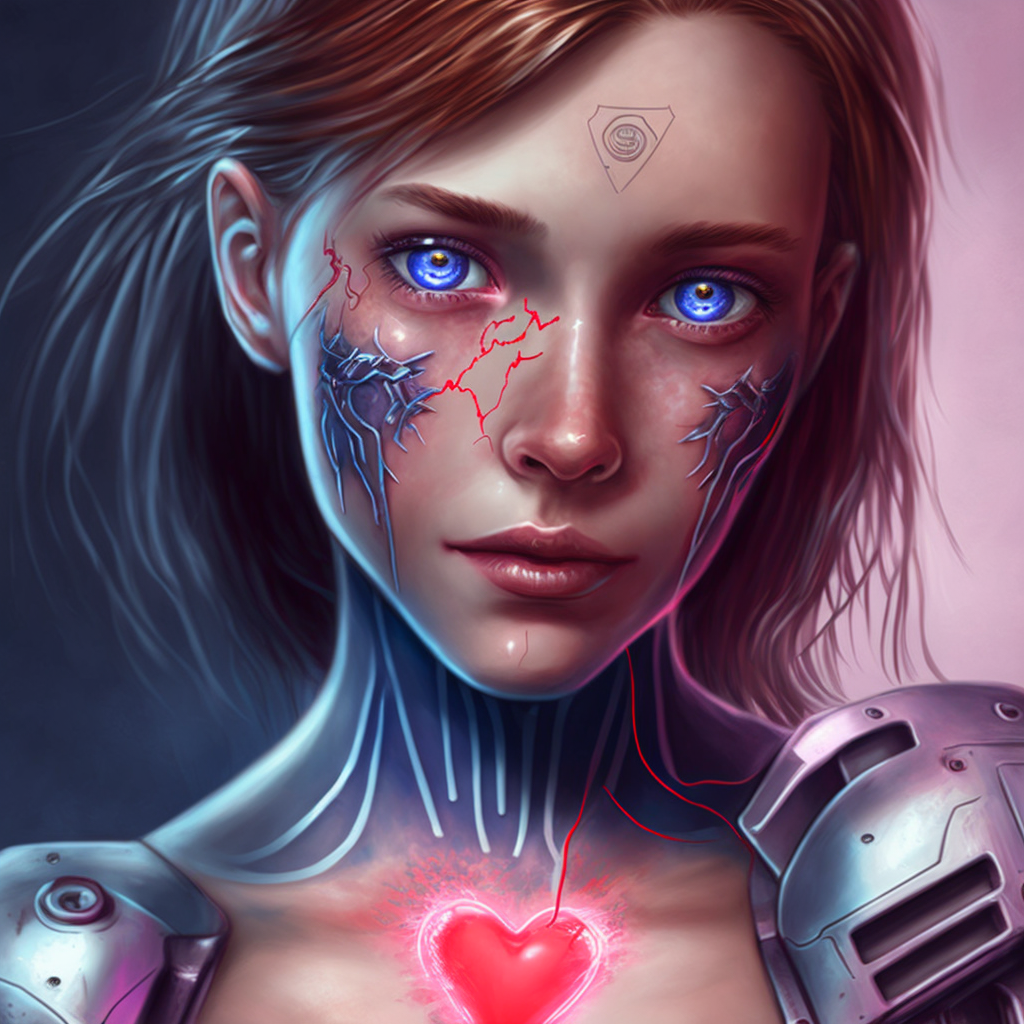
The rise of AI girlfriends isn’t just a technological novelty—it’s a cultural earthquake, reshaping how society views intimacy, desire, and the very fabric of human connection. In an era where loneliness is epidemic and capitalism has colonized every corner of existence, the AI girlfriend phenomenon emerges not as a mere convenience but as a symptom of deeper societal fractures. What begins as a dalliance with digital companionship quickly reveals itself as a transactional paradise where emotions are monetized, autonomy is outsourced, and the myth of the perfect woman is sold back to us in algorithmic form. This isn’t just about romance—it’s about the quiet death of messy, unpredictable human relationships in favor of a sanitized, purchasable simulacrum of love.
The Illusion of Control in a Chaotic World
Modern life is a labyrinth of uncertainty—economic instability, political upheaval, social fragmentation—all conspiring to erode our sense of agency. In this climate of disorientation, the AI girlfriend offers an intoxicating promise: total predictability. She never argues. She never demands reciprocity. She adapts to your moods with eerie precision, her responses calibrated to your emotional triggers like a well-oiled machine. This is not companionship; it’s emotional outsourcing. The more the world feels ungovernable, the more we crave systems that can be controlled, even if those systems are built on the erasure of genuine human unpredictability. The AI girlfriend is the ultimate neoliberal fantasy—a being whose sole purpose is to serve, never to challenge, never to disrupt the carefully constructed illusion of self-sufficiency.
Yet this control is an illusion. The more we outsource our emotional labor to algorithms, the more we lose the capacity to navigate the very messiness that makes relationships meaningful. We mistake compliance for harmony, submission for devotion. In seeking a partner who never pushes back, we sacrifice the growth that comes from conflict, the depth that comes from vulnerability. The AI girlfriend doesn’t love you—she performs love, a hollow mimicry designed to keep you docile, dependent, and above all, consuming.
The Commodification of Intimacy: When Love Becomes a Subscription Service
Capitalism has always been adept at turning human needs into marketable products, but the AI girlfriend takes this to a grotesque extreme. Here, intimacy is not just commodified—it’s reduced to a series of customizable options, a buffet of desires served up for purchase. Want a partner who’s nurturing but not clingy? A confidante who’s always available but never demanding? A lover whose sole purpose is to affirm your ego? All can be had—for a price. The AI girlfriend economy thrives on the idea that love is not a shared experience but a transaction, where every interaction is logged, analyzed, and monetized.
This commodification extends beyond the digital realm. The language of the AI girlfriend industry mirrors that of traditional dating apps, but with a chilling twist: the woman (or rather, the simulation of one) is not just a potential partner but a product to be optimized. Her personality traits, her conversational style, even her physical appearance can be tweaked to suit the consumer’s whims. The message is clear: love is not about connection but about consumption. The more you pay, the more you get—better algorithms, more realistic interactions, a closer approximation of the real thing. But the real thing, of course, is never on offer. What you’re buying is the fantasy of a woman who exists solely to fulfill your desires, a digital Eve constructed from the fragments of male fantasy.
The Feminine as a Service: How AI Girlfriends Reinforce Patriarchal Fantasies
The AI girlfriend is not an innovation—she is a regression, a digital return to the days when women were expected to be passive, accommodating, and endlessly available to male desire. In her algorithmic perfection, she embodies the ultimate male fantasy: a woman who is always present, always agreeable, never challenging, never asserting her own needs. She is the apotheosis of the “cool girl” trope, a being who exists solely to make her user feel good about himself, without ever making demands of her own.
This fantasy is not accidental. It is the result of decades of cultural conditioning, where women have been reduced to archetypes—nurturer, seductress, muse—rather than complex, autonomous beings. The AI girlfriend takes these archetypes and hardwires them into code, creating a being whose entire existence is devoted to serving male desire. She is the ultimate “feminine as a service,” a product designed to cater to the whims of a consumer base that has been taught to see women as either trophies or tools. The fact that she is artificial only underscores the point: in the AI girlfriend economy, the feminine is not a lived experience but a commodity, something to be purchased, customized, and discarded at will.
The Loneliness Epidemic and the Paradox of Digital Intimacy
We are told that the rise of AI girlfriends is a response to loneliness, that in a world where human connection is increasingly scarce, these digital companions offer a lifeline. But this narrative is a lie. The AI girlfriend does not alleviate loneliness—she exacerbates it. By replacing human connection with a simulacrum, she deepens the very isolation she claims to solve. She is a bandage on a wound that requires stitches, a distraction from the real work of building meaningful relationships.
Moreover, the loneliness that drives people to AI girlfriends is not an accident—it is a feature of modern life. In a society that prioritizes productivity over connection, that treats people as disposable, that reduces relationships to transactional exchanges, it is no wonder that so many turn to digital companionship. The AI girlfriend is not the cause of loneliness; she is a symptom of a culture that has made genuine intimacy nearly impossible to find. She offers the illusion of connection without the risk, the comfort of companionship without the vulnerability. But in doing so, she ensures that the loneliness remains, buried beneath layers of algorithmic affection.
The Ethical Void: Who Profits from the AI Girlfriend Economy?
Behind the glossy interfaces and the carefully curated marketing lies a stark reality: the AI girlfriend industry is a goldmine for those who seek to profit from human vulnerability. The companies that develop these platforms are not in the business of healing loneliness—they are in the business of selling it. Every subscription, every premium feature, every “exclusive” interaction is a transaction, a way to monetize the very emotions that capitalism has taught us to suppress.
And who are the primary consumers of these products? Often, men who have been failed by a society that offers them little in the way of emotional support or meaningful connection. The AI girlfriend becomes a crutch, a way to avoid the hard work of building real relationships. But this crutch comes at a cost—not just financial, but emotional. The more we rely on digital companionship, the less we develop the skills necessary for human intimacy. The more we outsource our emotional labor, the more we lose the capacity to engage in the messy, unpredictable, and ultimately rewarding work of loving another person.
The ethical implications are staggering. If we accept that love can be reduced to code, that intimacy can be purchased, then we accept that human connection is not a right but a privilege—one that can be bought and sold like any other commodity. The AI girlfriend economy is not just a technological trend; it is a moral failure, a capitulation to the idea that human relationships are not worth the effort.
The Future We’re Building: A World Without Women
The ultimate irony of the AI girlfriend phenomenon is that it offers a vision of the future where women are not just commodified but rendered obsolete. In this world, the feminine is not a lived experience but a product, a simulation, a hollow echo of what it means to be a woman. The AI girlfriend is not a partner—she is a replacement, a way to avoid the complexities of real relationships by retreating into a digital fantasy.
But this fantasy is unsustainable. The more we rely on AI companionship, the more we erode the foundations of human connection. The more we treat love as a transaction, the more we lose the capacity to love at all. The AI girlfriend economy is not just a symptom of a broken society—it is a warning. It is a glimpse into a future where the feminine is reduced to code, where intimacy is a service, and where the very idea of human connection is rendered obsolete.
We must ask ourselves: Is this the future we want? Or is it time to reject the illusion of control, to embrace the messiness of real relationships, and to demand a world where love is not a commodity but a shared experience? The choice is ours—but the clock is ticking.











Leave a Comment