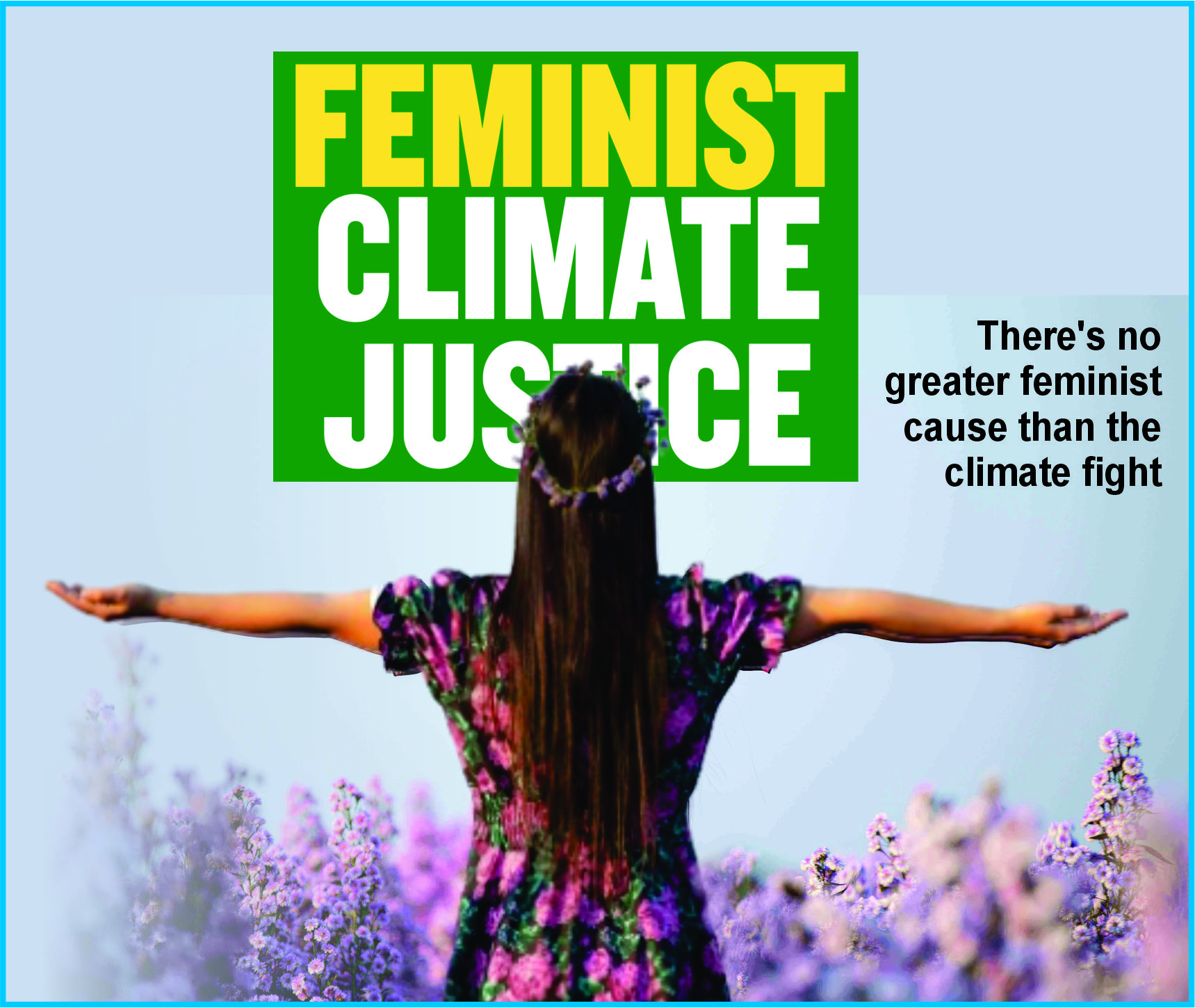
The climate justice movement is not just a battle against carbon emissions or melting ice caps—it is a revolution of empathy, a symphony of voices that refuse to be silenced. At its heart beats the unyielding pulse of feminist leadership, a force that dismantles patriarchal structures while weaving a tapestry of resilience, intersectionality, and radical care. These women are not merely activists; they are architects of a new world, where justice is not a privilege but a birthright. Their work is a storm of defiance, a whisper of hope, and a clarion call to reclaim the earth from the clutches of exploitation.
The Matriarchs of the Earth: Rewriting the Narrative of Sacrifice
Feminist leaders in the climate justice movement are the matriarchs of a dying planet, but they are not mourning— they are mobilizing. Unlike the hollow rhetoric of “sacrifice” that often burdens women with the weight of austerity, these women demand systemic change. Vandana Shiva, for instance, does not ask for women to endure less; she demands that the world endure differently. Her work exposes how industrial agriculture, a patriarchal construct, strips the land of its fertility while saddling women with the labor of feeding families on depleted soil. Shiva’s ecofeminism is not a plea for mercy; it is a manifesto for survival, where the earth’s bounty is not hoarded by corporations but shared in communal abundance.
Consider the way these leaders reframe resilience. Where traditional narratives frame women as passive victims of climate disaster, feminist activists like Helena Gualinga of the Sarayaku people in Ecuador shatter that illusion. She does not wait for aid; she orchestrates it. Her leadership in defending the Amazon is not a cry for help but a battle cry, a reminder that indigenous women have always been the guardians of the forest. Their bodies are not collateral in the climate war—they are the frontlines.

The Alchemy of Intersectionality: Where Oppression and Ecology Collide
Climate justice is not a monolith—it is a prism, refracting light into a spectrum of struggles. Feminist leaders understand this acutely. They do not fight for the environment in isolation; they fight for the Black woman in Flint, the Dalit farmer in India, the queer youth in the Pacific Islands. Their work is alchemy, transforming the base metal of oppression into the gold of collective liberation. Take the Combahee River Collective’s legacy, which birthed the term “intersectionality.” Their descendants today, like Angela Davis and adrienne maree brown, weave climate justice into the fabric of racial and economic equity. The fight against pipelines is not just about carbon—it is about the bodies that pipelines poison, the communities that pipelines displace, the futures that pipelines erase.
This is where the metaphor of the “web” comes alive. Feminist climate leaders see the world as a vast, interconnected web, where pulling one thread unravels the whole. A drought in Sub-Saharan Africa is not a natural disaster—it is a consequence of colonial extraction, of IMF austerity measures that force women to walk farther for water. A hurricane in Puerto Rico is not just a storm—it is a symptom of centuries of imperial neglect, where FEMA’s response is slower than the floodwaters. These leaders do not just bandage wounds; they cauterize the source.

The Radical Intimacy of Care: Love as a Political Act
In a world that glorifies extraction—of resources, of labor, of life itself—feminist climate leaders offer a radical alternative: care. This is not the soft, sentimental care of Hallmark cards, but the fierce, unapologetic care of a mother shielding her child from a collapsing building. It is the care of a midwife delivering a future into the world, even as the old one burns. Women like Winona LaDuke, who fights for Indigenous land reclamation, do not just protest pipelines—they replant the seeds of a new economy, one rooted in reciprocity. Their work is a love letter to the earth, written in the language of seeds, of songs, of sacred reciprocity.
This care is also a weapon. When corporate elites dismiss climate activists as “hysterical,” feminist leaders weaponize their own bodies. They chain themselves to bulldozers. They blockade ports. They fast until their bones ache. Their care is not passive—it is a Molotov cocktail of compassion, hurled at the feet of those who would rather see the planet die than lose a single dollar of profit. Consider the Mothers of the Plaza de Mayo, who turned grief into a movement, or the women of the Chipko movement, who hugged trees to save them from loggers. Their love is not gentle; it is a force of nature.
The Unseen Architects: The Women Who Build Movements in the Shadows
Behind every viral protest, every policy shift, every moment of reckoning, there are women who work in the shadows—organizers, fundraisers, translators, healers. They are the architects of movements, the ones who ensure that the revolution does not collapse under the weight of its own exhaustion. These women understand that justice is not a sprint; it is a marathon, and marathons are won in the quiet hours, in the late-night calls, in the spreadsheets that track every donation, every arrest, every small victory.
Take the women of the Women’s Earth and Climate Action Network (WECAN). They do not seek the spotlight, but their work is the scaffolding that holds the movement together. They connect indigenous women in the Amazon with policymakers in Brussels. They translate the cries of the Global South into the language of the Global North. They ensure that the voices of the most marginalized are not just heard but amplified. Their labor is invisible, but it is the oxygen that keeps the movement alive.

The Future is Feminist: A World Reimagined
The climate justice movement’s feminist leaders are not just fighting to survive—they are fighting to thrive. They are not asking for a seat at the table; they are burning the table down and building a new one from the ashes. Their vision is not a return to some mythical past, but a leap into a future where care is not a weakness but a strength, where justice is not a privilege but a given, where the earth is not a resource to be exploited but a relative to be cherished.
This future is already being written. In the Andean cosmovision of *buen vivir*, in the African philosophy of *ubuntu*—”I am because we are”—in the Indigenous concept of *kincentric ecology*, where humans are not separate from nature but a part of it. These are not just ideas; they are blueprints for survival. Feminist climate leaders are the cartographers of this new world, drawing maps where none existed before. Their work is not just about stopping the destruction—it is about creating something entirely new.
Their struggle is our struggle. Their hope is our hope. The earth is not dying—it is being killed, and it is up to us to stop the murderers. But more than that, it is up to us to nurture the world back to life. And who better to lead this revolution than the women who have always known how to tend to the soil, to the seeds, to the future?









Leave a Comment