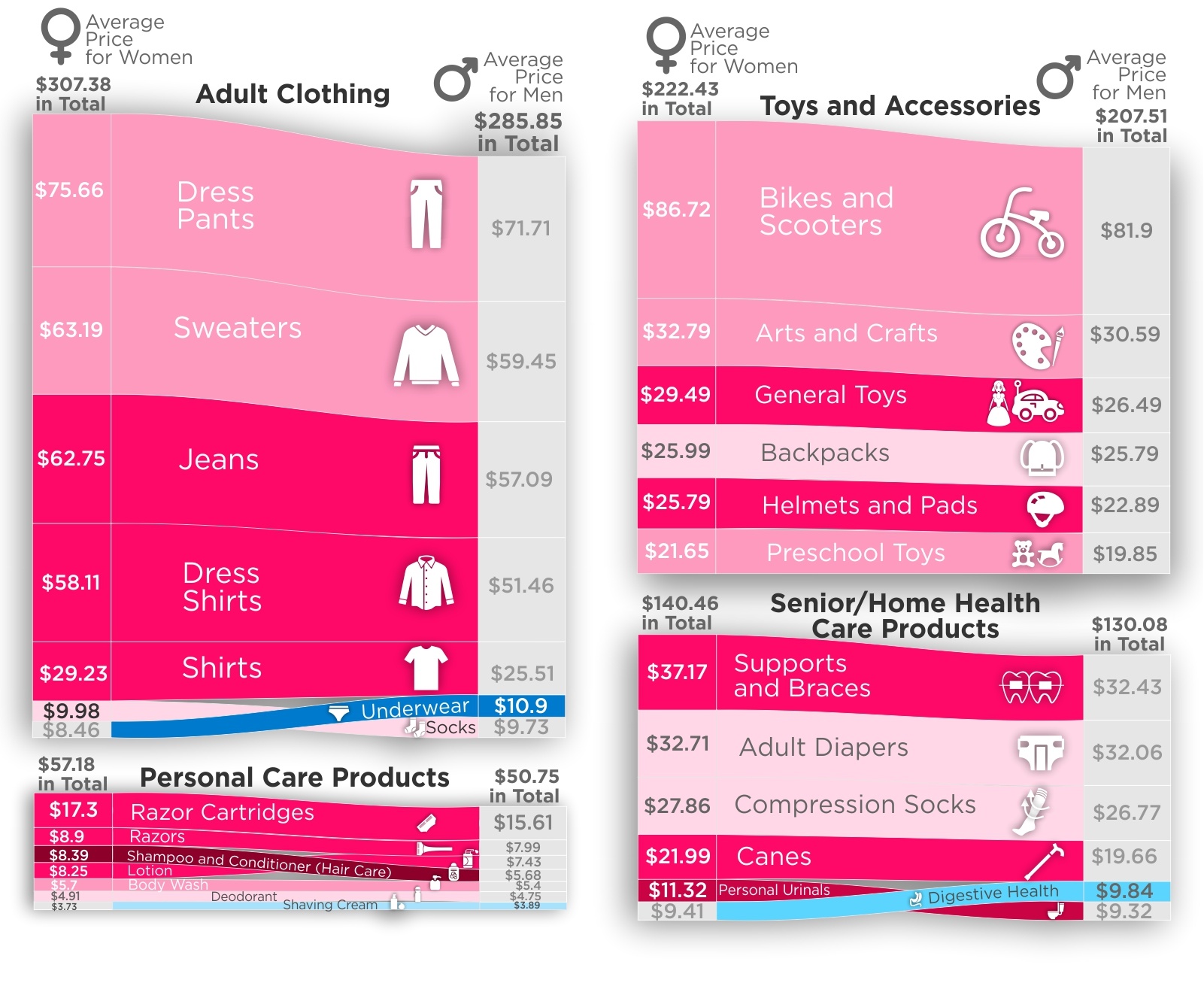
Step into a world where the simple act of existing as a woman is riddled with hidden financial penalties. The Pink Tax, a silent levy stitched into the fabric of everyday commerce, ensures that women shell out more money—merely for being themselves. It’s an insidious form of economic discrimination disguised as marketing and product differentiation. But what if you could pinpoint exactly how much more you pay? Enter the Pink Tax Calculator, a tool that unmasks the extra costs women bear under the guise of choice. This exploration promises to shatter complacency and provoke a re-examination of the price tag on womanhood.
The Veiled Burden: Understanding the Pink Tax
The Pink Tax is not a formal tax levied by governments; it is a pervasive markup embedded in products and services targeted toward women. From everyday essentials like razors and deodorants to services such as dry cleaning and haircuts, the price discrepancy often escapes notice. Society packages these items in dainty pink or pastel hues, layering an unwelcome surcharge that cumulatively drains women’s wallets. The Pink Tax Calculator pulls back the curtain on this covert surcharge, translating abstract indignation into tangible dollar amounts.
Dissecting the Data: What Products and Services Bear the Heaviest Markups?
Not all pink-labeled products are created equal in their fiscal impact. The calculator reveals that the most egregious offenders are personal care items—razors, shampoos, deodorants—where women pay significantly more despite nearly identical formulations. Beyond products, services such as haircuts and dry cleaning often come with a gender premium with no service difference, only the person’s gender. It’s a systemic issue, where the markup thrives on ingrained cultural norms assigning women as premium consumers, perpetually willing to pay more for ‘feminizing’ the mundane.

A Calculated Injustice: How the Pink Tax Calculator Quantifies Financial Inequality
The brilliance of the Pink Tax Calculator lies in its cold, unflinching math. It aggregates price differences across categories and projects the extra annual financial burden on women. The numbers are staggering—a financial penalty not borne out of choice, but systemic bias. This stark quantification transforms the abstract notion of ‘extra costs’ into a personal, visceral reality. Suddenly, every time a woman picks up a product or avails a service, she isn’t just paying the price on the tag; she’s paying the Pink Tax on top of it.

Beyond the Price Tag: The Psychological Toll of the Pink Tax
The Pink Tax wreaks havoc on more than just bank accounts. It sends a corrosive message: that women are economic subordinates, destined to pay more for the privilege of being female. This subtle economic oppression perpetuates a cycle of undervaluation and diminishes bargaining power. Women internalize a world where their consumption is taxed not by law, but by social constructs. The Pink Tax Calculator doesn’t just tally expenses; it exposes a cultural malaise, fostering a collective awakening.
The Pushback: How Awareness Can Transform Consumer Power
Knowledge is the fiercest weapon against the Pink Tax. The calculator empowers women with data, arming them to challenge pricing disparities. Consumer awareness fueled by such tools propels activists and policymakers to demand transparency and fairness. Grassroots campaigns now harness this numerical evidence to dismantle the status quo. As consumers become activists, corporations can no longer hide behind gendered pricing camouflage. The calculator ignites a movement where every dollar saved by rejecting pink premiums is a strike against systemic inequality.
Envisioning a Future Free from Gendered Financial Penalties
The dream is clear: a marketplace where gender does not dictate cost. The Pink Tax Calculator is not merely a tool; it’s a call to arms for reform. Regulatory bodies can leverage these insights to enforce price parity, eliminating subtle forms of gender discrimination in commerce. Manufacturers and service providers must innovate beyond superficial packaging to create genuinely equitable pricing models. As consumers and advocates unite, the insidious surcharge levied on women’s existence can be eradicated, ushering in an era where equality extends from rights to prices alike.
Using the Pink Tax Calculator, women awaken to a startling truth: the cost of simply being themselves is higher than it should be. This revelation sparks not only outrage but a relentless pursuit of justice. The fight against the Pink Tax is a fight for dignity, fairness, and economic autonomy—a battlefield where awareness is the first victory.








Leave a Comment