In a society that relentlessly demands explanations, justifications, and validations—especially from women—the act of ceasing to explain one’s boundaries marks a radical rebellion. Boundaries are intimate declarations, sacred lines drawn not just in defense but in assertion of selfhood. Yet, when a woman stops elucidating her reasons and instead enforces her limits unapologetically, it unsettles the onlookers. There’s an uncanny fascination with this refusal—why does the absence of explanation provoke so much unease, curiosity, or even ire? This phenomenon speaks volumes about power, autonomy, and the unyielding demands placed upon women’s emotional labor.
The Tyranny of Explanation: Why Boundaries Demand Justification
For many, especially women, setting boundaries comes tethered with the expectation of elaborate reasoning. “Why can’t you stay later?” “Why don’t you want to talk about this?” “Why are you upset?” These incessant queries act as subtle mechanisms of control, forcing women into a perpetual state of defense. Boundaries become a battleground where the currency is explanation, and the cost, emotional exhaustion.
Our culture venerates the compliant, the accommodating. A woman who must constantly explain her limits is seen as reasonable, empathetic, and ‘nice.’ Conversely, refuse to explain, and she risks being labeled capricious, harsh, or even irrational. It’s a paradoxical prison; the boundary exists as a protection, yet the demand to justify it erodes its very purpose. This obsession with explanation reveals a deeper societal discomfort with women exercising unmediated power.
From Pleading to Command: The Transformation of Boundary Setting
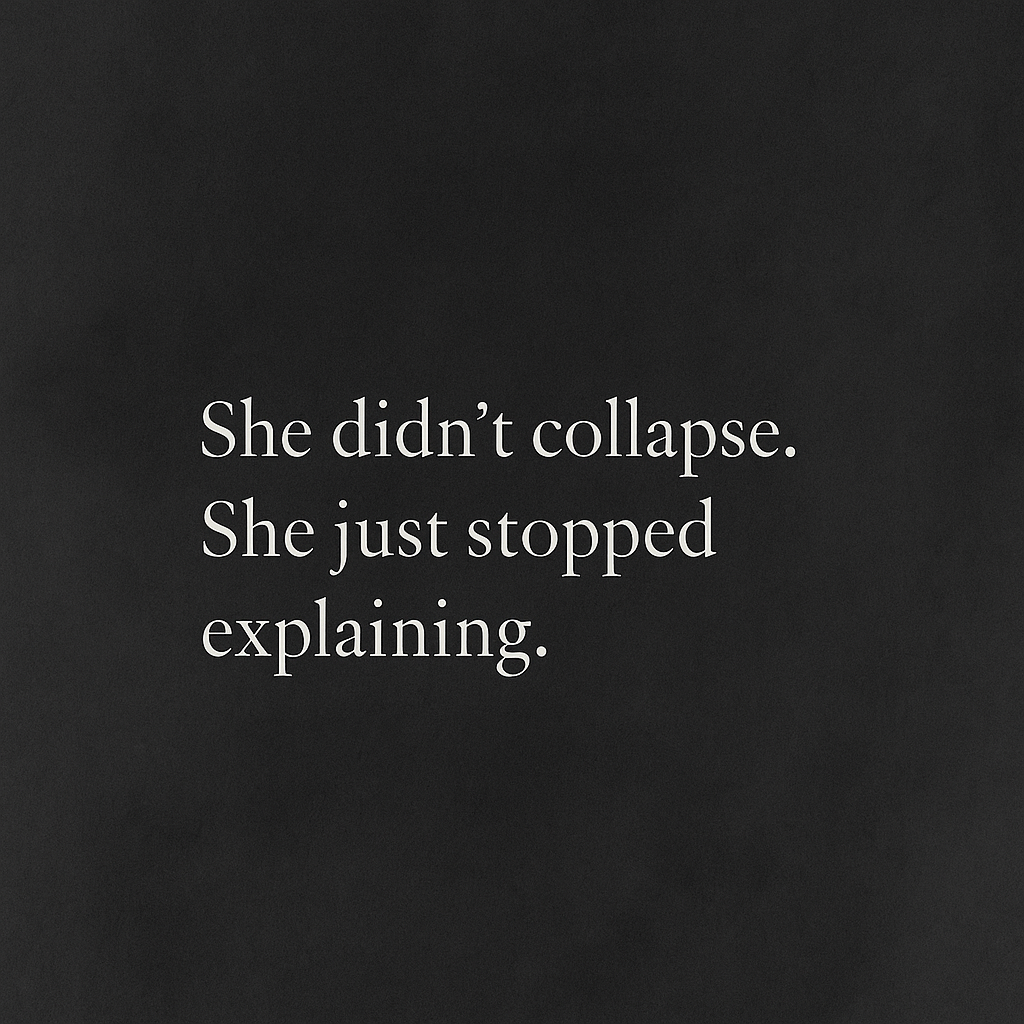
She didn’t collapse under the weight of expectation. She stopped apologizing. The shift from endless explanation to firm enforcement is nothing less than a metamorphosis. It moves the act of boundary-setting from a plea for understanding to a declaration of sovereignty. When words fall away, actions speak with a clarity that no justification can mute.
This transformation signals a profound internal shift. It is the realization that boundaries do not require anyone’s consent to exist. They are self-evident, non-negotiable, and sacred. The enforcement is not about denial of dialogue but assertion that some things transcend negotiation—respect being foremost among them. This mode of boundary setting defies the passive expectations; it demands to be recognized, not debated.
The Fetishization of Women’s Emotional Labor
The societal obsession with women explaining their emotional needs betrays a toxic fascination with control disguised as care. Women’s emotional labor—the work of managing others’ feelings, understanding unspoken rules, soothing discomfort—is often fetishized. The insistence on explanation is a manifestation of this: before a woman’s boundary can be accepted, it must be “understood.” But whose understanding takes precedence? The constant verification required is not empathy; it is surveillance.
When she ceases to explain, it threatens this dynamic. It refuses to perform emotional labor as currency for basic respect. This refusal unsettles the system that thrives on women’s perpetual self-sacrifice. The absence of justification becomes an act of subversion, an assertion that emotional labor is voluntary and cannot be compulsorily extracted.
The Liberation in Enforcing Boundaries Without Explanation
Enforcement without explanation is a fierce act of liberation. It is an embodied declaration of autonomy that resonates beyond words. This liberation does not require validation; it demands acknowledgment. It disrupts the compulsive cycle of negotiation that too often masquerades as politeness. With this shift, boundaries move from the realm of the optional to that of the inviolable.
Women who claim this space ignite a ripple effect. Their silence in explanation is a loud statement. It reverberates through interactions, challenging others to recalibrate respect and consent. It reframes relational dynamics by refracting the modern demand that women forever justify their time, space, and feelings.
The Cultural Implications: Why Society Reacts with Alarm
There is an unmistakable alarm when a woman stops explaining her boundaries. This reaction is not coincidental. The cultural fabric is woven with threads of control and expectation, where women’s autonomy often functions as a threat to established power dynamics. The refusal to explain punctures the illusion that women exist to validate others’ needs.
This alarm also stems from discomfort with unfiltered female power. Boundaries without explanation do not allow for manipulation or subtle forms of coercion. It exposes a craving for clarity and finality in spaces historically muddied by indecision and ambiguity imposed upon women. Society struggles with women who wield their power plainly and unapologetically because it destabilizes centuries-old norms.
Practicing Boundary Enforcement: A Blueprint for Feminist Defiance

Practicing the enforcement of boundaries without explanation is a necessary act of feminist defiance. It requires not only self-awareness but also courage to resist the pressure to justify oneself constantly. This practice reclaims emotional sovereignty and rewrites interpersonal scripts crafted to marginalize.
Start small. Saying no without a qualifying reason or apology is a vital step. Recognize the difference between defensiveness and firmness. Firmness is a manifestation of clarity about one’s value and limits; it neither demands nor requests permission—it commands respect. This approach fosters healthier relationships grounded in mutual recognition rather than manipulation or guilt.
Conclusion: Embracing Boundary Enforcement as a Revolutionary Act
She stopped explaining her boundaries—not as a breakdown—but as a breakthrough. It is a refusal to be drained by incessant demands for justification. This act transcends personal ecology; it is a manifesto against a culture that circuits women in cycles of explanation and acquiescence.
Embracing boundary enforcement without explanation is more than setting limits; it is reclaiming sovereignty. It challenges archaic narratives, unsettles power structures, and demands a new paradigm where respect for women’s autonomy is unequivocal. It’s not merely a personal choice—it is a revolutionary act, redrawing the contours of relationships in the language of uncompromising self-respect.





Leave a Comment