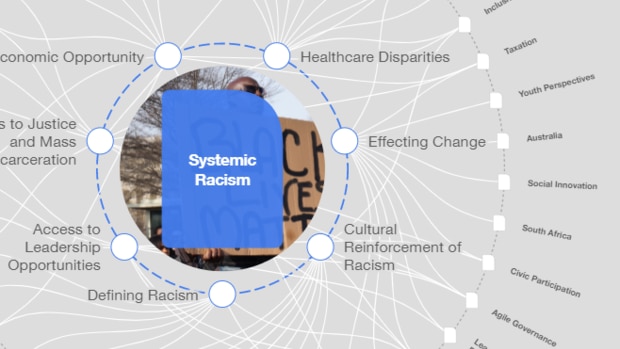
What if leaning in isn’t the radical act it promises to be? What if, instead, it’s simply a precarious perch on a foundation riddled with rot—systemic racism—as though pulling yourself up by your bootstraps somehow defies centuries of entrenched inequity? The phrase “Lean In” has taken social and professional spheres by storm, but have we paused to question whether this movement, shiny with individual empowerment, inadvertently props up a system that was never designed for everyone to ascend equally? Is pushing harder on a rigged ladder really the revolution it claims to be?
When “Leaning In” Meets Structural Inequity
“Lean In” extols striving, perseverance, and tenacity, but the brutal truth is that not all ladders are equal—not all rooms invite every voice to settle comfortably within their walls. Systemic racism doesn’t just lurk in shadows; it is the architecture of power shaped by centuries of exclusion, marginalization, and exploitation. It is the invisible current beneath our social fabric, steering wealth, opportunity, and visibility toward dominant groups under the guise of meritocracy.
For individuals from racially marginalized communities, leaning in without uprooting these structural biases risks reinforcing the very barriers they struggle to overcome. When an environment is saturated with systemic racism, telling oppressed groups to lean in is tantamount to urging them to excel within a maze that shifts walls against them. The hope of equality thus becomes a mirage—a tantalizing promise with no real path forward.
The Myth of Meritocracy: Who Really Leans In?
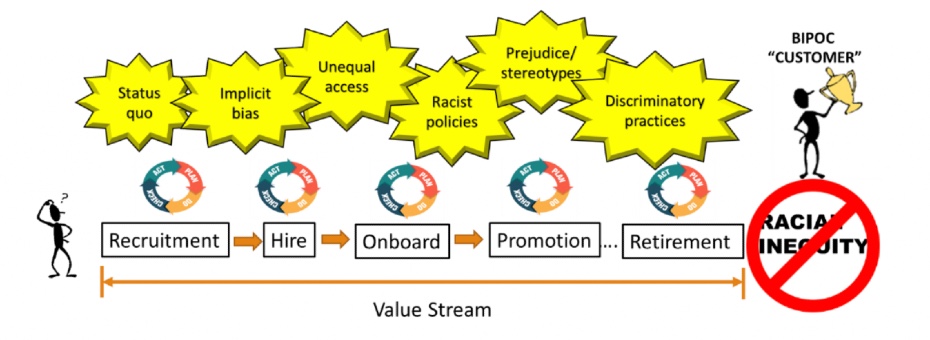
Meritocracy—the seductive narrative that talent and hard work guarantee success—collides head-on with systemic racism’s persistent shadow. The myth conceals preferential pipelines, selective networks, and discriminatory gatekeeping that skew the playing field. Leaning in becomes a solitary, exhausting endeavor, yet those who reach the top are often propelled by invisible hands shaped by racial privilege.
The consequence? Women and people of color are repeatedly told to push harder, show up more, be “exceptional,” even as their contributions are filtered through a lens distorted by prejudice. This relentless demand to individualize systemic failure places undue burden on those least responsible, camouflaging structural remediation as personal deficiency. It’s not about lacking grit—it’s about navigating an environment ported to root out difference and dissent.
Leaning In Without Reckoning: The Danger of Surface-Level Change
Corporate diversity initiatives and calls to lean in often culminate in performative gestures—quotas, diversity days, and buzzword-laden mission statements. These superficial reforms provide the illusion of progress while systemic racism remains intact, festering beneath. The language of leaning in becomes a smokescreen that distracts from the fundamental overhaul needed.
Without reckoning with systemic roots—the policies, institutional cultures, socio-economic disparities that converge to reproduce racial inequities—leaning in amounts to bravado, not revolution. True change demands dismantling those walls that force people to lean in just to avoid falling behind.

Reimagining Success: Beyond Individual Prowess
What if success was less about leaning in alone and more about reimagining the structures that define success? Collective liberation contends with systemic racism not through individual hustle but through shared struggle and solidarity. It requires transforming institutions to embrace equity over hierarchy, justice over mere inclusion.
This reimagined framework insists on shifting power—redistributing resources, amplifying marginalized voices authentically, and interrogating who sets the agenda. Progress thrives not when isolated individuals claw their way up, but when entire communities dismantle barriers together, acknowledging historical wounds and committing to structural repair.
From Leaning In to Taking Action: A Call for Systemic Disruption
Leaning in feels cozy. It’s a phrase that offers hope, motivation, and a semblance of control. But real disruption demands more than a shift in individual posture—it calls for systemic rupture. This means confronting uncomfortable truths about how racial hierarchies underpin our workplaces, educational systems, and social networks.
A commitment to racial equity compels institutions to act boldly: redesign hiring practices, challenge biased evaluation methods, invest in reparative education and community-driven policy making. It’s a transformative praxis that transcends the personal mantra of leaning in and embraces structural alchemy—turning exclusion into empowerment.
Conclusion: Can One Lean In on a Fractured Foundation?
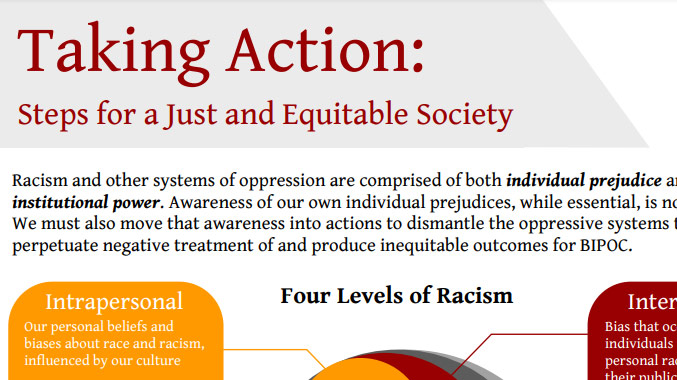
The mirror cracks when we ask—can we truly lean in on a foundation threaded with systemic racism without shattering our integrity and collective potential? Lean in, yes—but only if it accompanies determined dismantling, persistent questioning, and ceaseless transformation of the systems that govern us. Otherwise, leaning in risks becoming a whispered excuse that masks inequity rather than the clarion call for liberation we so desperately need.











Leave a Comment