Have you ever wondered if strength, when wielded incessantly as armor, becomes a noose rather than a shield? The archetype of the Strong Black Woman gleams with resolute pride on the surface, but beneath it festers a destructive paradox—a stereotype so laden with expectation that it quietly crushes the souls it’s meant to uplift. What happens when strength is less a choice and more a demand? Is it possible that this celebrated iconography is simultaneously a cage?
The Genesis of the Strong Black Woman Mythos
To understand the pernicious implications of this stereotype, one must first unravel its historical tapestry. The Strong Black Woman persona did not emerge in a vacuum—it was born amidst centuries of systemic oppression, survival under the yoke of slavery, and the relentless endurance required through segregation, sexism, and racism. This figure was forged as a necessity, a survival mechanism against relentless adversity. But as history morphed into contemporary narratives, what was once a symbol of resilience morphed into an onerous expectation, repressing vulnerability and demanding perpetual invincibility.

When strength becomes the defining—and limiting—feature of Black womanhood, the deeper struggles are rendered invisible. Emotional, mental, and physical strains are often dismissed or overlooked because the narrative insists on unyielding perseverance no matter the cost.
The Silent Epidemic: Emotional Suppression and Psychological Toll
Here lies the cruelest irony. This expectation to be perpetually stoic and self-reliant masks a silent epidemic of suppressed pain. The Strong Black Woman stereotype engenders a harmful culture where seeking help is stigmatized as weakness, creating dangerous psychological landscapes. Depression, anxiety, post-traumatic stress, and burnout trail behind like shadows, overlooked and untreated because “she can handle it.” The façade of invulnerability leaves no room for exhaustion or breakdowns.
Society’s applause for endurance becomes a suffocating demand for silence around legitimate struggles. This silencing is not benign; it fractures identities and impedes necessary healing. How many Black women suffer in silence to maintain the image that society has entrapped them into embodying?
The Double Bind of Productivity and Caretaking
The Strong Black Woman is often cast as the backbone of her community: nurturing mother, steadfast protector, relentless worker. This multifaceted role is lauded externally but carries an internalized double bind that’s near impossible to escape. She is expected to excel professionally while providing emotional labor at home and in her community, without assistance or reprieve.
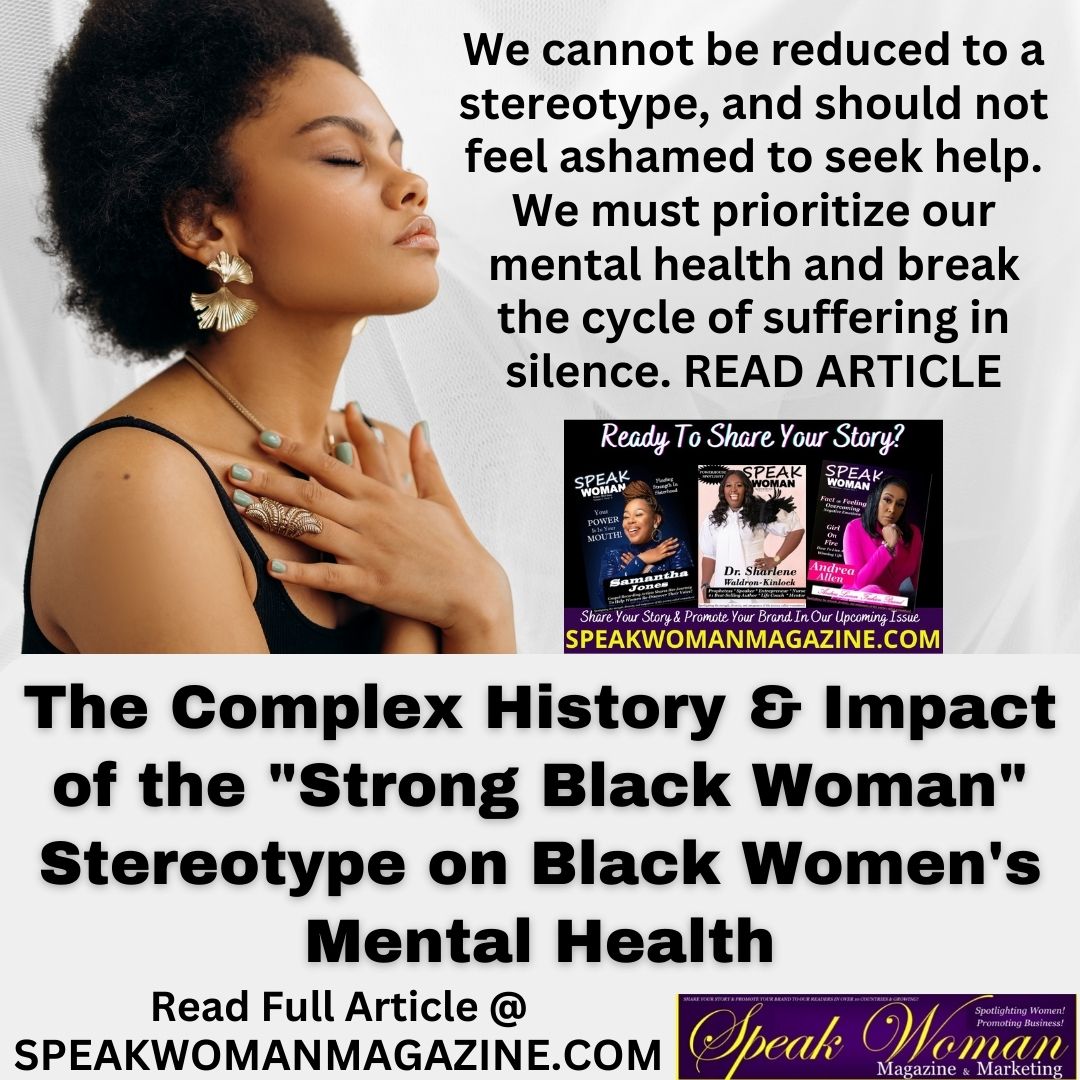
This Herculean balancing act operates under the assumption that she possesses infinite strength and energy—a dangerous myth that disregards her humanity. The insidious pressure to perform on all fronts keeps many from setting personal boundaries or prioritizing self-care, paving a direct pathway to chronic stress and exhaustion.
When Strength Becomes a Weapon of Oppression
It might seem paradoxical, but the Strong Black Woman archetype is weaponized against the very people it claims to empower. Employers, romantic partners, and even healthcare providers can weaponize this stereotype to rationalize neglect or mistreatment. “She’s strong; she can take it,” becomes an excuse to deny equitable support or compassion.
This societal callousness exacerbates disparities in health outcomes, workplace dynamics, and interpersonal relationships. The refusal to acknowledge vulnerability translates into fewer resources, missed diagnoses, and social isolation. Strength becomes a convenient scapegoat for systemic failure, absolving institutions of accountability while intensifying the burden on Black women.
Dismantling the Myth: Towards Radical Healing and Authenticity
Challenging the Strong Black Woman stereotype requires an act of radical vulnerability—one where Black women are free to embody the fullness of their humanity, warts and all. It means recognizing that strength is not the absence of frailty but the courage to embrace it. Authenticity becomes a revolutionary act, demanding spaces where Black women can express fear, pain, and imperfection without judgment or consequence.

Healing can only begin when society stops fetishizing strength and starts validating emotional and psychological needs. This transformation involves dismantling toxic expectations and advocating for mental health resources tailored to the unique experiences of Black women. It requires allies to listen, believe, and actively support dismantling structural barriers that perpetuate harm.
What If Strength Was Redefined?
Imagine a world where strength is redefined—not as stoic endurance, but as adaptive resilience that breathes and bends. What if society celebrated Black women’s capacity to be both powerful and tender, fierce and soft? This recalibration would unsettle entrenched norms but promise a more compassionate reality.
Could this new narrative open pathways for collective liberation, healing, and justice? The question is not merely rhetorical. It is a clarion call to recognize the complexity of Black womanhood beyond a harmful stereotype that kills. The challenge, then, is to expand what strength means, to break the chain of relentless expectation, and to allow Black women to reclaim their stories on their own terms—complex, vulnerable, whole.






Leave a Comment