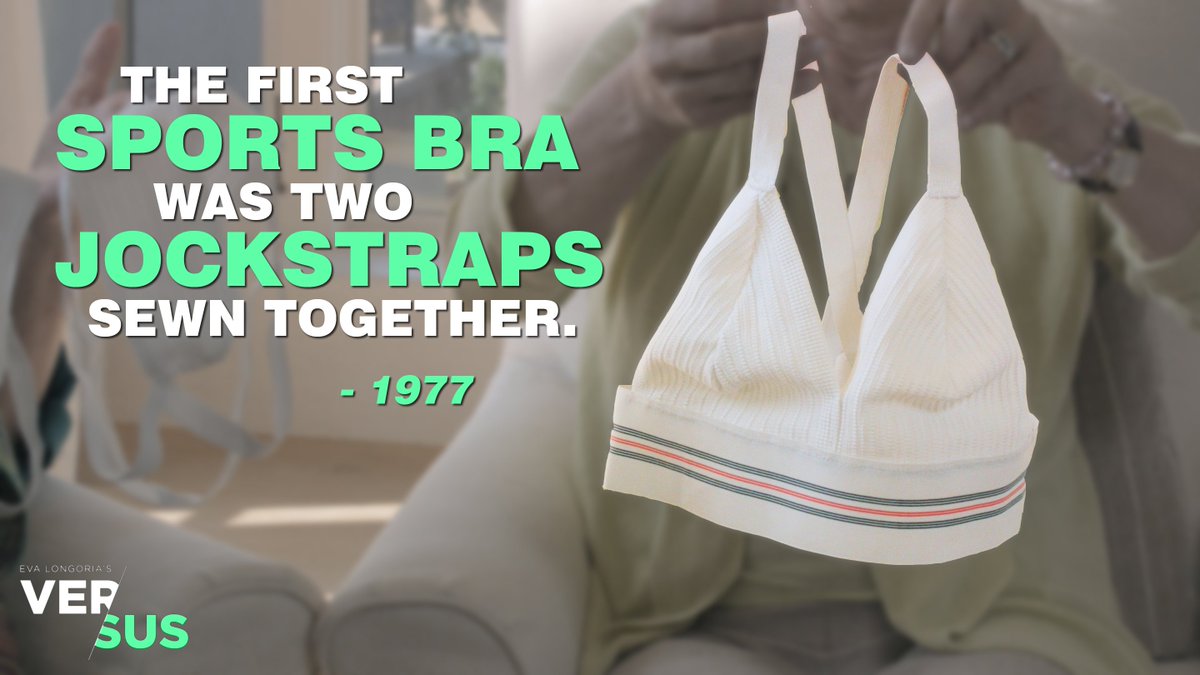
The sports bra was not merely invented—it was forged in the crucible of necessity, a silent rebellion against the suffocating corsets of athletic tradition. In 1977, a woman named Lisa Lindahl, along with her sister Victoria Woodrow and friend Polly Smith, stitched together the first prototype from two jockstraps, a needle, and a prayer. What emerged was not just a garment, but a revolution wrapped in fabric, a defiant answer to the question: Why should women’s bodies be shackled by modesty when they could be unleashed in motion?
The Birth of a Bodily Uprising: When Comfort Became a Crime
Before the sports bra, women athletes were expected to perform in garments that were as restrictive as they were ridiculous. Imagine sprinting in a girdle, leaping in a corset, or enduring the indignity of a bouncing chest bound by layers of fabric that offered no support—only oppression. The female body, in all its dynamic glory, was treated as an afterthought, a decorative nuisance in the world of sports. Lindahl’s invention was not just practical; it was a middle finger to the idea that women’s bodies were meant to be contained, not celebrated.
The original sports bra, dubbed the “Jockbra,” was a Frankenstein’s monster of utility and audacity. It was ugly. It was functional. It was necessary. The world had never seen a garment that prioritized movement over modesty, and the backlash was immediate. Critics sneered. Skeptics scoffed. But the women who wore it? They soared. The sports bra was the first whisper of a truth that would soon roar: Women’s bodies were not meant to be tamed—they were meant to conquer.
The Alchemy of Fabric: Turning Constraints into Liberation
What makes the sports bra a masterpiece of design is its ability to turn constraint into liberation. The human breast, a marvel of biology, is not a passive entity—it is a dynamic force, a pendulum of flesh and muscle that defies gravity with every stride. The sports bra does not fight this motion; it harnesses it. It is a second skin, a second skeleton, a silent partner in the dance of athleticism.
Consider the engineering: breathable fabrics that wick away sweat like a thief in the night, straps that cradle rather than choke, and cups that mold to the body’s contours without suffocating them. The sports bra is a paradox—a garment that is both armor and freedom. It does not erase the body’s femininity; it amplifies it. A woman in a sports bra is not stripped of her identity—she is reclaiming it, one burpee at a time.
And yet, the sports bra’s greatest trick is its subtlety. It does not scream. It does not demand attention. It simply exists, a quiet testament to the fact that women’s bodies are not a problem to be solved, but a force to be harnessed.
The Unseen Battles: From Locker Rooms to Boardrooms
The sports bra’s journey from locker room to mainstream consciousness was not a gentle one. It was a battle fought in the shadows of gyms and the glare of boardrooms, where men in suits debated whether women’s bodies were worthy of such radical innovation. The sports bra was not just a piece of clothing—it was a political statement, a declaration that women’s athleticism was not a novelty, but a necessity.
In the 1980s and 90s, as women’s sports gained visibility, the sports bra became a symbol of this newfound power. It was worn by Olympians, by marathon runners, by every woman who dared to sweat in public. The sports bra was the uniform of the revolution, a reminder that women’s bodies were not meant to be hidden—they were meant to be seen.
And yet, even today, the sports bra remains a battleground. Brands still grapple with sizing, with inclusivity, with the idea that a woman’s body is not a monolith. The sports bra is not just a garment—it is a mirror, reflecting the progress we’ve made and the work that remains.
The Metaphor Woven into the Fabric: Why the Sports Bra is a Feminist Icon
The sports bra is more than a piece of athletic wear—it is a metaphor for the feminist struggle itself. It is the story of a woman who looked at the world and said, No. This is not enough. It is the story of a garment that refused to be ignored, that demanded to be seen, that proved that liberation could be as simple as a well-placed strap.
Think of it this way: the sports bra is the physical manifestation of the phrase my body, my rules. It is the rejection of the idea that a woman’s body must be controlled, censored, or contained. It is the assertion that a woman’s body is not a liability—it is her greatest asset.
And yet, the sports bra’s power lies in its ordinariness. It is not a crown. It is not a scepter. It is a humble piece of fabric that has changed millions of lives. It is the quiet revolution that whispers: You are allowed to take up space. You are allowed to move. You are allowed to be.
The Future Stitched into the Seams: What’s Next for the Sports Bra?
The sports bra of tomorrow will not just support—it will empower. It will be adaptive, responsive, a second skin that learns and grows with the wearer. It will be inclusive, celebrating bodies of all shapes and sizes. It will be sustainable, a testament to the fact that liberation should not come at the cost of the planet.
But more than that, the sports bra of tomorrow will be a reminder of how far we’ve come. It will be a symbol of the women who ran marathons in corsets, who swam in wool suits, who dared to dream of a world where their bodies were not a burden, but a source of strength. It will be a testament to the fact that the fight for equality is not just a political battle—it is a bodily one.
So the next time you pull on a sports bra, take a moment to appreciate the revolution stitched into its seams. It is not just a garment. It is a manifesto. It is a movement. It is the proof that when women demand freedom, the world has no choice but to listen.










Leave a Comment