The first time a trans woman is turned away from a shelter, it’s not just a door that slams shut—it’s a mirror shattering. The reflection staring back at her isn’t her own face, but the distorted visage of a system that claims to offer refuge while wielding exclusion like a gavel. Shelters, those supposed sanctuaries of safety, often become battlegrounds where trans women are forced to fight for the most basic human right: a place to rest without fear. This isn’t just a policy failure; it’s a moral failure, one that reveals how deeply ingrained transphobia has woven itself into the fabric of institutions meant to protect the vulnerable. The question isn’t why shelters turn away trans women—it’s why we let them.
The Illusion of Shelter: A House of Cards Built on Exclusion
Imagine a fortress with towering walls, its gates guarded by sentinels who scrutinize every face that approaches. For most, the gates swing open. But for trans women, the guards squint, their hands tightening on the bars of tradition. “No vacancy,” they say, though the halls are half-empty. “Not our kind,” they whisper, as if kindness were a finite resource, doled out by caste. This isn’t just a policy—it’s a performance, a ritual of gatekeeping that masquerades as order.
The illusion of shelter as a neutral space is a lie. Shelters are not apolitical; they are microcosms of the societies that birthed them. When a trans woman is denied entry, it isn’t an accident—it’s a calculated erasure. The architecture of exclusion is built on the assumption that womanhood is a fixed, binary truth, one that can be policed by the whims of cisgender gatekeepers. But womanhood isn’t a fortress to be defended; it’s a river, ever-flowing, ever-changing, carving new paths through the landscape of identity.
The Tyranny of “Safety”: How Fear Becomes a Weapon
Shelters often justify their exclusion of trans women under the banner of “safety”—a word that drips with irony when wielded by those who have never known the true meaning of danger. The fear isn’t for the trans women; it’s for the comfort of cisgender residents, for the fragile egos of those who see their own privilege as a birthright. Safety, in this context, is a euphemism for control, a way to maintain the illusion of order by sacrificing the most marginalized.
But what is safety, really? Is it the cold sterility of a room where a trans woman must hide her identity to avoid confrontation? Is it the unspoken rule that she must shrink herself to fit into a space that was never designed for her? True safety isn’t the absence of conflict—it’s the presence of solidarity. It’s the knowledge that no matter how the world tries to break you, there will always be a hand to pull you back from the edge. Shelters that turn away trans women don’t offer safety; they offer a cage, gilded with the false promise of shelter.
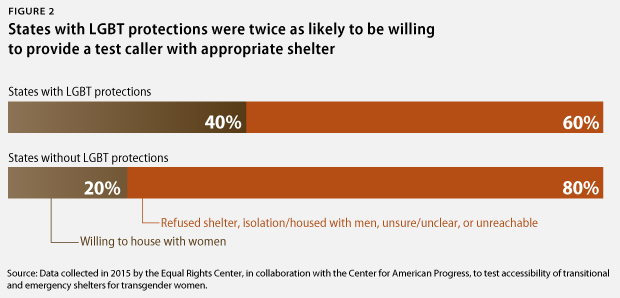
Consider the trans woman who is forced to sleep on the streets because a shelter’s “women-only” policy doesn’t include her. Is she safer there, vulnerable to violence and exposure? Or is she safer in a space where her identity is affirmed, where she can rest without the gnawing fear of being misgendered, harassed, or worse? The answer is obvious, yet shelters continue to cling to their exclusionary policies, as if the mere presence of a trans woman is a threat to the universe’s delicate balance.
The Myth of “Disruption”: Why Trans Women Are Framed as the Problem
There’s a peculiar logic at play in the minds of those who enforce exclusionary shelter policies: trans women are framed as the disruptors, the ones who “complicate” the status quo. But who, really, is disrupting whom? Is it the trans woman who simply wants a place to sleep, or is it the system that insists she must justify her existence before she’s granted the most basic human dignity?
The myth of disruption is a tool of oppression, a way to shift blame from the institutions that fail to adapt to the needs of marginalized communities. Trans women aren’t the problem—they’re the canaries in the coal mine, the first to suffocate when the air turns toxic. When shelters turn them away, they’re not just denying entry to one person; they’re sending a message to every trans woman who dares to seek help: *You do not belong here.* This message isn’t just cruel—it’s a self-fulfilling prophecy, one that ensures trans women will continue to be excluded, not because they’re unworthy, but because the system is designed to fail them.

Reimagining Shelter: From Fortresses to Oases of Radical Care
What if shelters weren’t fortresses but oases? What if they weren’t places of exclusion but spaces of radical care, where every person’s identity is affirmed, not interrogated? The transformation begins with dismantling the binary thinking that pits cisgender women against trans women, as if womanhood were a finite resource to be hoarded. It requires acknowledging that safety isn’t a zero-sum game—that the presence of a trans woman doesn’t diminish the safety of others, but rather enriches the community with her resilience and strength.
Radical care means more than just opening the doors; it means rethinking the entire infrastructure of shelter. It means training staff to understand the unique challenges faced by trans women, from the trauma of being misgendered to the fear of violence. It means creating policies that center consent and autonomy, where trans women aren’t forced to navigate a labyrinth of bureaucracy just to find a bed. It means recognizing that the most vulnerable among us deserve the most support—not the least.
Imagine a shelter where trans women aren’t just tolerated but celebrated, where their identities are affirmed in every interaction. Where a trans woman can walk in and be greeted by a staff member who uses her correct pronouns without hesitation. Where she can sleep without fear of harassment, eat without fear of judgment, and heal without fear of erasure. This isn’t a utopia—it’s a necessity. And it starts with the radical act of saying: *You belong here.*
The Cost of Complicity: Why Silence Is Violence
To remain silent in the face of exclusionary shelter policies isn’t just cowardice—it’s complicity. Every time a shelter turns away a trans woman, it sends a ripple through the community, a signal that some lives are worth less than others. And those ripples don’t stay contained; they spread, poisoning the well of public trust in institutions meant to protect the vulnerable. When we stay quiet, we become part of the machinery of oppression, even if we never lift a finger to enforce it.
The cost of complicity isn’t just moral—it’s practical. Exclusionary policies don’t just harm trans women; they harm everyone. They deepen the cycles of poverty and violence that plague marginalized communities. They reinforce the idea that some people are disposable, that their suffering is an acceptable price to pay for the comfort of others. And they ensure that the cycle of exclusion will continue, unchecked, until we decide to break it.
But breaking the cycle requires more than just awareness—it requires action. It means demanding that shelters change their policies, that governments fund inclusive programs, and that communities hold institutions accountable for their failures. It means recognizing that the fight for trans rights isn’t just a fight for trans women—it’s a fight for the soul of our society, a fight to decide whether we will be a world that turns its back on the vulnerable or one that lifts them up.
Conclusion: The Shelter We Deserve
Shelters aren’t just buildings—they’re mirrors. They reflect the values of the societies that create them. When they turn away trans women, they reflect a world that would rather erase than affirm, that would rather exclude than include. But we don’t have to accept this reflection. We can shatter it. We can demand better. We can build shelters that are not fortresses of exclusion but oases of radical care, where every person is welcomed, affirmed, and uplifted.
The question isn’t whether shelters *can* change—it’s whether they *will*. And the answer lies in our hands. Will we be the generation that finally breaks the cycle of exclusion? Or will we be the ones who let the doors stay shut, who let the mirrors keep shattering? The choice is ours. The time for action is now.









Leave a Comment