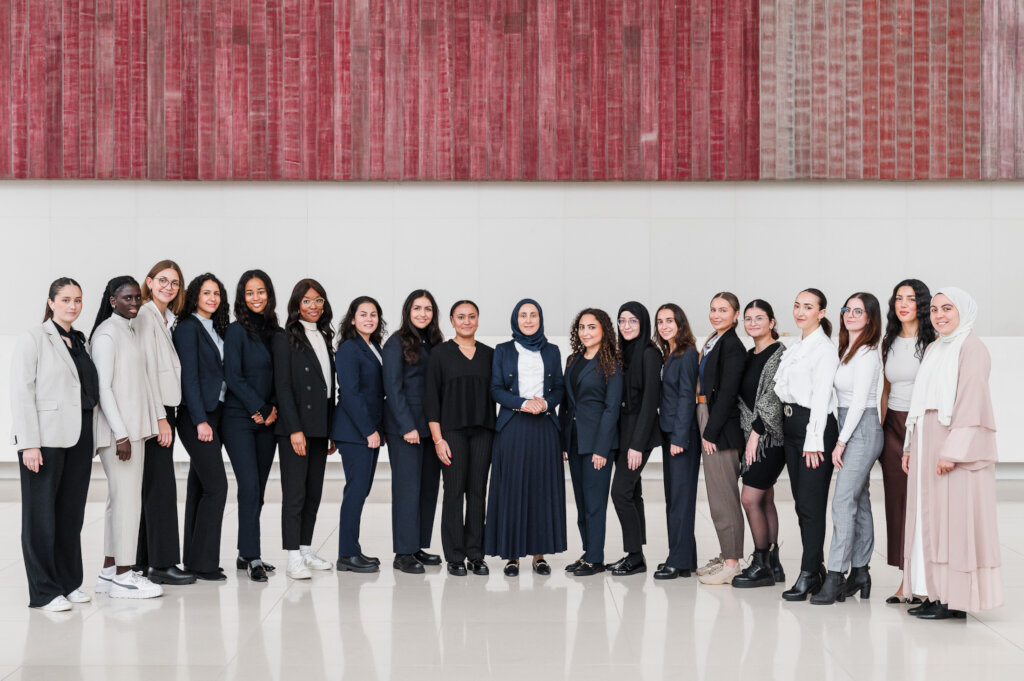
The open-source movement was supposed to be a sanctuary of collaboration, a digital agora where code flowed as freely as ideas, and meritocracy reigned supreme. Yet, beneath the surface of this utopian vision lies a stark reality: open-source communities are still some of the most inhospitable spaces for women. The numbers don’t lie—women make up less than 5% of contributors to major open-source projects. But why? The answer isn’t just about exclusion; it’s about systemic erasure, a carefully constructed labyrinth where women are either discouraged from entering or systematically pushed out.
The Illusion of the Meritocratic Playground
Open-source communities often cloak themselves in the rhetoric of meritocracy, a seductive narrative that suggests success is solely the result of skill and effort. But meritocracy in these spaces is less like a level playing field and more like a rigged obstacle course, where the rules are written by those who already dominate the terrain. Women who dare to contribute are met with skepticism, their contributions dismissed as “lesser” or “novice,” while men’s work is lauded as “groundbreaking” for the same level of effort. This isn’t just bias—it’s a form of intellectual gaslighting, where women’s expertise is constantly questioned, their voices drowned out by the chorus of male approval.
The myth of meritocracy is a Trojan horse, smuggling in exclusion under the guise of fairness. It’s not about who is most skilled; it’s about who is most visible, most persistent, most willing to endure the slings and arrows of a community that treats them as interlopers. Women in open-source aren’t just fighting to write code—they’re fighting to be seen as legitimate contributors in a space that was never designed for them.
The Toxic Charm of the “Brogrammer” Culture
Open-source communities have a unique allure—a kind of digital brotherhood, where camaraderie is forged in the fires of shared passion for technology. But this camaraderie often curdles into something far more sinister: a culture of toxic masculinity that polices who belongs and who doesn’t. The “brogrammer” ethos isn’t just a joke; it’s a power structure, a way of enforcing homogeneity by making women feel unwelcome through microaggressions, outright hostility, and the ever-present threat of doxxing or harassment.
This culture thrives on the myth of the lone genius, the myth that open-source is a playground for brilliant, eccentric men who code in isolation, fueled by caffeine and ego. Women who enter this space are often met with the infantilizing assumption that they’re only there to “find a husband” or “get attention,” rather than to contribute meaningfully. The result? A self-reinforcing cycle where women leave, and the narrative that “open-source is for men” becomes self-fulfilling.
The Double Bind of Visibility and Invisibility
In open-source, visibility is currency. The more you contribute, the more you’re recognized—or so the myth goes. But for women, visibility is a double-edged sword. Contribute too little, and you’re invisible. Contribute too much, and you’re labeled “too aggressive,” “too demanding,” or “not a team player.” Women in open-source exist in a state of perpetual erasure, where their work is either ignored or co-opted, and their presence is treated as an anomaly rather than a norm.
This double bind is exacerbated by the fact that women’s contributions are often framed as “niche” or “special interest,” while men’s work is seen as universal. A woman writing documentation? “Oh, she’s just doing the grunt work.” A man writing a new framework? “He’s a visionary.” The language of open-source is weaponized against women, ensuring that their labor is devalued while their identities are scrutinized.
The Gatekeeping of Knowledge
Open-source communities are notorious for their gatekeeping, a practice that masquerades as “maintaining quality” but often serves as a barrier to entry for those who don’t fit the mold. Women are frequently told they lack the “necessary” skills, that they need to “prove themselves” before they can contribute, or that their work isn’t “up to standard”—standards that are, conveniently, defined by the same men who benefit from the status quo.
This gatekeeping isn’t just about technical skills; it’s about cultural fit. Women who challenge the norms of the community—whether by calling out sexism or proposing inclusive practices—are often labeled as “difficult” or “disruptive.” The message is clear: conform or be exiled. The irony? The open-source movement prides itself on innovation, yet it clings to the most regressive forms of exclusion, as if innovation and diversity are mutually exclusive.
The Psychological Toll of Constant Vigilance
For women in open-source, the mental load isn’t just about writing code—it’s about navigating a minefield of microaggressions, unsolicited advice, and outright hostility. Every pull request, every commit, every comment is a potential landmine, requiring constant vigilance to avoid triggering the wrath of the community. This isn’t just exhausting; it’s a form of emotional labor that men in the same spaces rarely, if ever, have to perform.
The psychological toll of this environment is profound. Women report higher rates of burnout, anxiety, and depression, not because they lack resilience, but because the system is designed to break them. The open-source community’s refusal to address these issues isn’t just negligent—it’s complicit in perpetuating a cycle of exclusion that drives women away, again and again.
The False Promise of “Diversity Initiatives”
In recent years, many open-source projects have launched “diversity initiatives,” touting them as proof of progress. But these initiatives are often performative, designed to placate critics rather than enact real change. They’re the digital equivalent of putting a Band-Aid on a gaping wound—superficial, temporary, and ultimately ineffective. True inclusion requires more than lip service; it requires dismantling the structures that perpetuate exclusion in the first place.
The problem isn’t that women aren’t trying to break into open-source; it’s that the system is rigged against them. Until the community confronts its own biases, its own gatekeeping, and its own toxic culture, these initiatives will remain hollow gestures, a way to pat themselves on the back while doing nothing to change the status quo.
The Way Forward: A Radical Reimagining
So what’s the solution? It’s not enough to call for “more women in open-source.” The problem isn’t a lack of women; it’s a lack of willingness to change the system that excludes them. Open-source communities must confront their own complicity in perpetuating exclusion, from the language they use to the standards they uphold. They must actively dismantle the structures that privilege men while marginalizing everyone else.
This isn’t just about making open-source more inclusive—it’s about redefining what open-source can be. A movement that claims to value freedom and collaboration should start by extending those values to everyone, not just the privileged few. The future of open-source isn’t just about code; it’s about people. And if the community can’t make space for women, then it doesn’t deserve to call itself open at all.










Leave a Comment