What if I told you that the fight for a living wage isn’t just about dollars and cents—it’s about dismantling the very scaffolding of patriarchy? That’s right. The minimum wage isn’t just a number on a paycheck; it’s a feminist battleground. And here’s the kicker: two-thirds of minimum wage earners are women. Let that sink in. While politicians debate tax cuts for the ultra-wealthy, millions of women are stitching together lives on wages that barely cover rent, let alone childcare or groceries. So, why is the minimum wage a feminist issue? Buckle up. We’re about to unpack the tangled web of economic injustice, gendered labor, and systemic inequality that keeps women trapped in a cycle of financial precarity.
The Wage Gap’s Ugly Cousin: The Minimum Wage Crisis
We’ve all heard about the gender pay gap—the 82 cents women earn for every dollar a man makes. But the minimum wage crisis is its uglier, more insidious cousin. While the pay gap measures the difference in earnings between men and women across all jobs, the minimum wage crisis exposes the raw, unfiltered exploitation of women in low-wage work. These aren’t just abstract statistics; they’re real lives. Two-thirds of minimum wage workers are women, and many of them are single mothers, women of color, or immigrants—groups already marginalized by systemic discrimination. The minimum wage isn’t just low; it’s a tool of oppression, ensuring that women remain financially dependent, vulnerable, and trapped in cycles of poverty.
Imagine working full-time and still not being able to afford a bus pass. Imagine choosing between groceries and medicine because your paycheck doesn’t stretch far enough. This isn’t hypothetical. It’s the reality for millions of women who are told that their labor is worth less than a living wage. And the kicker? Many of these women are doing jobs that society deems “essential”—caregivers, cleaners, cashiers—jobs that keep society running but are systematically undervalued. So, why do we tolerate a system that pays women poverty wages for work that sustains us all?

The Feminization of Poverty: When Survival Becomes a Luxury
The feminization of poverty isn’t a new concept, but it’s one we’ve normalized. Women, especially women of color and single mothers, are overrepresented in low-wage jobs—jobs that don’t just pay poorly but often lack benefits, job security, or pathways to advancement. The minimum wage crisis isn’t just about the numbers; it’s about the human cost. When women can’t afford childcare, they’re forced to choose between work and parenting. When they can’t afford healthcare, they skip doctor’s visits until it’s too late. When they can’t afford rent, they face eviction or homelessness. This isn’t just economic hardship; it’s a form of structural violence.
Consider the woman working the night shift at a 24-hour diner, her feet aching, her mind foggy from exhaustion, all while her paycheck barely covers the basics. Or the single mother juggling two part-time jobs, her children seeing her only in fleeting moments between shifts. These aren’t isolated cases; they’re the norm. And the system thrives on it. By paying women poverty wages, society ensures that they remain dependent on men, on welfare, or on sheer luck to survive. The minimum wage isn’t just a policy—it’s a mechanism of control.
The Care Economy: Undervalued Labor and the Myth of “Women’s Work”
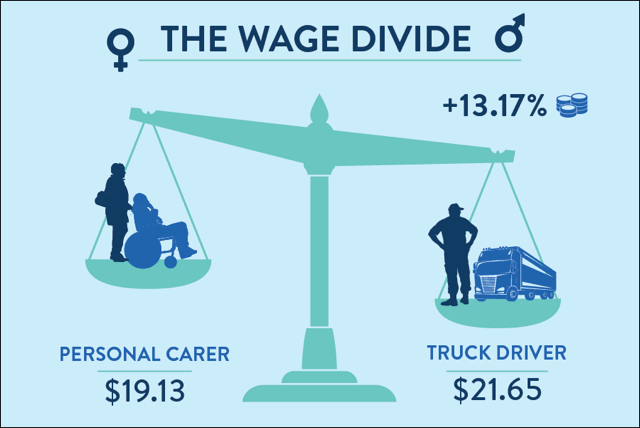
Let’s talk about the care economy—the backbone of our society. Who changes diapers? Who tends to the sick? Who cleans the homes, cooks the meals, and cares for the elderly? Women. And yet, these jobs—jobs that require patience, skill, and emotional labor—are among the lowest paid. The minimum wage crisis isn’t just a numbers game; it’s a cultural one. Society has long treated “women’s work” as inherently less valuable, as if nurturing and caregiving are hobbies rather than essential services. This devaluation isn’t accidental; it’s deliberate. By paying poverty wages for care work, society reinforces the idea that women’s labor is expendable.
Take childcare workers, for example. They’re responsible for shaping young minds, yet they’re paid so little that many can’t afford childcare for their own children. Or home health aides, who care for the elderly and disabled, often working multiple jobs just to get by. These aren’t just jobs; they’re acts of love and service. And yet, we’ve built an economy that treats this labor as worthless. The minimum wage crisis exposes the hypocrisy of a society that claims to value family and community while systematically underpaying the women who keep those families and communities alive.
The Intersectional Trap: Race, Immigration, and the Minimum Wage
The minimum wage crisis isn’t just a gender issue; it’s an intersectional one. Women of color, immigrant women, and undocumented workers are disproportionately represented in minimum wage jobs. For these women, the exploitation is compounded by racism, xenophobia, and the constant threat of deportation. Many are trapped in jobs with no labor protections, no sick leave, and no recourse against abuse. The minimum wage crisis isn’t just about poverty; it’s about survival in a system that treats some women as disposable.
Consider the immigrant woman working in a nail salon, her hands raw from chemicals, her wages withheld by an employer who knows she has no legal recourse. Or the Black single mother working two minimum-wage jobs, her children seeing her only in passing, her body exhausted from the relentless grind. These aren’t just stories; they’re the lived reality of millions. And the system benefits from it. By keeping wages low and labor protections weak, employers can exploit the most vulnerable workers without consequence. The minimum wage crisis isn’t just an economic issue; it’s a human rights crisis.
The Domino Effect: How Low Wages Perpetuate Inequality
The minimum wage crisis doesn’t exist in a vacuum. It’s a domino that sets off a chain reaction of inequality. When women are paid poverty wages, they can’t save for emergencies, invest in education, or build wealth. They’re trapped in a cycle of debt and dependence. And this cycle doesn’t just affect them—it affects their children, their communities, and future generations. Low wages perpetuate poverty, which in turn reinforces gender and racial disparities. It’s a vicious cycle, and the minimum wage is the linchpin holding it all together.
Think about it: if a woman working full-time at minimum wage can’t afford childcare, she might have to rely on welfare or family support. If she can’t afford healthcare, she might skip preventive care, leading to chronic illness. If she can’t afford rent, she might face eviction, disrupting her children’s education. These aren’t just personal struggles; they’re systemic failures. And the minimum wage is at the heart of it all. By refusing to pay women a living wage, society ensures that inequality persists, generation after generation.
What’s the Solution? A Living Wage for All Women
So, what’s the answer? It’s simple: a living wage. Not a minimum wage that keeps people in poverty, but a wage that allows women to thrive. A wage that covers rent, childcare, healthcare, and emergencies. A wage that recognizes the true value of women’s labor. But here’s the catch: raising the minimum wage isn’t enough. We also need to dismantle the systems that devalue women’s work in the first place. We need to invest in care infrastructure, so that women aren’t forced into low-wage jobs out of necessity. We need to strengthen labor protections, so that women can’t be exploited without consequence. And we need to challenge the cultural narratives that tell us women’s work is worth less.
This isn’t just about policy; it’s about power. The minimum wage crisis is a feminist issue because it’s about who holds power in our economy. Right now, that power is concentrated in the hands of a few—mostly men, mostly white, mostly wealthy. But when women demand a living wage, they’re not just asking for more money. They’re demanding dignity, autonomy, and the right to shape their own lives. And that’s a threat to the status quo.
The fight for a living wage isn’t just a fight for economic justice; it’s a fight for liberation. So, let’s stop treating the minimum wage as a policy detail and start treating it as a feminist imperative. Because when women earn enough to live, we all win.







Leave a Comment