
Picture this: a room, meticulously curated, where the scent of aged leather mingles with the faintest whisper of cigar smoke—even if the occupant has never lit one. A space where the walls are adorned with memorabilia of conquests, real or imagined, and the only soundtrack is the hum of a television broadcasting sports that no one else in the house particularly cares about. This, my friends, is the hallowed ground of the “man cave,” a sanctuary that has somehow become the poster child for domestic segregation. But let’s be real: if man caves are the answer, what exactly is the question? And more importantly, why does it feel like an elaborate excuse to avoid the messier business of sharing space?
The Illusion of Autonomy: A Room of One’s Own, But Not Really
Virginia Woolf famously declared that a woman needed “a room of one’s own” to write fiction. Fast forward a century, and the modern man has been gifted his own version—not for the pursuit of art or thought, but for the consumption of nachos and the worship of flat-screen gods. The man cave is sold as a retreat, a place of respite from the chaos of shared living. Yet, it’s a retreat that often comes at the cost of another room being repurposed, another corner of the home surrendered to the cult of masculinity. Where is the reciprocity? Where is the acknowledgment that domestic harmony isn’t a zero-sum game? The man cave, in its current iteration, is less a sanctuary and more a gilded cage—a space that reinforces the idea that sharing a home doesn’t mean sharing a life.

The Tyranny of the “Me Space”: When Personalization Becomes Isolation
There’s a certain irony in the term “man cave.” It’s not a cave in the traditional sense—a dark, damp, and communal dwelling—but a meticulously designed enclave where one can indulge in the fantasy of solitude without the inconvenience of actual wilderness. The man cave is the ultimate in curated isolation: a space where every throw pillow, every neon sign, every framed jersey of a long-forgotten athlete screams, “This is mine, and yours is elsewhere.” But personalization doesn’t have to mean segregation. Why must the pursuit of individuality come at the expense of collective living? The tyranny of the “me space” isn’t just about physical rooms; it’s about the mental and emotional boundaries we erect to avoid the discomfort of true cohabitation.
Consider the language used to describe these spaces: “sanctuary,” “refuge,” “escape.” These words paint the man cave as a necessity, a non-negotiable feature of modern domesticity. But what if the real necessity is learning to coexist in shared spaces without relegating one another to the sidelines? What if the challenge isn’t about carving out a corner for oneself, but about redefining what a home can be—a place where individuality and togetherness aren’t mutually exclusive?
The Gendered Architecture of Domestic Life
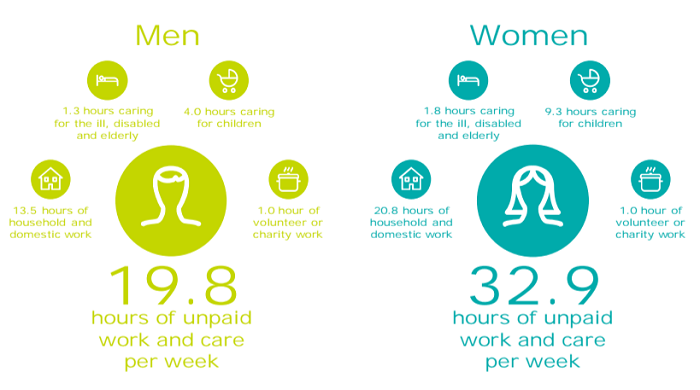
Let’s not mince words: the man cave is a product of gendered architecture, a physical manifestation of the unspoken rules that govern who gets the attic and who gets the kitchen. It’s the architectural equivalent of the “boys’ club,” a space where the rules of engagement are simple: no interruptions, no compromises, no shared emotional labor. But domestic life isn’t a board game where you can just “pass” your turn. The man cave, in its most reductive form, is a symptom of a larger problem—the way we design our homes to reinforce outdated gender roles rather than challenge them.
Why is it that the spaces designated for relaxation and leisure are so often gendered? Why must the “man cave” exist in opposition to the “she-shed” or the “craft room”? Why can’t a living room be a space for everyone, without the need for a separate enclave to reclaim one’s masculinity? The answer, of course, lies in the way we’ve been conditioned to associate certain spaces with certain identities. The man cave isn’t just a room; it’s a statement—a declaration that some parts of life are off-limits to negotiation.

The Emotional Cost of Architectural Segregation
There’s a quiet violence in the way man caves are normalized. It’s not the kind that leaves bruises, but the kind that erodes intimacy over time. When one partner retreats to their cave, it’s not just a physical separation—it’s an emotional one. It’s a way of saying, “I need a break from you,” without ever having to articulate the reasons why. And while breaks are healthy, the man cave takes it a step further: it institutionalizes the break. It turns solitude into a lifestyle choice, one that doesn’t require explanation or apology.
But what about the partner left to navigate the rest of the home alone? What about the children who learn that “dad’s cave” is a place of retreat while “mom’s space” is something to be carved out in the margins? The emotional cost of architectural segregation is a slow drip of resentment, a buildup of unspoken grievances that fester until they erupt in ways that no man cave can contain. The man cave doesn’t solve the problem of domestic tension; it just buries it under a layer of faux leather and LED strip lighting.
Rethinking the Cave: From Fortress to Fellowship
So, what’s the alternative? Must we abolish the man cave entirely, or can we reimagine it as something more inclusive? The answer isn’t to eliminate personal spaces but to redefine what those spaces can be. A man cave doesn’t have to be a fortress of solitude; it can be a studio, a library, a music room—a place where individual passions are nurtured without excluding others. The key is to design spaces that invite participation rather than enforce isolation.
Imagine a home where the “cave” is a shared creative hub—a place where board games are played, where movies are watched together, where the television isn’t the sole focus of attention. Imagine a space where the memorabilia on the walls tell a story of shared experiences rather than solitary conquests. This isn’t a utopian fantasy; it’s a challenge to the status quo. It’s a call to design homes that reflect the complexity of modern relationships, where individuality and togetherness aren’t pitted against each other but celebrated as complementary forces.
The man cave, as it stands, is a relic of a bygone era—a time when domestic life was neatly divided into spheres of influence. But we’re not living in that era anymore. We’re living in a world where the lines between public and private, individual and collective, are constantly being redrawn. The man cave, in its current form, is a reminder of what happens when we cling to old scripts instead of writing new ones. It’s time to ask ourselves: if the cave is the answer, what was the question? And more importantly, are we asking the right questions at all?







Leave a Comment