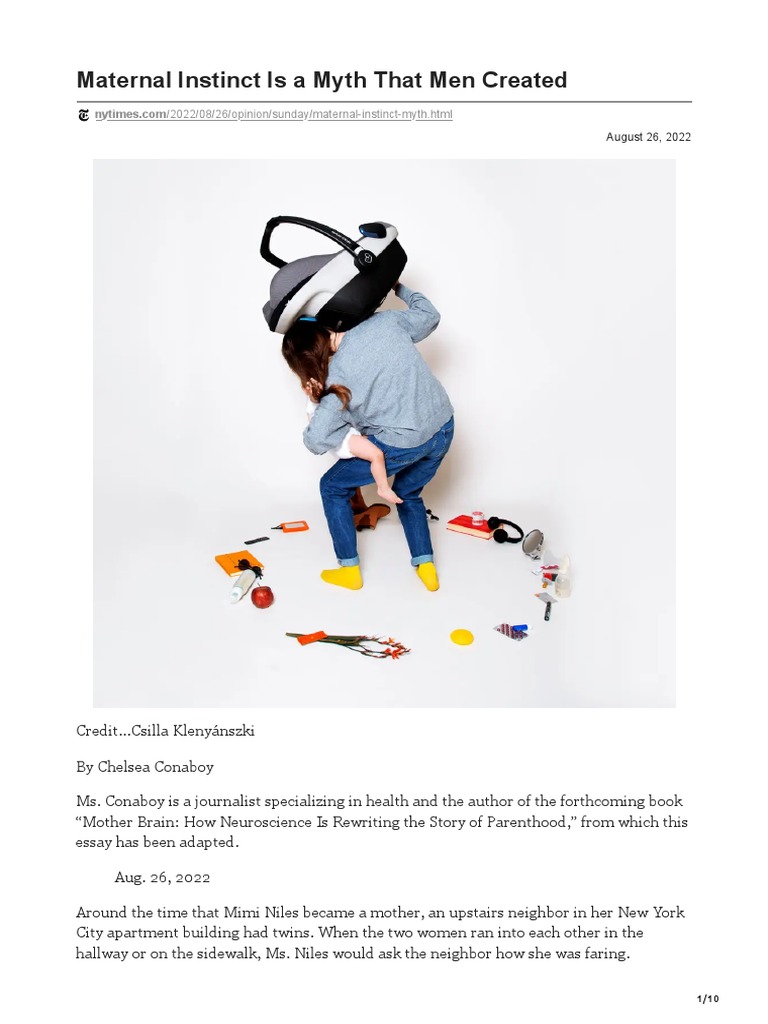
We have been sold a narrative so intricately woven that it has become the unquestioned truth: that maternal instinct is an inherent, unchangeable drive unique to women. This myth, far from celebrating motherhood, stealthily shackles women within predetermined roles while simultaneously liberating men from the responsibilities of parenthood. It’s a tale crafted not by biology alone, but by cultural scripts written and perpetuated by patriarchal design. It’s time to unravel this fiction, exposing the convenience it grants men and the profound implications it has on gender dynamics, equity, and the fabric of family life itself.
The Illusion of Innate Maternal Instinct
From the moment a child is born, society inundates women with expectations to become the quintessential nurturer. But what if this “maternal instinct” is not a primal biological imperative? What if it’s an overgeneralized and romanticized script designed to minimize women’s autonomy? Research indicates that caregiving behaviors are not uniquely hardwired in women; rather, they are learned, influenced by socialization and circumstances. A woman’s attachment to her child, while deeply emotional and powerful, is cultivated through experience, support, and cultural reinforcement—not simply a genetic switch flicked by childbirth.

This revelation doesn’t diminish the strength or tenderness of mothers. Instead, it challenges the notion that maternal care is the sole province of women. Paternity and caregiving are capacities encoded in human nature, not exclusive secrets of one gender. The idea that women are instinctively equipped for motherhood distances men from these roles, feeding into a systemic imbalance steeped in gendered labor division.
The Patriarchal Alibi: How the Myth Frees Men from Parent Responsibilities
While the so-called maternal instinct envelops women in duties and expectations, its twin shadow frees men from comparable scrutiny. “I’m not the nurturing type” becomes a permissible excuse, liberating men from the domestic arena’s emotional and physical toil. This isn’t happenstance. It’s a calculated strategy that cloaks male absence and disengagement in the guise of natural difference.

By insisting that maternal care is instinctual and paternal involvement optional or conditional, society shifts the burden squarely onto women. This has tangible repercussions: economic disparity grows, women’s professional lives are curtailed or derailed, and the emotional labor of maintaining family cohesion is disproportionately shouldered. Men’s freedom to opt in or out remains unquestioned, a privilege wrapped in pseudo-scientific justification.
Deconstructing the Cultural Script: Parenting Beyond Gendered Boxes
The “maternal instinct” myth underpins a rigid dichotomy that paints caregiving as inherently feminine and provision as inherently masculine. This binary ignores the fluidity and variability of human capacity. Parenting is a social practice—a series of actions, decisions, and emotional investments—not a mystical inheritance.
When society begins to view caregiving as a skill rather than an innate trait, a seismic transformation occurs. It creates the space for fathers and non-binary parents to claim their role authentically. It acknowledges that nurturing is a learned ability, nurtured by environment, encouragement, and opportunity—things everyone deserves regardless of sex or gender identity. This shift challenges entrenched norms and invites a radical reconstruction of family roles.
The Emotional Toll of Enforced Maternal Expectations
Women’s mental health often suffers under the weight of these imposed maternal identities. The myth imposes not only expectations of unconditional love and sacrifice but also creates guilt and self-recrimination when “instinct” deserts them—be it through postpartum depression, ambivalence, or simply exhaustion. Denying women the space to negotiate their own feelings into complex, conflicted realities is a brutal facet of this myth.
Moreover, the glorification of maternal instinct often silences women who don’t fit the mold—those who don’t want children, those who struggle with parenting, or those who deliberately choose alternative family structures. This narrow framing becomes a tool for policing and punishing women’s choices, perpetuating misogyny under the guise of celebrating motherhood.
Reclaiming Parenthood: Toward Equity and Shared Responsibility
By dismantling the myth of maternal instinct, society can aspire to a more equitable distribution of caregiving responsibilities. This requires redefining what it means to be a parent. Parental commitment should be measured by involvement, intentionality, and presence—not gender.
The path forward involves policy reforms that support all parents, destigmatize male caregiving, and foreground the realities of emotional labor. Paid parental leave, affordable childcare, and robust community support are vital mechanisms to redistribute caregiving equitably. Only when men’s participation is normalized rather than exceptionalized can the illusion of maternal instinct lose its grip.
The Liberation of Men Through Challenging Myths
Ironically, this myth that ostensibly glorifies motherhood is also a prison for men. It shackles them to outdated ideals of masculinity that preclude vulnerability and emotional intimacy. Men are equally capable of nurturing relationships but are denied permission by the weight of cultural expectations.
Embracing a model of parenthood unmoored from instinctual determinism frees men to engage fully and authentically with their children and partners. It emancipates them from the constraining scripts of stoicism and detachment, fostering healthier interpersonal dynamics and well-being.
Conclusion: The Myth Must Fall for True Progress
The maternal instinct myth is not a benign cultural artifact; it’s a patriarchal contrivance that perpetuates inequality, confines identities, and glosses over the complexity of human caregiving. It demands unwavering, unquestioned maternal devotion while absolving men from the reciprocal obligations of parenthood. To envision a just, compassionate world liberated from these constraints, this myth must be exposed—and dismantled.
The revolutionary prospect lies in redefining parenthood as a shared, learned, and evolving experience. Only by breaking free of this ingrained fallacy can society begin to forge families grounded in equity, empathy, and mutual responsibility.










Leave a Comment