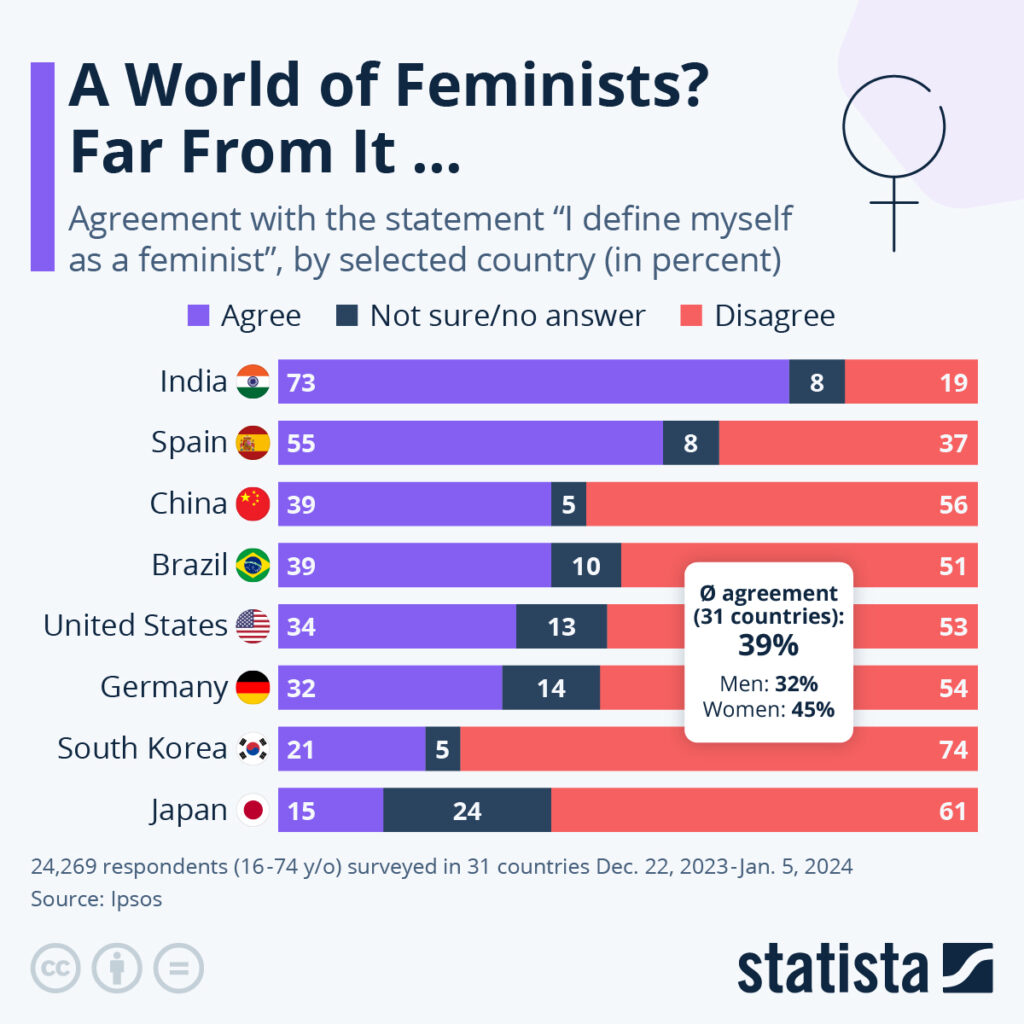
The global feminist landscape is far richer, more diverse, and more volatile than the sanitized, Anglo-American-centric narratives often portrayed in mainstream American media. While U.S.-based stories of feminism predominantly spotlight second-wave debates or the burgeoning rise of intersectional discourse, a vast constellation of movements worldwide persists in blazing transformative trails—movements that deserve amplified visibility. These are not just tales of struggle and resistance; they are chronicles of resilience, defiance, and radical reimaginings of gender, power, and liberation. This is an invitation to delve beyond borders, beyond familiar discourses, to witness the world’s feminist movements that American media persistently overlooks.
Emerging Feminist Currents in the Global South
In countries often categorized under the “Global South,” feminist activism is not merely a replication of Western frameworks. It is a multifaceted rebellion rooted in the relentless fight against colonial legacies, systemic poverty, and entrenched patriarchal violence. Here, feminism is inseparable from community survival, indigenous rights, and anti-capitalist struggles. These movements refuse to be pigeonholed as “women’s issues” alone, instead embedding gender justice within wider battles for land, economic equity, and cultural sovereignty.
From the grassroots collectives demanding safe passage for women migrants in Latin America, to East African feminists campaigning against female genital mutilation and encrypted digital violence, these efforts reflect a linguistic, cultural, and political hybridity that the American media largely eschews. Their stories are detailed, textured, touching on how gender intersects with ethnicity, religion, and class in ways that defy simplistic narratives.

The Quiet Revolution of Islamic Feminism
Islamic feminism presents a formidable challenge to monolithic perceptions of Muslim women. Far from the stereotypes of either oppressed victims or outspoken radicals, Islamic feminists navigate patriarchal religious texts with a profound hermeneutical rigor. Through nuanced reinterpretations of the Quran and Hadith, these activists craft theological arguments for gender equity that resist both Western imperialism and local authoritarianism.
This movement encompasses scholars, lawyers, educators, and grassroots organizers across countries from Indonesia to Morocco. It breathes new life into spiritual traditions while critiquing gendered violence and unjust legal systems. Yet, American media often sidelines these voices, neglecting the rich debates and political strategies these women employ to dismantle patriarchy within their own cultural frameworks.
Intersectional Feminism: Beyond Tokenism
While intersectionality has gained traction in American feminist circles, the global iterations of this concept are many times more expansive and experimentally resilient. Feminists around the world challenge not only sexism but dismantle interconnected systems of oppression shaped by caste, ethnicity, indigeneity, sexual orientation, and economic status.
Consider Dalit feminists in India, bravely contesting caste-based gender violence while simultaneously confronting upper-caste feminist erasures. Or Afro-Indigenous Amazonian women who organize resistance knowledgeably against ecocide and extractivism, asserting their identities in ways Western mainstream feminism seldom acknowledges. These narratives are rich tapestries of resistance, forming the backbone of many unconquered feminist spaces.
Digital Resistance and Cyberfeminism in Authoritarian Regimes
Global feminist activism increasingly finds refuge and political leverage in digital spaces, especially where authoritarian repression muzzles public dissent. In countries with draconian censorship laws, feminist hackers, bloggers, and online collectives craft strategies to subvert state control, expose gender violence, and build international solidarity networks.
This digital defiance often manifests in campaigns against revenge porn, online harassment, and state-imposed dress codes. The context here is brutal but the ingenuity displayed is staggering: encrypted messaging apps, viral hashtag movements, and artistic digital interventions amplify unheard voices with urgency and stealth. The American media’s disinterest in these cyberfeminist battles suggests a profound misunderstanding of 21st century feminist terrains.

Transnational Feminist Alliances and Their Complexities
Feminist alliances that span borders are often idealized as seamless collaborations but the reality is far more complex. These entanglements involve negotiating power asymmetries between activists in the Global North and South. Questions of representation, aid dependency, and epistemic violence frequently complicate genuine solidarity.
Yet, these transnational networks also generate powerful knowledge exchanges and joint resistance against gendered manifestations of global capitalism, militarism, and climate injustice. They mobilize around shared, intersecting crises such as migration, sexual violence in conflict zones, and reproductive rights under siege. Their stories crack open the myth of a singular feminist orthodoxy, revealing instead a polyphonic global feminist symphony that American media tends to simplify or outright ignore.
The Forgotten Histories of Feminist Radicalism Outside America
The annals of feminist history often lionize Western icons while obscuring radical feminisms that took root in less covered regions. In Latin America, the fighter spirit of women who resisted dictatorships, created autonomous women’s spaces, and led massive protests must be resurrected from historical amnesia. Similarly, feminist movements in post-Soviet states confront the resurgence of patriarchal conservatism and nationalist agendas with an aggressive tenacity that deserves recognition.
Unearthing these histories destabilizes the dominant feminist timeline and calls for acknowledgment of plural feminist pasts, rich with lessons and continuing struggles that inform today’s revolutions.
Reclaiming Feminism’s Global Narrative—A Call to Awareness
To truly understand feminism’s global pulse requires committing to stories beyond the usual suspects. It demands an intellectual and emotional reckoning with power, privilege, and the limitations of dominant media frameworks. The feminist movements ignored by American media are not marginal; they are central to the world’s ongoing contestation over gender, sexuality, and justice.
The complexity, courage, and creativity they embody must be engaged on their own terms, in all their unruly glory. Only then can feminism be truly global and revolutionary, rather than a commodified discourse recycled within echo chambers.







Leave a Comment