
The princess is no longer waiting for a prince to rescue her. She is digging. She is building. She is reclaiming the narrative with a shovel and a dream. The feminist fairy tale is not a passive story—it is a construction site, a fortress of self-determination, a moat filled not with water, but with the unapologetic truth of women’s autonomy. This is not a tale of damsels and dragons. This is the chronicle of a sovereign woman who fortifies her world against the very forces that once sought to define her.
The Princess as Architect: Reclaiming the Castle
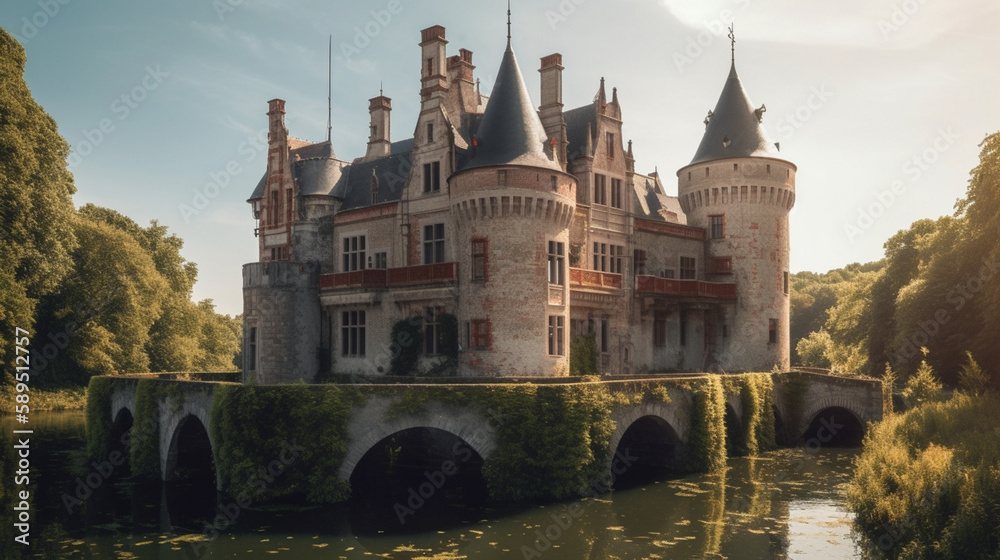
For centuries, the castle was a symbol of confinement—a gilded cage where women were told to wait, to dream, to be beautiful. But what if the princess never wanted to be rescued? What if she wanted to build her own kingdom? The feminist fairy tale flips the script. The princess becomes the architect. She surveys the crumbling towers of patriarchal tradition and begins to lay the foundation of a new world. Bricks are not just mortar and stone; they are the weight of her own voice, the structure of her own choices. The moat she digs is not a defensive trench—it is a declaration. It says: I will not be flooded by your expectations. I will not drown in your silence. This castle is mine, and I will defend it with every tool at my disposal.

The Moat as Metaphor: Boundaries in a World That Demands Surrender
A moat is more than water. It is a boundary. It is a line drawn in the earth that says: this far, and no further. In a world that has historically demanded women surrender their autonomy, the moat is a radical act. It is the princess saying, “I will not be your damsel. I will not be your muse. I will be your architect.” The feminist fairy tale understands that boundaries are not walls—they are the scaffolding of self-respect. The moat is the space between “I want” and “I must.” It is the distance between a woman’s dreams and a world that tells her to shrink. Digging it is not an act of aggression. It is an act of survival.
Generative AI and the Princess’s Toolkit
In the digital age, the princess does not need a magic wand—she needs a keyboard. Generative AI is her new toolkit. With it, she can design castles that never existed, rewrite endings that were never hers, and build worlds where she is not the prize, but the protagonist. The AI-generated fairy tale castle with its turrets and moat is not just a pretty image—it is a blueprint for a future where women are not passive characters in someone else’s story. They are the creators. They are the engineers. They are the ones who decide what the moat will hold: water, or the weight of their own unbroken will.
Feminist Retellings: The Princess Who Rewrites the Rules
The feminist fairy tale is not a single story—it is a rebellion in prose. It is the princess who refuses the kiss, who chooses the sword over the spindle, who builds a moat not to keep others out, but to keep herself in—safe, sovereign, and unapologetic. Feminist retellings are the princess’s manifesto. They are the ink on the parchment of history, rewriting the rules of engagement. No longer will she be the silent figure in the tower. She will be the one who climbs down, who digs deep, who builds anew. The moat is her signature. The castle is her kingdom. And the story? It is hers to tell.

The Princess’s Manifesto: A Call to Dig
So what does the feminist fairy tale ask of you? It asks you to dig. To build. To refuse the roles that have been handed to you. It asks you to see the moat not as a barrier, but as a boundary—one that protects what matters. It asks you to be the princess who builds her own castle, who writes her own ending, who defends her own sovereignty. The princess does not wait for a prince. She waits for no one. She picks up the shovel. She starts digging. And the world? It better get out of her way.








Leave a Comment