Confidence in the classroom is often treated as an intangible trait — a nebulous “something” that either shines naturally or remains frustratingly out of reach. Yet, beneath this ethereal veneer lies a stark, quantifiable reality: boys and girls enter academic spaces armed with markedly different reservoirs of self-assurance. This divergence, known as the confidence gap, quietly orchestrates an unequal narrative in how young minds engage, assert, and achieve. What if this gap is not merely a benign characteristic but a catalyst for systemic bias, reshaping the academic fate of countless students? It’s time to unravel this phenomenon, recalibrate our perspectives, and challenge the deeply rooted societal scripts that nurture it.
The Unspoken Divide: Defining the Confidence Gap
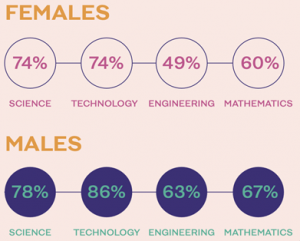
The confidence gap between boys and girls is more than just a statistical anomaly; it is a recurring theme etched deeply into classroom dynamics worldwide. This chasm reflects the discrepancy in self-assuredness and assertiveness with which students approach tasks, participation, and intellectual challenges. Boys frequently exhibit heightened confidence, even in areas where their performance may not surpass that of their female counterparts. Conversely, girls, despite often demonstrating superior competence and diligence, harbor pervasive self-doubt that stifles their willingness to take risks or vocalize insights.
Such a divergence is not born out of innate ability but cultivated through subtle, yet insidious social conditioning. From early childhood, gendered expectations infiltrate educational environments—whether through teacher feedback, peer interactions, or cultural narratives around ability and success. Thus, the confidence gap becomes a self-perpetuating cycle, silently shaping career trajectories and societal participation long after the final bell rings.
The Anatomy of Classroom Confidence: Socialization and Stereotypes
At the heart of the confidence gap lies a confluence of socialization processes and entrenched stereotypes. Boys are often encouraged to be bold, vocal, and competitive in academic settings, traits that are rewarded through heightened attention and leadership opportunities. This tacit endorsement of assertiveness creates a fertile ground for boys to cultivate a stronger internal sense of capability.
Girls, on the other hand, are frequently subjected to conflicting messages: praised for neatness and compliance but subtly discouraged from dominating conversations or making mistakes. This double bind fosters a culture of reservation, where perfectionism coexists with reticence. When girls hesitate to raise their hands or question assumptions, it is not a lack of intelligence but a deeply ingrained wariness of social reprisal and failure.
Moreover, the persistence of gendered role models—or the glaring absence thereof—in STEM and leadership further exacerbates the issue. Without visible exemplars validating their potential, girls struggle to envision a place for themselves beyond traditional academic niches, shrinking their confidence accordingly.

The Silent Saboteur: Confidence and Academic Performance
Academic prowess is not solely the footprint of raw intellect; it is inextricably linked to the audacity with which students engage challenging material. The confidence gap distorts this interaction. Paradoxically, girls often outperform boys in standardized assessments and classroom assignments, yet report lower levels of confidence.
This discrepancy manifests in risk-averse behaviors—avoiding complex problems, hesitating to speculate answers during discussions, and shying away from leadership roles in group work. Boys, emboldened by their self-assurance, often attempt questions beyond their understanding, learning through trial and error. This approach, while sometimes leading to failure, also fuels a growth-oriented mindset unavailable to many girls shackled by perfectionistic fear.
The consequence is a self-fulfilling prophecy where girls’ reluctance to embrace intellectual risk limits their opportunities to refine problem-solving skills and creative thinking, ultimately curbing their academic and professional development.
Bridging the Divide: Strategies to Cultivate Equitable Confidence
Addressing this gap demands a paradigm shift from educators, parents, and policy-makers alike. First, it involves dismantling implicit biases that shape teacher expectations. Research reveals teachers often call on boys more frequently, praising them for effort rather than outcome, while girls receive feedback geared toward compliance and neatness. Transforming these interaction patterns is critical.
Secondly, classrooms must become incubators for risk-taking devoid of punitive consequences. Celebrating mistakes as learning opportunities encourages girls to step forward without the looming threat of failure. Interventions that promote growth mindset principles have demonstrated promising results in tempering the confidence gap.
Equally imperative is the deliberate inclusion of diverse role models, particularly female figures in STEM, leadership, and creative fields. Representation fuels aspiration, offering concrete proof that competence and confidence are not gender-bound.
Finally, curriculum design should integrate collaborative and discursive formats, where students of all genders are equally compelled to express thoughts and negotiate ideas, leveling the playing field and eroding traditional power dynamics in classroom discourse.
The Future Reimagined: Toward a Classroom Without Confidence Barriers
The confidence gap, though stubbornly persistent, is not immutable. Recognizing its roots in socialization and institutional practices opens the door to transformative change. Imagine classrooms where every child—regardless of gender—carries the unshakeable conviction to question, assert, falter, and ultimately flourish.
Such environments would be crucibles of innovation and equity, where confidence serves not as a gatekeeper but as a common currency empowering all students to realize their potential. This vision demands reckoning with uncomfortable truths about how gendered assumptions shape educational experiences and an unrelenting commitment to rewriting those scripts.
When confidence ceases to be a scarce commodity meted out unevenly between boys and girls, education becomes not a battleground of inequality but a vibrant arena of opportunity and justice. The question no longer remains whether we can close the gap—it becomes how swiftly and decisively we will do so.











Leave a Comment