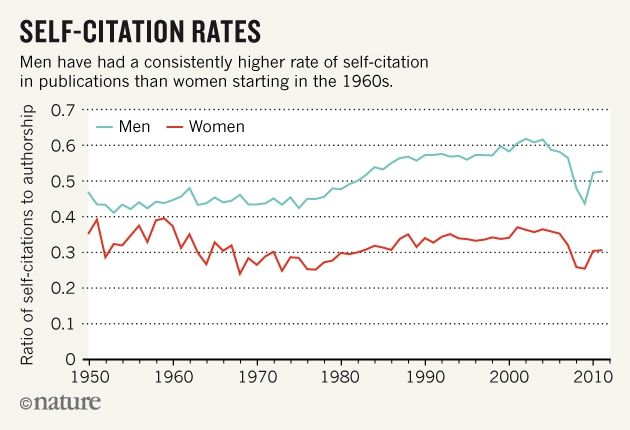
What does it say about the academic ecosystem when men predominantly cite men, while women seem inclined to cite everyone? Is this merely an innocuous quirk of scholarly behavior, or does it expose a persistent fissure in how intellectual authority is constructed and perpetuated? The citation gap is not just about numbers in bibliographies; it echoes the subtle yet entrenched dynamics of power, recognition, and exclusion in the halls of knowledge.
The Citation Gap: A Window into Gendered Epistemologies
At first glance, citations may appear as sterile academic currency — a way to attribute ideas, give credit, and anchor arguments. But beneath this surface lies a complex interplay of biases and networks that shape who gets acknowledged and who remains silent. Men’s tendency to disproportionately cite other men presents a fascinating puzzle: why does this gendered citation pattern persist, and what does it reveal about the invisible scaffolding of intellectual credibility?
Women’s more inclusive citation practices, on the other hand, unveil an intriguing paradox. By citing a broader range of authors — encompassing both men and women — women scholars seemingly resist the homogenizing forces of academic patriarchy. Could this be a form of epistemic insurgency, a subtle strategy to dismantle ingrained hierarchies? The act of citation transcends mere acknowledgment; it forms the fabric of who belongs to the scholarly conversation.

The Self-Citation Phenomenon: Men’s Insular Citation Practices
Delving deeper, self-citation practices reveal a glaring asymmetry. Men tend more frequently to cite their own work, a behavior that inflates their visibility and suggests self-assuredness—or perhaps entitlement—in the academic marketplace. This self-referential loop not only boosts men’s perceived authority but also risks creating echo chambers that drown out diverse voices.
Women, conversely, are less prone to self-citation. This could stem from various factors, including differential socialization, confidence gaps influenced by systemic sexism, or a strategic choice prioritizing communal over individual recognition. However, fewer self-citations may inadvertently stunt women’s career trajectories since citation counts are a prominent metric for success. Thus, self-citation – or the lack thereof – becomes a double-edged sword.
Implications for Academic Visibility and Career Advancement
The implications are far-reaching. Citations are more than academic nods; they influence hiring decisions, grant awards, tenure approvals, and invitations to speak. When men disproportionately cite men—and themselves—the resultant citation inertia canonizes a narrow cohort of voices, predominantly male, thereby marginalizing women’s intellectual contributions.
Women’s far-reaching citation habits, while ostensibly egalitarian, may dilute their citation capital within a system that rewards repeated acknowledgment of the same authoritative figures. This dynamic exacerbates the citation gap, perpetuating structural inequities with subtle, institutionalized inertia.
The Role of Gendered Networks and Academic Gatekeeping
Academic citation communities mirror larger gendered social networks, where access and inclusion are often gatekept by implicit biases and historic power distributions. Men’s tendency to cite other men can be interpreted through the lens of homophily—the preference for associating with similar others. Such networks reinforce their dominance, creating closed citation circuits that perpetuate male visibility.
Women’s broader citation range may reflect less access to these closed male-dominated networks or a conscious effort to validate a wider array of scholarly voices, thereby challenging the gatekeeping mechanisms that valorize male authority. Still, the structural barriers remain rugged and often unacknowledged in academic discourse.

Challenging the Citation Gap: From Awareness to Action
The question thus looms: how to rectify this persistent citation disparity that fuels academic gender inequity? Awareness is foundational but insufficient. Intentional citation practices that consciously incorporate female scholars and marginalized voices are essential first steps. Faculty, peer reviewers, and editors hold powerful levers to disrupt the status quo by advocating for equitable citation audits and inclusive scholarly norms.
More radically, academia must rethink its adulation of citation metrics as the arbiter of merit. Diversifying evaluative criteria to account for quality over quantity, interdisciplinary impact, and community engagement can alleviate the pressures that privilege self-citations and insular networks. Encouraging women to embrace confident self-citation—and rewarding them when they do—could also narrow the citation chasm that curtails their professional ascent.
Conclusion: The Politics of Prestige in Scholarly Citation
The citation gap lays bare a passionate battleground where gender, power, and intellectual legitimacy converge. Men’s proclivity to cite men, especially themselves, underscores the entrenched patriarchy skulking within academic rituals. Women’s inclusive citation habits, while admirable, highlight a systemic vulnerability in navigating scholarly recognition.
To transform citation from an instrument of exclusion into a tool of equity demands relentless critical scrutiny, structural reform, and cultural shifts—where who is cited is not an homage to power, but a reflection of intellectual diversity and rigor. After all, citations should not merely build careers, but build knowledge that truly represents the kaleidoscope of human thought.









Leave a Comment