
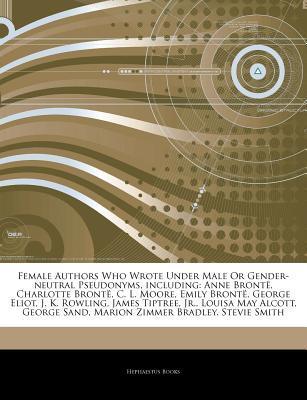
What if the greatest novel you’ve ever read was written by a woman—but credited to a man? What if the sharpest political satire, the most searing critique of society, the most daring exploration of human desire, all bore a masculine name on the cover? History is riddled with such paradoxes, where brilliance was forced to wear a disguise to be taken seriously. These women didn’t just write under male pseudonyms—they forged entire identities, navigating a world that refused to read their words unless they were draped in a man’s cloak. Their stories aren’t just about literature; they’re about survival, subversion, and the quiet revolution of a pen in a corseted hand.
The Tyranny of the Literary Canon: Why Women Had to Hide Their Names
The 19th century was not kind to women who dared to wield a pen with ambition. The literary world was a fortress of male gatekeepers, where a woman’s voice was either dismissed as frivolous or, worse, dangerous. Publishers refused to print works by women unless they were safely tucked behind initials or a man’s full name. The fear wasn’t just of bad writing—it was of good writing that might unsettle the status quo. A woman writing about desire? Unseemly. A woman dissecting politics? Unnatural. A woman crafting a tale that rivaled the greats? Impossible—unless she pretended to be someone else.
Consider the sheer audacity of it: to write under a false name wasn’t just a trick; it was an act of defiance. These women knew that if they signed their real names, their work would be relegated to the “domestic sphere” of poetry or children’s stories. But if they donned a man’s identity, suddenly their words carried weight. The pseudonym became a shield—and a sword. It allowed them to infiltrate the halls of literary power, to be reviewed by the same critics who would have sneered at a woman’s byline, to be compared to Shakespeare and Dickens without the automatic dismissal.

Yet this wasn’t just about getting published. It was about being heard. The pseudonym wasn’t a mere convenience; it was a lifeline. Women like the Brontë sisters, who initially published as “Currer, Ellis, and Acton Bell,” knew that without their masculine aliases, their novels—*Jane Eyre*, *Wuthering Heights*—might never have left the slush pile. The world wasn’t ready for a woman to write about madness, passion, or the bleak moors of Yorkshire. So they wrote as men. And in doing so, they rewrote the rules.
The Pseudonym as a Weapon: How Women Turned Disguise into Dominance
To call these women “victims” of the system would be to underestimate their cunning. They didn’t just tolerate the pseudonym—they weaponized it. The disguise wasn’t a prison; it was a disguise of power. Take George Eliot, for instance. Mary Ann Evans wrote some of the most profound novels of the Victorian era—*Middlemarch*, *The Mill on the Floss*—under a name that sounded like a man’s, but with a first name that carried a hint of the feminine. Why? Because “George” was safe. “Eliot” was neutral. Together, they were unthreatening enough to slip past the gatekeepers, yet distinctive enough to be remembered.
But here’s the twist: the pseudonym didn’t just protect her; it amplified her. Readers assumed “George Eliot” was a man, and so they approached her work with the seriousness reserved for male authors. When they discovered the truth, the shock was palpable—but the damage was done. Her words had already carved their place in the canon. The pseudonym wasn’t a lie; it was a strategy. It forced the world to engage with her ideas before they could dismiss her gender.
And then there’s Amantine Lucile Aurore Dupin, who wrote under the name George Sand. She didn’t just adopt a man’s name—she adopted a man’s life. She smoked cigars, wore trousers, and rode horses astride. She was scandalous in every sense, and her writing reflected that boldness. *Indiana*, her first novel under the Sand pseudonym, was a scathing critique of marriage and societal expectations. By writing as a man, she didn’t just gain access to the literary world; she set it on fire.
The pseudonym, then, was more than a mask. It was a manifesto. It said: *I will write what I must, and I will be read as I deserve.* These women didn’t just hide behind male names—they used them to dismantle the very structures that sought to silence them.
The Aftermath: When the Truth Came Out, Did the World Care?
What happened when the world discovered the truth? Sometimes, the revelation was met with outrage. When *Wuthering Heights* was revealed to be the work of two women, critics who had praised its “masculine power” were forced to confront their own biases. The Brontës were accused of writing something “unfeminine,” as if passion and darkness were traits reserved for men.
Other times, the reaction was indifference. George Eliot’s true identity was an open secret among the literary elite, yet her work was still celebrated. The pseudonym had done its job: it had allowed her to be judged on her merit, not her gender. But the fact that her sex was still a topic of gossip decades later speaks volumes. The world could accept a woman’s genius—just not her name.
And then there were the cases where the truth was met with relief. When readers learned that the author of *Little Women* was a woman—Louisa May Alcott—they didn’t recoil. They embraced her. But even Alcott, who wrote under her own name, had to navigate a world where her work was often dismissed as “sentimental” or “domestic.” The pseudonym, then, wasn’t just a tool for the bold; it was a survival tactic for the brilliant.
The legacy of these women is a paradox. They achieved literary immortality—but only by erasing themselves. Their pseudonyms became their legacies, their names their prisons. And yet, in the act of hiding, they revealed something far more powerful: the arbitrariness of the rules that sought to contain them.
The Modern Echo: Why This Struggle Still Matters Today
It’s tempting to think that the era of the male pseudonym is over. After all, we live in a time where women win literary prizes, where female authors dominate bestseller lists, where the idea of a woman writing under a man’s name seems quaint, even absurd. But the echoes of this struggle persist. How many women today still feel the need to adopt neutral or masculine-sounding pen names to be taken seriously? How many manuscripts are rejected because the author’s name sounds “too female”? The publishing industry may have changed, but the biases haven’t vanished—they’ve just gone underground.
Consider the case of J.K. Rowling, who initially published under her initials to avoid the assumption that her work was “for girls.” Or the countless female authors who choose initials over full names to sound more “universal.” The pseudonym may have evolved, but the impulse to disguise remains. The question isn’t just about the past; it’s about the present. Why, in 2024, do women still feel the need to shrink themselves to fit into the spaces they’ve fought to claim?
This isn’t just a historical footnote. It’s a challenge. A provocation. If these women could rewrite the rules with nothing but a pen and a pseudonym, what’s our excuse? What barriers do we still accept as inevitable? The literary world has changed, but the fight for recognition hasn’t ended—it’s just taken on new forms.

The next time you pick up a book, ask yourself: Who wrote this? And more importantly—who didn’t get to write it because the world wasn’t ready to hear their voice? The answer might surprise you. It might even make you angry. And that’s the point.








Leave a Comment