
History is written by the victors, they say—but what happens when the victors refuse to acknowledge the rebels who paved their way? The erasure of trans women in feminist discourse isn’t just an oversight; it’s a deliberate act of historical amnesia, a silencing of those who fought not just for their own liberation, but for the very soul of feminism itself. Sylvia Rivera and Marsha P. Johnson didn’t just march—they shattered the mold, demanding that the movement they helped birth recognize the most marginalized among them. Yet today, their names are often whispered in footnotes, their contributions sanitized into palatable narratives. This is the story of a trans feminist pioneer whose legacy was buried under the weight of respectability politics—and why we must exhume it.
The Myth of a Monolithic Feminism
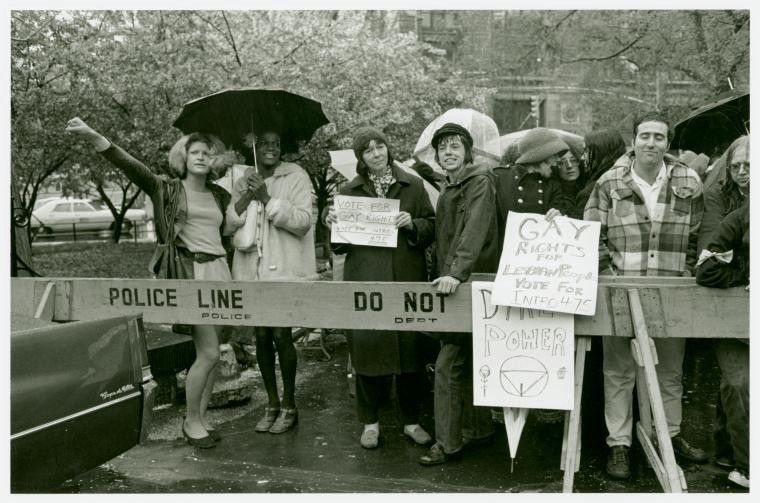
Feminism, as it’s often taught, is a linear progression: from suffragettes to second-wave warriors, each wave building upon the last. But this narrative is a lie—a sanitized fairy tale that ignores the radical, unruly truths that birthed the movement. The reality is that feminism has always been a battleground, not a unified front. And at its most volatile, most transformative edges stood trans women like Sylvia Rivera, whose very existence threatened the cisnormative core of the movement. When Rivera stormed the stage at the 1973 Pride rally, hurling a high heel at the emcee who’d called her a “heterosexual revolutionary,” she wasn’t just defending herself—she was exposing the hypocrisy of a movement that claimed liberation while excluding those who didn’t fit its narrow definitions. The myth of a monolithic feminism crumbles under the weight of her defiance.
Consider the language of the era: second-wave feminists often framed womanhood in biological essentialism, a stance that left no room for trans women. Rivera’s response? A middle finger to the establishment. She co-founded STAR (Street Transvestite Action Revolutionaries) with Marsha P. Johnson, creating a haven for homeless queer and trans youth in a city that wanted them dead. This wasn’t just activism—it was a revolution, one that demanded the movement confront its own complicity in transphobia. Yet history has largely reduced STAR to a footnote, a quaint sidebar in the story of gay liberation, rather than the radical vanguard it truly was.
The Erasure of Trans Women in Feminist Canon
The erasure of trans women from feminist history isn’t accidental; it’s a structural violence. Academia, publishing, and media have long privileged cis voices in discussions of gender, rendering trans women’s contributions invisible or, worse, appropriated without credit. Take the case of The Feminine Mystique, a text that reshaped second-wave feminism: Betty Friedan famously dismissed trans women as “the castrated men” who threatened the movement’s purity. Friedan’s words weren’t just exclusionary—they were a call to arms for a feminism that would rather police boundaries than embrace solidarity. Sylvia Rivera’s response? She didn’t just fight back; she built an alternative. STAR’s work wasn’t theoretical—it was survival. They fed, housed, and protected trans youth when no one else would. And yet, when we teach feminism, we teach Friedan. We teach Gloria Steinem. We teach them, but not Rivera. Why?
This erasure isn’t just about omission; it’s about power. Cis feminists have historically controlled the narrative, shaping feminism into a movement that centers their experiences while relegating trans women to the role of “other.” The result? A feminism that preaches intersectionality but practices exclusion. The 1990s saw a resurgence of trans-exclusionary radical feminism (TERFism), a ideology that framed trans women as threats to cis women’s safety. The irony? TERFs often cite feminist icons like Friedan as their inspiration, ignoring that Rivera and Johnson were the ones who lived the intersectional feminism they only theorized about. History isn’t just written by the victors—it’s rewritten by those who fear losing their grip on the narrative.
The Radical Potential of Trans Feminist Praxis
What would feminism look like if it embraced the radical praxis of trans women like Sylvia Rivera? It would be a movement that doesn’t just tolerate difference but demands it. A movement that recognizes that liberation isn’t possible when some bodies are deemed more worthy of freedom than others. Rivera’s activism wasn’t just about trans rights—it was about dismantling the entire system of gender oppression. She understood that feminism couldn’t be separated from anti-racism, anti-capitalism, or anti-violence work. STAR’s work with homeless youth wasn’t charity; it was a direct challenge to a society that would rather criminalize trans people than house them.
This radical potential is why trans feminists are so threatening. They expose the contradictions at the heart of mainstream feminism: a movement that claims to fight for equality but clings to hierarchies of gender, race, and class. Rivera’s famous speech at the 1973 Pride rally—where she declared, “I’m not free yet, and I won’t be free until I’m accepted and we’re all accepted as human beings”—wasn’t just a call for trans inclusion. It was a manifesto for a feminism that hasn’t been invented yet. A feminism that doesn’t just ask for a seat at the table but burns the table down and builds something new in its place.
To reclaim Rivera’s legacy is to embrace a feminism that is messy, unapologetic, and unafraid to confront its own complicity in oppression. It’s a feminism that doesn’t just march in Pride parades but occupies the streets, feeds the hungry, and shelters the vulnerable. It’s a feminism that recognizes that the most marginalized among us hold the keys to true liberation.
Why Sylvia Rivera’s Story Still Matters Today
The erasure of trans women from feminist history isn’t a relic of the past—it’s an ongoing violence. Today, trans women, particularly trans women of color, face rates of violence and discrimination that are nothing short of genocidal. The same forces that silenced Rivera in the 1970s are still at work: media that misgenders trans women, politicians who pass laws banning their existence, and feminists who still debate whether they belong in the movement. The difference? We have the tools to fight back. We have the internet, the archives, the voices of those who came before us. We have the chance to rewrite history—not as it was written by the victors, but as it was lived by the rebels.
Sylvia Rivera’s story matters because it’s a reminder that feminism has never been a safe space for trans women—and that’s exactly why it needs them. Her life was a testament to the power of unapologetic defiance, a blueprint for a movement that refuses to compromise. To honor her legacy is to commit to a feminism that is intersectional in practice, not just in name. It’s to recognize that the fight for trans liberation isn’t separate from feminism—it’s the essence of it.
So the next time you hear someone say, “Feminism is about equality for all women,” ask them: Which women? And then tell them the story of Sylvia Rivera—the trans feminist pioneer history tried to bury.





Leave a Comment