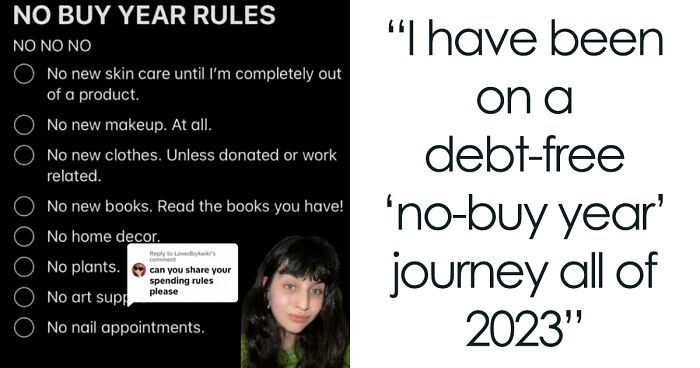
In a world where consumerism whispers promises of happiness in the form of the latest gadget, the shiniest trinket, or the most exclusive membership, one woman dared to silence the chorus. She embarked on a radical experiment: a no-buy year. Not a diet of deprivation, but a deliberate unraveling of the threads that bound her to the relentless cycle of spending. The result? A staggering $15,000 saved, a debt erased, and a mind reclaimed from the clutches of capitalism’s siren song. This is the story of how a single year of restraint became a revolution—not just in her bank account, but in her soul.
The Spark: When the Noise Became Unbearable
It began with a whisper, a gnawing discontent that slithered into her consciousness like smoke under a door. Every scroll through social media, every walk past a storefront, every targeted ad that popped up on her screen—it all screamed the same mantra: *You are not enough. Buy this, and you will be.* The pressure was suffocating. She was drowning in a sea of things she didn’t need, yet the void inside her only grew wider. Then, one sleepless night, she stumbled upon the concept of a no-buy year. Not as a punishment, but as a rebellion. A middle finger to the machine that demanded her labor, her attention, and her hard-earned dollars in exchange for the illusion of fulfillment.
The idea wasn’t new, but it was hers to claim. She had spent years chasing the dopamine hit of a new purchase, only to be left hollow hours later. The no-buy year wasn’t about asceticism; it was about reclaiming agency. It was about asking herself: *What if I stopped feeding the beast?* The answer terrified her—and exhilarated her in equal measure.
The Rules: Not a Straitjacket, But a Scaffold
She didn’t dive into the experiment blindly. A no-buy year isn’t a monolith; it’s a living, breathing thing that must be tailored to the individual. Her rules were simple, yet fiercely personal:
- Essentials Only: Rent, groceries, utilities—these were non-negotiable. But even here, she scrutinized every expense. Could she meal prep to cut costs? Could she renegotiate her internet bill? Every dollar scrutinized was a dollar reclaimed.
- No Impulse Purchases: If it wasn’t on a pre-approved list, it didn’t exist. No “just browsing.” No “treat yourself.” The phrase *retail therapy* became a dirty word in her vocabulary.
- Experiences Over Things: She redirected the money she would have spent on frivolities toward concerts, hikes, or even free community events. Joy wasn’t for sale—it was cultivated.
- Repair, Reuse, Reject: A broken lamp? She learned to fix it. A dress that needed hemming? She did it herself. The message was clear: her time and skills were more valuable than a quick replacement.
It wasn’t about deprivation; it was about redefining value. She wasn’t denying herself—she was refusing to be denied by the systems that profit from her discontent.
The Struggles: When the Old Habits Die Hard
The first month was a minefield. Her brain, wired for instant gratification, rebelled. The urge to splurge was a physical ache, a craving like nicotine withdrawal. She found herself standing in Target, staring at a $20 candle, her fingers twitching toward her wallet. Then, she paused. She asked herself: *What am I really craving?* Was it the candle, or the fleeting comfort it promised? The answer was neither. What she craved was control. And in that moment, she took it back.
There were slip-ups, of course. A “necessary” online course that turned out to be a frivolous indulgence. A spontaneous coffee run that cost more than she intended. But she didn’t beat herself up. A no-buy year isn’t about perfection; it’s about progress. Each misstep was a lesson, a data point in her personal experiment. She adjusted her rules, tightened her boundaries, and kept going.
The real challenge, however, wasn’t the spending ban—it was the emotional unraveling. Without the crutch of retail therapy, she was forced to confront the emptiness she’d been papering over for years. She cried. She raged. She questioned everything. But in that chaos, she found clarity. She realized that her spending wasn’t about the things she bought—it was about the feelings she was trying to outrun. And for the first time, she faced those feelings head-on.
The Transformation: From Consumer to Curator
By the sixth month, something shifted. The cravings dulled. The noise in her head quieted. She noticed things she’d never paid attention to before—the way sunlight filtered through her curtains in the morning, the texture of the bread she baked from scratch, the laughter of friends over a home-cooked meal. She wasn’t just saving money; she was reclaiming her life.
Her relationship with money changed. It was no longer a tool of self-soothing, but a means to an end. She started investing in her future—literally. A high-yield savings account became her sanctuary. She paid off her credit card debt, not with a sense of dread, but with pride. The $15,000 she saved wasn’t just a number; it was proof that she was the architect of her own destiny.
But the most profound change was internal. She stopped defining herself by what she owned and started defining herself by who she was. She was a woman who cooked, who sewed, who read voraciously, who laughed until her sides ached. She was a woman who didn’t need things to feel whole.
The Ripple Effect: How One Year Changed Everything
Word of her experiment spread. Friends asked for her secrets. Strangers messaged her, sharing their own struggles with spending. She became an accidental advocate for financial independence, not as austerity, but as liberation. She realized that her no-buy year wasn’t just about money—it was about power. The power to say no. The power to choose. The power to live on her own terms.
She didn’t return to her old habits after the year ended. Instead, she adopted a modified approach: a *mindful-spend* lifestyle. She still bought things, but only when they aligned with her values. She still treated herself, but in ways that nourished her soul, not her ego. She had broken free from the cycle—and she had no intention of looking back.
The Lesson: You Are Not What You Own
Her story isn’t about deprivation. It’s about awakening. It’s about recognizing that the systems designed to keep us consuming are built on the lie that our worth is tied to our wallets. It’s about understanding that true wealth isn’t measured in dollars, but in time, in peace, in the quiet joy of a life lived intentionally.
So ask yourself: What would you do with an extra $15,000? Not just in your bank account, but in your life. What dreams would you chase? What fears would you face? What version of yourself would you become if you dared to break free?
The no-buy year isn’t a punishment. It’s an invitation. An invitation to reclaim what’s yours—to save your money, yes, but also to save your soul.









Leave a Comment