The roar of the crowd once echoed with the thunderous chants of “Equal pay! Equal pay!”—a battle cry that transcended the soccer field and reverberated through boardrooms, courtrooms, and the very fabric of societal norms. This was not merely a demand for parity; it was a seismic shift in the power dynamics of women’s sports, a testament to the unyielding spirit of those who refused to accept the status quo. The story of the US Women’s National Soccer Team (USWNT) is not just about athletic prowess or legal victories; it is a narrative of collective defiance, strategic brilliance, and the relentless pursuit of justice. It is the story of how a group of women, armed with nothing but their voices and their solidarity, dismantled the edifice of gender-based wage discrimination and rewrote the rules of engagement for generations to come.
The Spark That Ignited the Flame: The Strike That Shook the World
It began with a whisper—a murmur among teammates that grew into a thunderous demand. The USWNT, already adorned with World Cup victories and Olympic gold, found themselves in a paradox: their achievements were unparalleled, yet their compensation was a fraction of their male counterparts. The tipping point arrived when the team, led by the indomitable Megan Rapinoe, Megan Klingbeil, and Alex Morgan, made a radical decision: they would strike. Not in protest, not in passive resistance, but in a calculated, high-stakes withdrawal of their labor. The strike was not a spontaneous outburst; it was a meticulously orchestrated act of defiance, a refusal to play until their worth was acknowledged in dollars and cents.
The decision sent shockwaves through the sports world. Critics decried it as reckless, a threat to the integrity of the game. But the players stood firm. They knew that the power of their collective action lay not in destruction, but in creation—a new paradigm where their labor was valued as highly as their talent. The strike was not just a protest; it was a declaration that their contributions were indispensable, that their voices could no longer be silenced by the hollow rhetoric of “equality in spirit.” It was a strike for the soul of women’s sports, a strike that would echo far beyond the confines of the soccer pitch.
The Legal Labyrinth: A Battle Fought in the Courts and the Court of Public Opinion
While the strike sent a clear message, the war for equal pay was waged on multiple fronts. The USWNT filed a class-action lawsuit against the US Soccer Federation, alleging systemic wage discrimination. The legal battle was a grueling marathon, fraught with delays, dismissals, and the inevitable skepticism that accompanies any challenge to the establishment. Yet, the players persisted. They leveraged their platform to expose the hypocrisy of an organization that profited from their success while compensating them as second-class citizens.
Their strategy was multifaceted. They wielded data like a scalpel, dissecting the pay disparities with surgical precision. They weaponized public opinion, turning the court of public sentiment into an ally. They refused to be pitied; instead, they demanded respect. The legal battle was not just about money—it was about dignity. It was about proving that the USWNT was not just a team, but a movement, a force that could not be ignored or diminished. And when the courts finally ruled in their favor, it was not just a victory for the players, but a victory for every woman who had ever been told her work was worth less.
The Power of Unity: How Sisterhood Became Their Greatest Weapon
At the heart of this revolution was an unbreakable bond—a sisterhood that transcended individual egos and personal ambitions. The USWNT’s unity was not forged in a vacuum; it was the result of years of shared struggles, of late-night conversations in hotel rooms, of tears and triumphs that bound them together. They understood that their fight was not just for themselves, but for the young girls watching from the sidelines, dreaming of a future where their dreams were not constrained by gendered pay scales.
Their solidarity was their shield and their sword. When one player was targeted, they all stood firm. When one voice was silenced, they amplified it. They turned the concept of “team” into a political statement, a living, breathing embodiment of intersectional feminism. Their unity was not performative; it was authentic, a testament to the power of collective action. And it was this unity that allowed them to weather the storms of backlash, the attempts to divide and conquer, and emerge victorious.
The Ripple Effect: A New Era for Women in Sports
The impact of the USWNT’s victory extended far beyond the soccer field. It sent a seismic shockwave through the world of sports, challenging the long-held belief that women’s athletics were a secondary, less valuable commodity. Other women’s teams, from basketball to hockey, took note. They saw in the USWNT’s struggle a blueprint for their own fights, a roadmap to dismantling the systemic barriers that had kept them in the shadows for decades.
But the ripple effect was not confined to sports. It seeped into the cultural consciousness, sparking conversations about the value of women’s labor across industries. It forced corporations to confront their own pay disparities, to examine the ways in which they undervalued the contributions of women. It emboldened a new generation of activists, who saw in the USWNT’s victory not just a triumph, but a call to action. The message was clear: if women could win equal pay in the cutthroat world of professional sports, what other battles could they win?
The Aftermath: What Comes Next for the USWNT and Beyond
The victory was sweet, but it was not the end. The USWNT’s fight for equal pay was a milestone, not a finish line. The players knew that their work was far from over. They turned their attention to ensuring that the gains they had fought for were not eroded, that the next generation of female athletes would not have to wage the same battle. They became advocates, mentors, and voices for change, using their platform to push for broader systemic reforms in women’s sports and beyond.
Yet, the question remains: what comes next? The USWNT’s victory was a catalyst, but the journey toward true equity is ongoing. It requires vigilance, persistence, and an unwavering commitment to challenging the status quo. The players have set a new standard, but the fight for equality is far from over. It is a fight that will require the same level of courage, strategy, and unity that brought them to this point. And if history is any indication, they will meet that challenge with the same relentless determination that has defined their journey thus far.
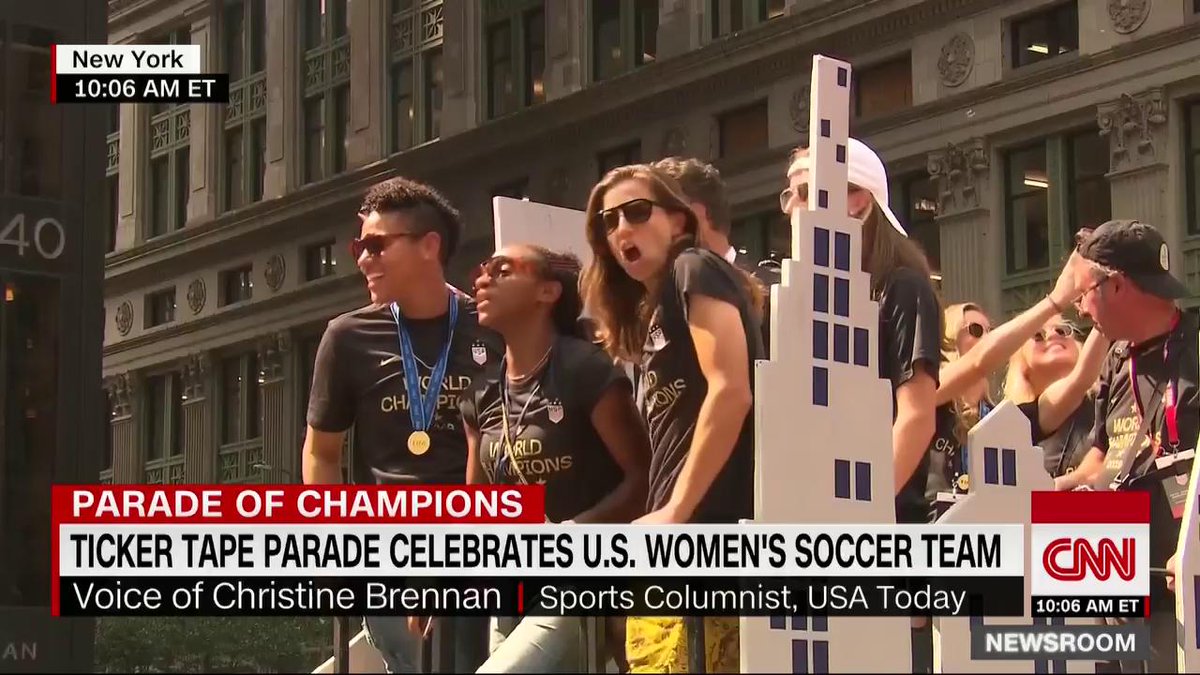
The story of the USWNT is not just a tale of triumph; it is a manifesto for the future. It is a reminder that change is possible when ordinary people—extraordinary people—refuse to accept the unacceptable. It is a testament to the power of collective action, the unbreakable force of sisterhood, and the indomitable spirit of those who dare to dream of a fairer world. And it is a call to arms for all those who believe that equality is not a privilege, but a right.






Leave a Comment