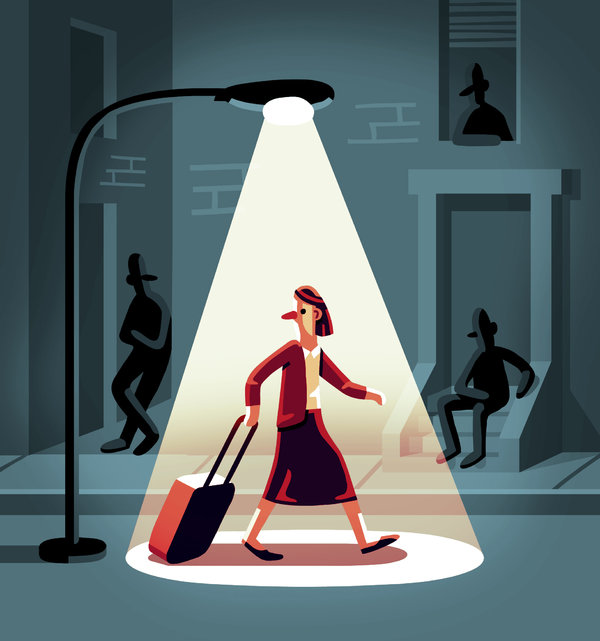
The first time she documented street harassment, she didn’t even realize it was a thing worth recording. A stranger’s catcall echoed down the sidewalk like a misfired gunshot. She flinched. The second time, she scribbled it down in a notebook, not out of defiance, but curiosity. By the thirtieth day, the notebook had become a ledger of unsolicited invasions—each entry a punctuation mark in a silent war waged against women’s autonomy. What began as a personal experiment evolved into a map of menace, a topography of terror etched not on maps, but on the skin of everyday life.
The Unseen Cartography of Harassment: Mapping the Invisible Terrain
Imagine walking through a city where every street corner holds a hidden landmine. Not the kind that maims the body, but the kind that shatters the spirit. Each day, she plotted her route not by efficiency, but by avoidance—skirting alleys where the shadows clung too thick, crossing streets to dodge clusters of idle men, timing her commute to avoid the rush of leering eyes. The city, once a neutral space, became a minefield of micro-aggressions. The harassment wasn’t random; it was a pattern, a rhythm, a language spoken in glances, whistles, and comments that slithered through the air like smoke. She wasn’t paranoid. She was perceptive. The city wasn’t neutral. It was hostile.
The Grammar of Gaze: How Eyes Become Weapons
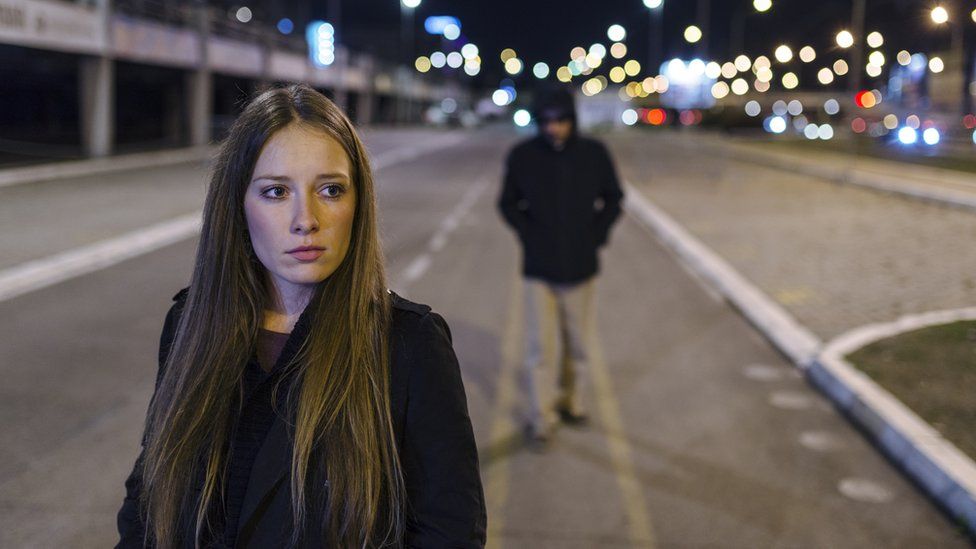
Harassment begins with the eyes. A lingering gaze is not a compliment; it’s a claim. A stare that follows you down the block is not admiration; it’s possession. She noticed how the intensity of the gaze fluctuated—sometimes a quick flicker, other times a slow, deliberate undressing. The eyes were not just windows to the soul; they were portals to violation. In the silence of the street, the unspoken language of harassment spoke volumes. A whistle wasn’t just sound; it was a declaration. A comment wasn’t just words; it was a boundary crossed. The grammar of harassment was not in the sentences uttered, but in the spaces between them—the pauses, the smirks, the way the air thickened with unspoken threats.
The Ritual of Repetition: Why Harassment Feels Like a Script
By day 15, the patterns became undeniable. Harassment wasn’t a series of isolated incidents; it was a ritual. The same phrases echoed across different streets: “Smile, love,” “You’re too pretty to be so serious,” “Hey, where’s the fire?” The words were interchangeable, but the intent was always the same—to assert dominance, to remind her that her body was not her own. The repetition wasn’t coincidence; it was conditioning. Society had scripted these interactions, and men performed them like actors reciting lines in a play they’d seen a thousand times. She wasn’t just documenting harassment; she was witnessing a cultural performance, a grotesque ballet where women were the unwilling stars.
The Illusion of Choice: How Harassment Dictates Movement
Choice is an illusion when the alternative is constant vigilance. She found herself altering her behavior—not because she wanted to, but because the city demanded it. She avoided certain routes, dressed differently, walked faster, slower, with headphones in or out, always calculating the cost of visibility. The harassment wasn’t just an inconvenience; it was a tax on her freedom. Every time she adjusted her path to avoid a catcaller, she was paying a toll to the patriarchy. The city wasn’t hers to navigate; it was a space where her presence was conditional, where her right to exist without interruption was constantly negotiated.

The Digital Echo: When Harassment Leaves the Street
But harassment wasn’t confined to the physical world. Online, the same patterns emerged—unsolicited messages, invasive comments, the demand for attention disguised as “friendliness.” The digital realm was just another frontier of the same war. The anonymity of the internet emboldened the harassers, turning their vitriol into a relentless drumbeat. She documented these too, not just as echoes of the street, but as proof that harassment wasn’t a localized issue. It was systemic, a hydra with heads in every corner of life. The street was just the beginning. The internet was the amplification.
The Weight of Documentation: Turning Personal into Political
At first, the notebook was a private act—a way to make sense of the chaos. But by day 30, it had become something else: a ledger of resistance. Each entry was a testament to endurance, a refusal to normalize the unacceptable. She wasn’t just recording harassment; she was exposing it. The patterns she uncovered weren’t just personal; they were universal. They revealed a society that treated women’s bodies as public property, where the right to walk unmolested was a privilege, not a guarantee. The documentation wasn’t just for her. It was for every woman who had ever been told to “take it as a compliment,” for every girl who had learned to shrink herself to avoid notice, for every person who had ever been made to feel unsafe in their own skin.
The Aftermath: What Happens When the Ledger is Full?
Now, the notebook sits on her shelf, a silent witness to a month of endurance. The patterns are clear. The city is hostile. The internet is a battleground. The world expects women to navigate it with grace, to smile through the slights, to laugh off the violations. But grace isn’t armor. Laughter isn’t protection. The ledger is full, but the war isn’t over. The patterns she documented aren’t just observations; they’re a call to action. If harassment is a script, then it’s time to rewrite it. If the city is a minefield, then it’s time to disarm it. If the eyes are weapons, then it’s time to blind the wielders.
The first time she documented street harassment, she didn’t realize it was a thing worth recording. By the thirtieth day, she knew it was a thing worth dismantling.




Leave a Comment