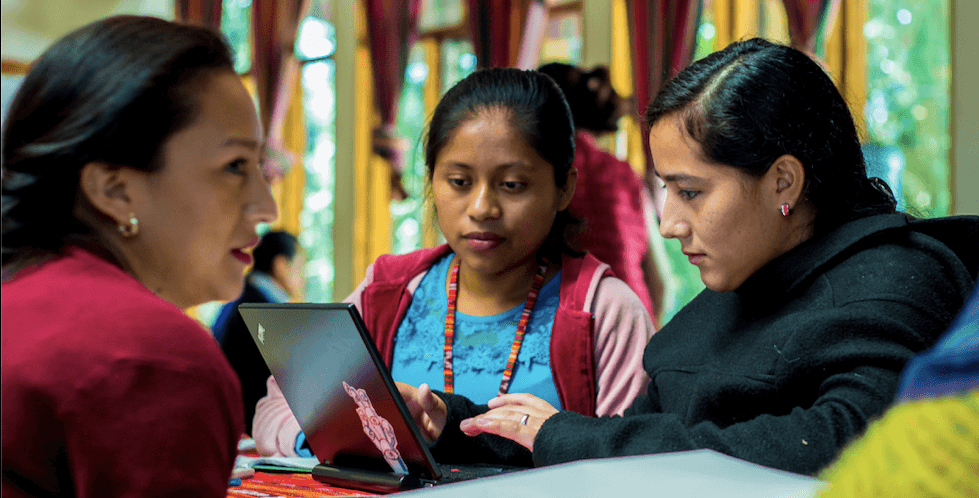
She stepped onto the crumbling stage of academia armed with something far more potent than a degree or a polished résumé: Indigenous knowledge. A wisdom wrought from ancestors, from land, from lived realities that defy Western epistemologies and dismantle patriarchal constructs. What happened next was no gentle nod of approval—no academic pomposity that welcomes the strange yet tame. Instead, an unsettling reverberation coursed through the halls, a collective panic that unveiled more about the institution than about her profound work. She centered Indigenous knowledge within her feminism, and the ivory towers shuddered.
The Unsettling Power of Indigenous Knowledge
Indigenous knowledge is not just a repository of quaint traditions or cultural artifacts; it is a living, breathing framework of understanding the world that challenges dominant paradigms. It is holistic, relational, and rooted in both spiritual and corporeal realities. This is destabilizing to academia because it demands that knowledge production be decolonized, that the hierarchy of evidence and authority be questioned.
When she brought this knowledge to the forefront of feminist discourse, she didn’t merely insert another voice into the cacophony—she redefined the song entirely. Indigenous epistemologies foreground collective responsibility, agrarian and ecological reciprocity, and matriarchal stewardship that resist commodification. Such paradigms threaten to dismantle the individualistic, anthropocentric, and patriarchal underpinnings of Western feminism.

Why Did Academia Panic?
At first glance, the panic appears as conservative gatekeeping or defensive posturing from an institution notoriously slow to evolve. But beneath this surface lies a more insidious anxiety: the fear of losing control over what counts as ‘legitimate’ knowledge. Indigenous feminism threatens the sterile neutrality that universities crave. It insists on context, relationship, and embeddedness in histories of colonial violence. This disrupts not only academic methodologies but the very foundation of disciplines.
Institutions are structured around compartmentalization and extractivism. Knowledge is pulled out, dissected, categorized, rendered inert. Indigenous knowledge resists this violent extraction. It flows. It is communal. It refuses to be owned or sanitized. She challenged this order simply by centering it.
The Tensions Between Indigenous Feminism and Western Academia
There is an inherent tension in how Indigenous feminism demands recognition within academic spaces that have historically excluded and erased Indigenous voices. This feminism is not merely about gender equity but about sovereignty, treaty rights, and cultural resurgence. It holds intersections of race, colonialism, gender, and ecology as inseparable strands, weaving a complex tapestry that defies simplistic analysis.
The academic panic comes from an inability—or unwillingness—to accommodate this complexity. Institutions prefer linear narratives and singular categories. They are ill-equipped to grapple with the contradictions Indigenous feminism unearths: the coexistence of victimhood and resilience, oppression and empowerment, tradition and innovation.

The Cultural Significance of Centering Indigenous Knowledge in Feminism
Centering Indigenous knowledge within feminism is an act of reclamation. It asserts that Indigenous women are not footnotes to history but central narrators of their own stories. It disrupts hegemonies that legitimize only certain kinds of knowledge—typically those that exclude spiritual and relational modalities.
This focus highlights ancestral wisdom and contemporary resistance simultaneously. Indigenous feminism illuminates how the past lives persistently within the present struggles against systemic patriarchal and colonial violence. It is a radical reimagining of feminist praxis that invites a multiplicity of voices and epistemes.
More Than Representation: A Call for Structural Transformation
The panic provoked in academic spaces is a reflection of the institutional inertia and fragility when confronted with genuine calls for transformation—not just diversity of faces but disruption of power structures. Indigenous feminism demands this: it insists on land repatriation, reparative justice, and epistemic sovereignty.
This is a clarion call that reverberates far beyond the academy. Feminism intertwined with Indigenous knowledge refuses to remain an abstraction. It is grounded in lived reality, in the stories of women who have survived colonial genocide, whose songs carry the memory of creation and resistance. To center this knowledge is to demand the world itself be reimagined, beginning with the very ways we conceive of knowledge, power, and gender.
Conclusion: The Necessity of Indigenous Epistemologies for Feminist Futures
The fascination and fear that Indigenous knowledge ignites in academic circles are two sides of the same coin. It is a reminder of the stubborn persistence of colonial structures and the profound need to dismantle them. She centered Indigenous knowledge in her feminism with fierce clarity, refusing to dilute the voices of her ancestors or the women around her. What academia calls panic may in fact be a prelude to transformation—a painful, necessary shaking of foundations built on exclusion.
When Indigenous knowledge surfaces as the heart of feminist discourse, it demands rigor, respect, and radical reorientation. The future of feminism, we must realize, depends on this reckoning—with pain, power, and possibility entwined.










Leave a Comment