In the grand theater of politics, the scripts written by news anchors often serve as invisible puppeteers, shaping not only public perception but also the very essence of leadership itself. When the spotlight shifts onto male and female politicians, it reveals a linguistic double standard — a curious choreography of words that unwittingly cages women in gendered stereotypes while men dance freely across the stage of discourse. This analysis dives into how the verbal brushstrokes of news anchors paint strikingly different portraits, exposing the subtle machinery of bias that underpins our collective consciousness.
The Linguistic Mirror: Words as Weapons and Wardrobes
Language is no neutral medium. It is a mirror cracked by social prejudices, reflecting deeper cultural fissures. When news anchors describe politicians, their choice of words becomes a powerful lens – one that magnifies male authority while veiling female competence beneath layers of gendered expectations. Men are often cloaked in the lexicon of strength, decisiveness, and strategic prowess. Women, by contrast, find themselves draped either in the soft fabrics of empathy and warmth or paradoxically scrutinized under the harsh light of emotional instability and vulnerability.
This lexicon acts as a wardrobe stylist, dressing male politicians in the robust armor of leadership and female politicians in either the delicate chiffon of likability or the heavy chains of scrutiny. The subtlety here is exquisite: seldom blunt, frequently coded. An anchor might praise a man for his “firm resolve” and “commanding presence,” while admiring a woman’s “compassionate approach” or questioning her “temperamental reactions” — a linguistic dance that reinscribes traditional gender binaries, often without conscious intent.
The Gendered Kaleidoscope: Traits and Stereotypes in Political Coverage
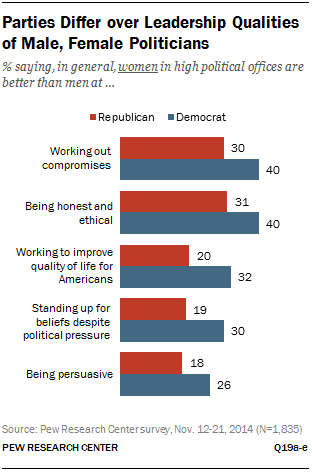
Under the kaleidoscopic gaze of media narratives, male politicians are often described in terms that evoke imagery of warriors and captains — resolute, unflinching, imbued with an almost mythic gravitas. Women politicians, however, are caught in an ever-shifting mosaic of gendered traits. They are alternately celebrated for communal attributes like kindness and emotional intelligence yet disparaged for the very same qualities when perceived as weakness or indecision.
Anchors fragment women’s leadership into a series of contradictions: be likable but not too likable; show strength but not aggression; be authoritative but not domineering. This impossible tightrope walk is linguistically embedded in political coverage — creating a double bind that drains the narrative of female leaders of their multidimensionality and complexities, silencing the dynamic fullness of their leadership in favor of simplistic stereotyping.
The Curtain of Emotional Language: Sympathy or Suspicion?
Emotion, a double-edged sword in political discourse, often operates as a linguistic minefield for female politicians. When male leaders express passion or frustration, anchors label it as spirited leadership or justified assertiveness. Female politicians, conversely, navigate a thicket of descriptors that underscore their emotionality with suspicion, veering dangerously close to insinuations of irrationality.
This is more than mere semantics; it is a calculated narrative strategy that wields emotional language to subtly discredit women’s political gravitas. Expressions like “she seemed upset” or “her emotions got the better of her” are seldom observed in parallel descriptions of men. The metaphorical curtain falls on women’s speeches and debates not because of what they say, but because how they are described conveys a covert distrust — a linguistic trap that male counterparts rarely encounter.
Power Deferred: The Subtle Undermining of Female Authority
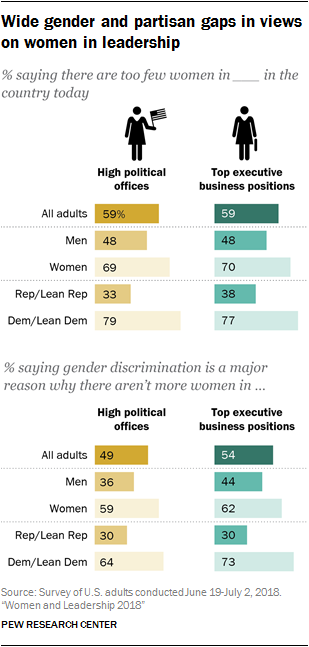
Even when news anchors recognize competence in female politicians, their language often deflects authority through qualifiers and softening hedges. Phrases such as “unexpectedly strong,” “surprisingly effective,” or “different style of leadership” betray a lingering disbelief that women can embody power in its traditional forms. This linguistic hesitation functions like an invisible leash, tethering female politicians to an old script that defines power as a masculine domain.
In contrast, male politicians are granted a default assumption of capability — their actions filtering through the prism of authority without defensive prefixes. The metaphor here is stark: men hold the throne by default, women must prove their right to sit upon it in every sentence spoken about them. It’s a battlefield of language where words are the weapons subtly wielded to maintain entrenched hierarchies under the guise of impartial reporting.
Breaking the Mold: Toward a New Political Discourse
The news anchor’s microphone is both a magnifying glass and a chisel — it not only reveals social realities but carves out the contours of cultural belief. To transform political discourse, it is imperative to recognize and dismantle these gendered linguistic patterns. Language shapes and reshapes reality; different words can illuminate overlooked capacities or reinforce tired stereotypes.
This calls for a bold reimagining of how female politicians are framed — emphasizing their leadership qualities beyond gendered confines, embracing complexity without resorting to clichés, and refusing to reduce emotional expression to a liability. The power of words must be harnessed intentionally, with courage to foster a narrative that reflects the true breadth and depth of political leadership in all its forms.

Conclusion: Shattering the Glass Lexicon
The tale of how news anchors describe male versus female politicians is a linguistic labyrinth — a riddle wrapped in subtle biases and cultural inertia. Each word, phrase, and trope carries the weight of centuries-old expectations, reverberating through modern media. Yet within this labyrinth lies the potential to shatter the glass lexicon, to free political discourse from gendered shackles, and to allow women to lead not as anomalies or exceptions but as unequivocal architects of power.
It is a narrative revolution waiting to be spoken into existence — one sentence at a time.






Leave a Comment