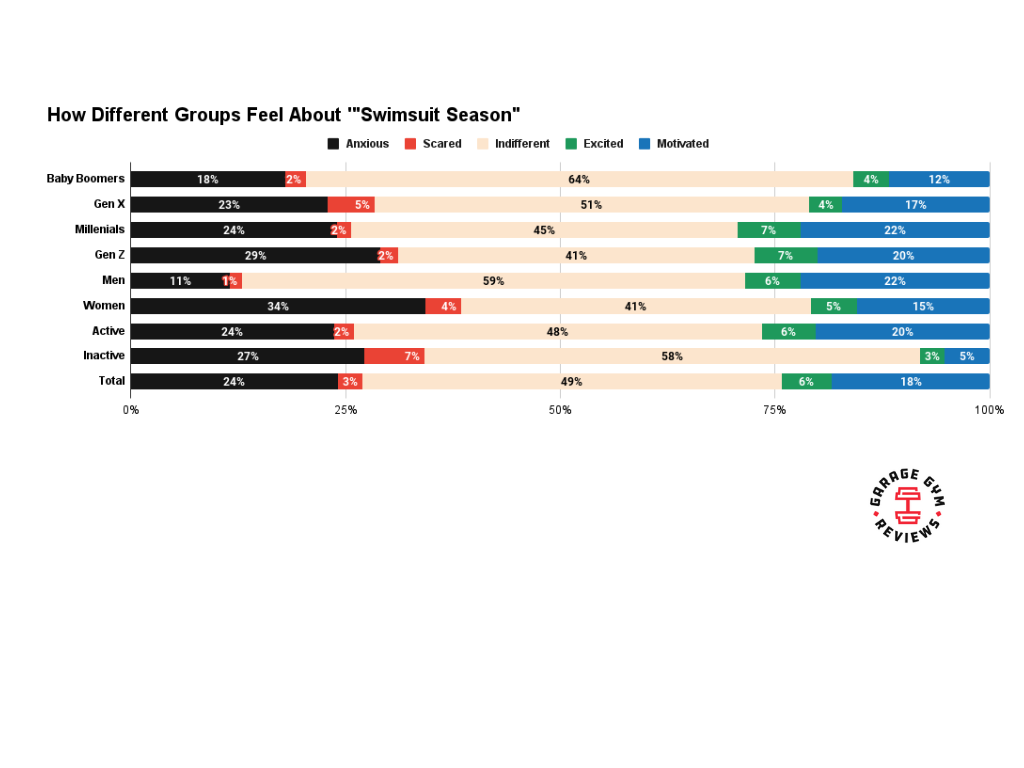
Every year, as spring buds bloom and temperatures ascend, a peculiar societal ritual unfolds: the dread of swimsuit season. This dread—an omnipresent, gnawing anxiety—casts a shadow predominantly over women, while men, curiously, seldom bat an eye. Why is it that the arrival of summer’s quick-drying garments ignites a pervasive unease in women, yet men stride confidently into pools and beaches, unburdened by the spectacle of their bodies? Beneath this disparity lies a labyrinthine tableau of cultural, patriarchal, and psychological forces that reduce women’s bodies to battlegrounds of perception, control, and self-worth. The “swimsuit season anxiety” is no mere vanity crisis; it is a profound societal phenomenon that reveals how women are surveilled, commodified, and policed in ways men simply are not.
Swimsuit Season: A Perennial Battleground
The swimsuit is unlike any other clothing item. It is an emblem of exposure, vulnerability, and societal scrutiny, all wrapped into one tight, often unforgiving garment. For women, slipping into swimwear unleashes a cascade of anxieties rooted in legacy—centuries of visual policing and punishments disguised as “beauty standards.” This seasonal rite of passage is layered with contradictory messages: be confident, yet thin; be free, yet modest; be playful, yet perfect. Women enter summer armed with a slew of emotional and psychological armaments, from obsessive calorie counting to grueling exercise routines, all aimed at preempting possible judgment.

Men, on the other hand, often wade through this season with an enviable immunity. Societal expectations of men’s bodies, while not nonexistent, are vastly less scrutinizing and seldom reduce to an anxiety-inducing spectacle. The absence of that dread is not an accident but a direct reflection of how patriarchal culture constructs gendered experiences of public display.
The Male Gaze and the Female Body: A Legacy of Objectification
To understand the disparate impact of swimsuit season, one must first confront the insidious implications of the male gaze. Women’s bodies have been subjected to a centuries-long visual injunction: to be looked at, assessed, and appraised as objects of desire. Swimsuits lay bare the contours of the female form, providing little refuge from this gaze. The barrage of evaluative stares and internalized judgments generates what might be called a psychic enclosure—a feeling of being on display for the spectator’s pleasure rather than one’s own.

Men, while also subject to visual assessment, rarely experience this with the same intensity or consequence. Their bodies are not dissected and critiqued with the relentless precision demanded by patriarchal standards. The male form, even when displayed scantily clad, is often regarded through a lens of strength or virility, rather than strict conformity to aesthetic codes. The male gaze, paradoxically, functions primarily as a tool of control over women’s appearances rather than a reflective yardstick for men’s identities.
Culture’s Double Bind: Liberation or Surveillance?
Swimsuit season occupies an ambivalent cultural space. On the surface, it promises freedom—the tactile pleasure of sun, water, and air on skin previously shrouded under layers. Yet this freedom is constrained, circumscribed by the ever-watchful eyes of society and a culture obsessed with policing women’s appearances. This phenomenon is not merely about self-image but about coercive cultural narratives that dictate who deserves visibility and who must remain hidden.
Women’s reluctance or anxiety surrounding swimsuit season is therefore not an individual failing but a reaction to a societal double bind: the expectation to reveal and flaunt, paired with the mandate to conform to narrowly prescribed ideals. This tension is amplified by social media’s omnipresence, exacerbating internalized anxieties with its pervasive, performative culture.
Psychological Toll: Beyond Surface-Level Worry
The stress surrounding swimsuit season transcends superficial concern—it is a palpable, sometimes traumatizing, psychological burden. Research highlights rising rates of body dissatisfaction among women, worsened by seasonal cycles of scrutiny. The anticipation of “revealing” one’s body under a swimsuit triggers self-surveillance and dysmorphia, reinforcing harmful narratives that equate value with appearance. This anxiety can precipitate social withdrawal, low self-esteem, and even disordered eating or exercise patterns, framing swimsuits as unwelcome barometers of worth.

Men are rarely subjected to such psychosocial stressors linked to body image in this context. Their visibility in swimwear seldom triggers the same psychic toll. Instead, their experience of swimsuit season often remains one of mere physical comfort or sport.
Reclaiming the Narrative: Toward Radical Self-Acceptance
The antidote to this systemic anxiety is not found in superficial fixes—no miracle diet or exercise regime will dismantle patriarchal standards. Rather, it lies in radical self-acceptance and cultural transformation. Reclaiming ownership over one’s body requires challenging the male gaze, dismantling unrealistic beauty norms, and fostering communities that celebrate diversity in shape, size, and identity.
Women embracing their bodies irrespective of “flaws” or societal diktats embody a defiant act of liberation. This shift not only mitigates the dread of swimsuit season but also opens space for genuine joy, pleasure, and embodied freedom. When swimwear becomes a choice rather than a source of anxiety, the pools and beaches cease to be arenas of judgment and become instead zones of solidarity and self-expression.
The Way Forward: Challenging Systemic Inequities
Addressing swimsuit season anxiety requires a dismantling of the broader cultural matrix that breeds it. This means confronting media representations that idolize narrow body types; rejecting commodification that exploits women’s insecurities; and fostering inclusive environments where all bodies are visible without shame or censure. It also calls for men to acknowledge their complicity in perpetuating these dynamics, and to become allies in the struggle for bodily autonomy and dignity across gender lines.
Countering swimsuit season anxiety is not merely a cosmetic concern; it is about reclaiming personhood from a society that too often reduces women to objects of appraisal. Only by transforming cultural narratives and expanding the collective imagination of beauty and worth can this annual dread dissolve into a celebration of human diversity.







Leave a Comment