The pandemic didn’t just expose cracks in our systems—it pried them open, revealing the raw, unfiltered truth about the labor that sustains society. While the world locked down, women stepped forward, not as bystanders, but as the invisible scaffolding holding everything together. Their work—paid and unpaid, seen and unseen—became the linchpin of survival. Yet, as the dust settled, one glaring reality remained: the pandemic didn’t just highlight the indispensability of women’s labor; it laid bare how little we value it.
The Unseen Labor That Fuels the World
When schools shuttered and offices emptied, the burden of care fell disproportionately on women’s shoulders. They became teachers, nurses, therapists, and chefs—often simultaneously. The term “invisible work” isn’t just a metaphor; it’s a lived experience. The mental load of orchestrating a household’s daily chaos, the emotional labor of soothing frayed nerves, the physical toil of maintaining a home—none of it appears on a balance sheet, yet without it, economies collapse. Women’s unpaid labor, estimated at $10 trillion annually globally, is the silent engine of productivity. The pandemic didn’t create this disparity; it magnified it, forcing even the most oblivious to confront the reality that the world runs on women’s time and energy.
Consider the healthcare worker, juggling 12-hour shifts while worrying about her children’s Zoom lessons. Or the single mother, stitching together gig work to pay rent, all while ensuring her family doesn’t starve. These aren’t exceptions; they’re the rule. The pandemic didn’t just expose the cracks—it turned them into chasms, revealing how deeply ingrained the expectation is that women will absorb the fallout of systemic failures.

The Myth of the “Essential” Worker
Governments and corporations rushed to label certain professions “essential” during the pandemic. Nurses, grocery store clerks, delivery drivers—these roles were suddenly deemed critical. But who filled these positions? Women. Over 70% of the global healthcare workforce is female. Women dominate the ranks of teachers, social workers, and caregivers. Yet, when the applause faded and the memes about “heroes” subsided, the material conditions of their labor remained unchanged. Pay disparities persisted. Protective equipment was scarce. Burnout became an epidemic.
The term “essential” is a cruel irony. It implies that these workers are valued, when in reality, they are exploited. Their labor is indispensable, but their lives are disposable. The pandemic didn’t just prove their necessity; it underscored how little society is willing to invest in their well-being. Frontline workers risked their lives for poverty wages, while corporations reaped record profits. The contradiction is glaring: we depend on women’s labor, but we refuse to compensate them fairly for it.
The Double Shift: When Work and Home Collide
The pandemic didn’t just upend professional lives; it obliterated the illusion of work-life balance. For women, it wasn’t a collision—it was a full-blown erasure of boundaries. The “double shift” became a triple or quadruple shift. Women who worked remotely found themselves performing emotional labor on top of their professional duties, fielding calls while mediating sibling squabbles, or drafting reports between diaper changes. The mental gymnastics required to navigate this new reality were Herculean.
Studies show that women’s productivity plummeted during the pandemic—not because they were less capable, but because the systems around them failed to adapt. Remote work became a misnomer for many women, who were trapped in a never-ending cycle of caretaking and career maintenance. The myth of the “flexible workplace” crumbled under the weight of unaddressed childcare crises and the absence of policies that acknowledge care as a collective responsibility.
Meanwhile, men’s productivity, in many cases, remained stable or even increased. Why? Because the invisible labor of the home—cooking, cleaning, childcare—still fell disproportionately on women. The pandemic didn’t just expose this imbalance; it weaponized it, turning the home into a pressure cooker where women were expected to perform miracles without complaint.
The Future We Refuse to Build
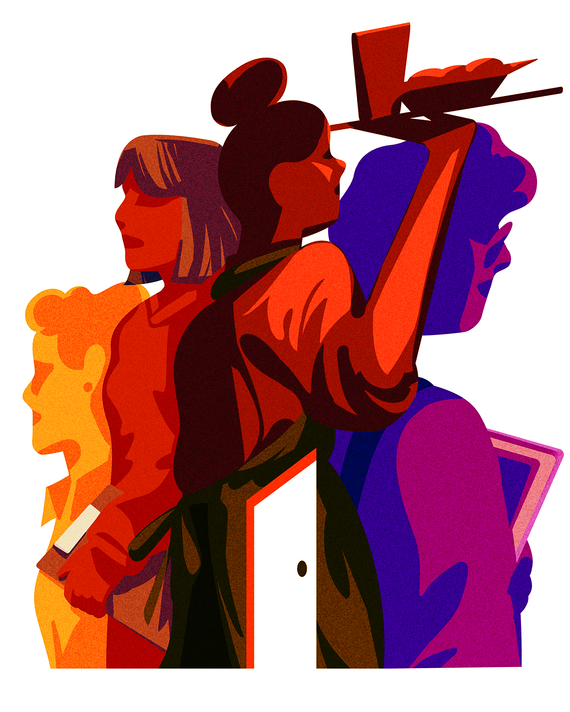
The pandemic offered a rare opportunity: a chance to rebuild systems that actually work for women. Instead, we got performative gestures—empty platitudes about “leaning in” and “girl power,” while the structures of oppression remained intact. The future we’re hurtling toward is one where women are expected to do even more, with even fewer resources. The pandemic proved that women’s labor is essential. What it didn’t prove is that society is willing to treat them as such.
What would a future that values women’s work look like? It would start with universal childcare, paid leave for all caregivers, and wages that reflect the true cost of labor. It would dismantle the myth that women’s work is a “gift” rather than a necessity. It would recognize that care isn’t a side hustle—it’s the foundation of civilization.
But we’re not there yet. The pandemic was a stress test, and we failed. The question now is: Will we learn from this failure, or will we continue to exploit the very people who hold society together? The choice is ours. The time to act is now.









Leave a Comment