The border crisis is often framed as a geopolitical chessboard, where nations move pawns and pawns become casualties. But what happens when the pawns are not just faceless soldiers, but women—whose bodies, labor, and lives are weaponized in the name of security? The narrative of border enforcement has long been dominated by the imagery of male warriors standing guard, their silhouettes framed against barbed wire and surveillance towers. Yet, beneath the rhetoric of protection and control lies a quieter, more insidious reality: the border crisis has a distinctly female face, one that is rarely acknowledged, rarely mourned, and rarely given the dignity of its own story.
The Myth of the Neutral Border
Borders are not neutral. They are not mere lines on a map, but living, breathing entities that breathe through the bodies that traverse them—some with papers, some without. The idea that a border can be “secured” without consequence is a fantasy sold by those who benefit from the illusion of order. In this fantasy, women are either invisible or hyper-visible: either erased from the narrative entirely or reduced to symbols of vulnerability, of bodies that must be controlled lest they “disturb” the fragile balance of national identity.
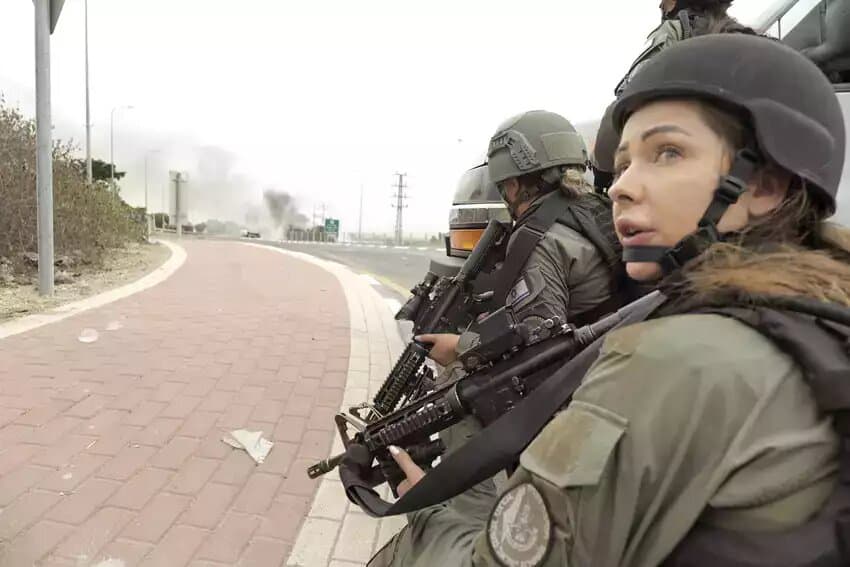
The inclusion of women in border policing—such as the undercover unit in Judea and Samaria—is often touted as progress, a step toward gender equality in institutions built on patriarchal foundations. But progress, when draped in the language of duty and sacrifice, can be a gilded cage. These women are not just participants in a system; they are its most potent symbols. Their presence is meant to soften the edges of a militarized border, to make the machinery of control feel less oppressive. Yet, the reality is far more complex. When a woman is asked to enforce a border that was never designed to protect her, what does that say about the nature of the border itself?
The Labor of Invisibility
Women at the border do not just stand guard—they perform invisible labor. They are the ones who process the paperwork of asylum seekers, their fingers tracing the edges of documents that may mean the difference between safety and deportation. They are the ones who navigate the bureaucratic labyrinths of immigration systems, their patience tested by endless queues and arbitrary rules. They are the ones who comfort children separated from their parents, their arms cradling futures that have already been decided by faceless officials.
This labor is not celebrated. It is not memorialized in monuments or etched into the annals of history. It is the labor of the overlooked, the unsung, the necessary. And yet, without it, the border would collapse under the weight of its own contradictions. The border is not just a line; it is a factory, and women are its most efficient workers—even when they are not the ones pulling the triggers.
The Body as a Battleground
The female body at the border is a contested space. It is a site of both protection and violation, of care and control. Women seeking asylum are often subjected to invasive medical examinations, their bodies treated as evidence in a legal process that cares little for their dignity. Their reproductive health is policed, their pregnancies scrutinized, their traumas dissected for the sake of border security. The border does not just separate nations; it dissects bodies, reducing them to their most vulnerable parts.
Even those who are not seeking asylum are not spared. Women who live near borders are often the first to feel the brunt of militarization. Their movements are restricted, their communities surveilled, their voices drowned out by the rhetoric of national security. The border is not just a line on a map; it is a cage, and women are its most confined inhabitants.
The Spectacle of the Female Victim
There is a macabre fascination with the female victim of the border crisis. Her image is used to sell newspapers, to rally support for “tougher” border policies, to justify the expansion of surveillance and detention. She is the face of the crisis, but she is also its most commodified element. Her suffering is turned into a spectacle, her pain reduced to a headline, her story distilled into a soundbite.
This fascination is not accidental. It is a carefully constructed narrative, one that serves to reinforce the idea that borders are necessary, that security is paramount, that the ends justify the means. The female victim is not just a victim; she is a tool, a means to an end. And when the cameras turn away, when the headlines fade, she is left to pick up the pieces of a life that has been irrevocably altered by the border.
The Unspoken Cost of Protection
What does it mean to be “protected” by a system that treats you as both a shield and a target? The women who serve in border policing units are often celebrated as pioneers, as proof that even the most patriarchal institutions can evolve. But evolution is not the same as liberation. These women are still bound by the same rules, the same hierarchies, the same expectations that have long governed their lives. Their presence in these units does not challenge the system; it reinforces it.
The cost of this “protection” is borne by those who are not part of the system. The women who are detained, the women who are deported, the women who are left behind—these are the true victims of the border crisis. Their stories are not told in the halls of power, but they are the ones who feel the weight of the border most acutely. The border is not just a line; it is a wound, and women are the ones who bleed.
The Border as a Mirror
The border crisis is not just a crisis of geography; it is a crisis of identity. It reflects back to us the contradictions of our societies, the ways in which we both cherish and exploit the bodies of women. The border is a mirror, and what it shows us is not flattering. It shows us a world where women are both the guardians and the guarded, where their labor is essential but their voices are silenced, where their bodies are both protected and violated.
To confront the border crisis is to confront these contradictions. It is to ask why we tolerate a system that treats women as both the solution and the problem, as both the protectors and the protected. It is to demand a narrative that does not reduce women to symbols or spectacles, but recognizes them as full, complex human beings whose lives are shaped by the borders they cross—and the borders that cross them.
The border crisis will not be solved by more women in uniform or more surveillance. It will be solved when we stop treating women as pawns in a geopolitical game and start recognizing them as the architects of their own lives. The border is not neutral. Neither are we.







Leave a Comment