
The kitchen is the heart of the home, yet the face of culinary excellence is often a man in a crisp white jacket, wielding a knife with theatrical flair. Women, who have spent centuries perfecting the alchemy of turning raw ingredients into nourishment, remain the unsung architects of domestic gastronomy—while men command the spotlight in televised kitchens. This paradox is not merely an oversight; it is a cultural sleight of hand, a deliberate erasure of the labor that sustains families, communities, and indeed, the very industry that glorifies itself on innovation. To understand why cooking shows lionize male chefs while home cooking remains a woman’s domain, we must dissect the myth of culinary authority, the gendered performance of skill, and the quiet revolution brewing in the shadows of our stovetops.
The Myth of the Male Culinary Genius
Cooking shows are not documentaries; they are stage plays where masculinity is scripted as the default protagonist. The male chef is a swashbuckling figure, a pirate of the pantry who tames flames with a flick of the wrist and conjures sauces from thin air. His authority is performative—measured in decibels, in the dramatic toss of a pan, in the way he commands an audience with a single arched eyebrow. Women, by contrast, are rarely afforded the same cinematic grandeur. When they appear on screen, it is often as the nurturing sidekick, the smiling face behind a family recipe, or worse, the punchline to a joke about burnt toast.
This disparity is not accidental. It is the legacy of a culinary world that has historically equated skill with spectacle. The male chef’s dominance in media is a reflection of broader societal biases: competence is gendered, and the traits we associate with genius—brilliance, innovation, authority—are coded as masculine. Women, meanwhile, are relegated to the realm of the domestic, where their expertise is dismissed as instinct rather than artistry. The irony? The most celebrated dishes in history were likely perfected by women in kitchens long before men ever set foot in a professional setting.
The Invisible Labor of the Home Cook
Consider the woman who wakes before dawn to prepare lunches for three children, balancing dietary restrictions and school schedules with the precision of a bomb squad technician. Her work is invisible not because it lacks value, but because it is so thoroughly embedded in the fabric of daily life that it is rendered unremarkable. The home cook is a silent architect, designing meals that nourish bodies and souls, yet her labor is rarely celebrated in the same breath as a Michelin-starred tasting menu.
Cooking shows thrive on the illusion of spontaneity—the chef who “just knows” when the risotto is done, who improvises with a handful of random ingredients. But the reality of home cooking is far less glamorous. It is the meticulous planning of a week’s worth of meals, the negotiation of picky eaters, the sleepless nights spent soothing a feverish child with chicken soup. These are not the stories that sell cookbooks or fill television slots. Instead, we are fed a diet of male chefs who transform humble ingredients into haute cuisine, while the women who perform the same alchemy daily remain faceless and unpaid.
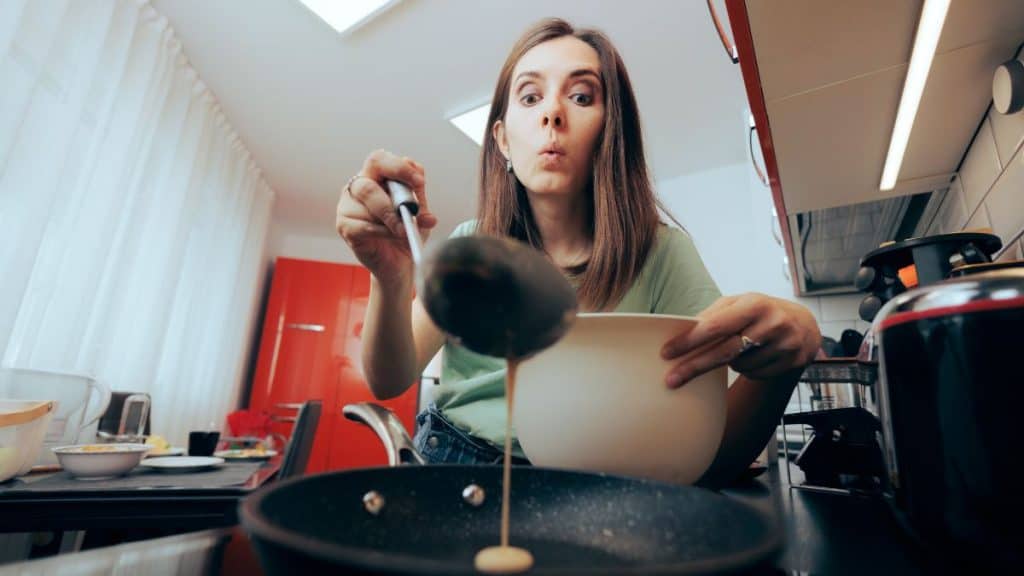
The home cook is the unsung heroine of the culinary world, her work a symphony of compromise and creativity. She is the one who stretches a budget to feed a family, who transforms leftovers into something magical, who turns a simple bowl of rice into a vessel for love. Yet her story is rarely told. Instead, we are told that cooking is a hobby, a pastime, a quaint domestic duty—never the foundation of civilization itself.
The Performance of Masculinity in the Kitchen
Cooking shows are not just about food; they are about power. The male chef’s kitchen is a stage where masculinity is performed with surgical precision. His movements are bold, his language is commanding, his failures are framed as dramatic setbacks rather than systemic flaws. The camera lingers on his hands as he chops, his muscles flexing with each strike of the knife, as if to say: *This is what mastery looks like.*
Women, on the other hand, are often depicted as nurturers rather than innovators. Their cooking is framed as an act of love, a selfless offering to their families. There is nothing wrong with nurturing—it is a vital part of the culinary ecosystem—but when it becomes the sole narrative for women in the kitchen, it erases the skill, the creativity, and yes, the ambition that drives them. The home cook is not just a mother or a wife; she is an artist, a scientist, a problem-solver. Her kitchen is not a stage for performance; it is a laboratory where she conducts experiments with flavors, textures, and emotions.
The male chef’s dominance in media is not just a reflection of gender bias; it is a reinforcement of it. By centering men as the default experts, we perpetuate the idea that women’s contributions are secondary, their expertise confined to the domestic sphere. This is not just unfair—it is a distortion of history, a erasure of the countless women who have shaped culinary traditions across cultures and centuries.
The Quiet Revolution in the Home Kitchen
But the tide is turning. Women are reclaiming their narratives, not just as cooks, but as culinary visionaries. Social media has become a battleground for visibility, where home cooks share their stories, their struggles, and their triumphs. Platforms like Instagram and TikTok have democratized culinary expertise, allowing women to showcase their skills without the filter of traditional media.
This revolution is not just about visibility; it is about redefining what culinary excellence looks like. It is about recognizing that the woman who can stretch a single chicken into three meals is just as skilled as the chef who can deconstruct a lobster. It is about understanding that the home cook’s work is not just labor—it is art, it is science, it is love made edible.
The next time you watch a cooking show, ask yourself: Who is really the expert here? Is it the man in the spotlight, or the woman who has spent a lifetime perfecting the dishes he merely performs? The answer lies not in the camera’s gaze, but in the quiet, unyielding power of the home kitchen.

The culinary world is at a crossroads. Will it continue to glorify the spectacle of male chefs while ignoring the labor of women? Or will it finally acknowledge the true architects of gastronomy—the women who feed the world, one meal at a time?
The Future of Culinary Representation
The future of cooking shows must be inclusive, not just in the demographics they feature, but in the stories they tell. It is time to move beyond the tired tropes of the male genius and the female nurturer. It is time to celebrate the diversity of culinary expertise, from the home cook who feeds a family to the chef who pushes the boundaries of flavor.
This is not just a call for representation; it is a call for recognition. Women have always been the backbone of the culinary world. It is time the world acknowledged their contributions—not as an afterthought, but as the foundation upon which all culinary artistry is built.
The kitchen is not a stage for performance. It is a sanctuary of creativity, a laboratory of flavor, a testament to the power of women. And it is long past time the world took notice.









Leave a Comment