What if your smart home wasn’t just listening to your secrets—it was weaponizing them? Picture this: you’re curled up on the couch, the lights dimmed to a soft amber glow, your smart speaker murmuring a lullaby as the thermostat hums just above a comfortable 72 degrees. It feels safe. It feels controlled. But what if every whispered conversation, every heated argument, every moment of vulnerability was being meticulously cataloged, not by a benign algorithm, but by a partner who knows exactly how to twist technology into a tool of domination? Welcome to the chilling frontier of digital domestic violence—where smart homes don’t just serve convenience, they serve control.
The Invisible Invasion: How Smart Tech Becomes a Spy in Plain Sight
Smart home devices are the Trojan horses of modern relationships. They arrive in sleek packaging, marketed as the future of effortless living—voice-activated assistants that order groceries, thermostats that learn your preferences, doorbells that greet intruders before they even knock. But beneath their glossy exteriors, these devices are data vampires, siphoning intimate details of your life with every interaction. A smart speaker doesn’t just play music; it records ambient noise. A smart lock doesn’t just secure your door; it logs entry and exit times. A smart thermostat doesn’t just adjust temperature; it tracks occupancy patterns, inferring when you’re home, when you’re asleep, when you’re alone.
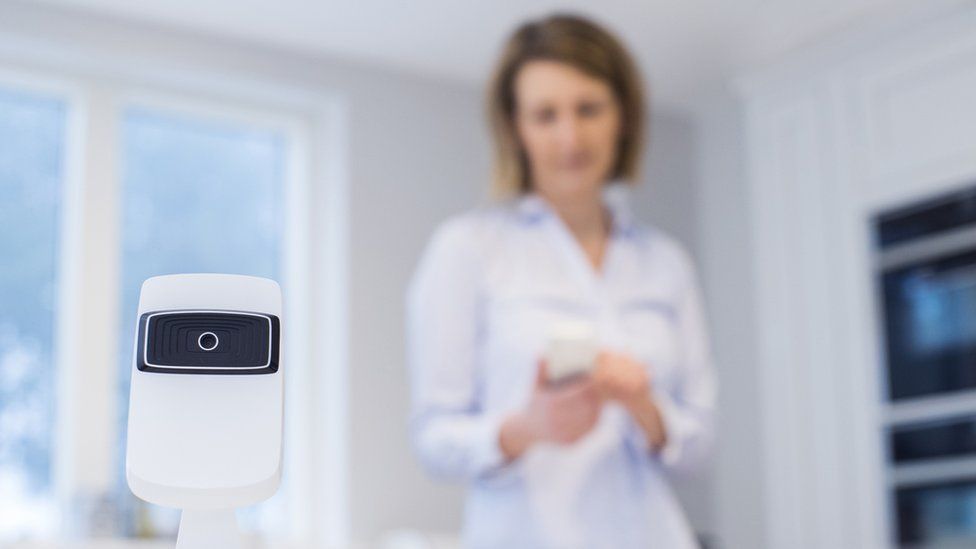
And here’s the kicker: most abusers don’t need to hack these devices. They already have the keys. Shared accounts, default passwords left unchanged, or devices gifted under the guise of “making life easier” become instruments of surveillance. Imagine a partner “helpfully” setting up a new smart camera—only to receive real-time alerts every time you move through the house. Or a shared family account where every search history, every voice command, every late-night Netflix binge is logged and weaponized. The illusion of convenience is a Trojan horse, and the gift of connectivity is often the first brick in the wall of digital entrapment.
Thermostats That Torment: The Subtle Cruelty of Climate Control
Consider the humble smart thermostat—not just a gadget, but a silent arbiter of comfort and discomfort. In a healthy home, it adjusts to keep you cozy. In an abusive one, it becomes a tool of psychological warfare. Picture this: you wake up to a house that’s been deliberately chilled to 60 degrees because your partner knows you hate the cold. Or perhaps the thermostat is locked at a sweltering 85 degrees, the air thick with resentment as much as humidity. Every adjustment you make is overridden. Every complaint is met with a shrug: “It’s just how the system works.”
But the cruelty isn’t just physical—it’s performative. Abusers use smart thermostats to create a theater of discomfort, a daily reminder that your environment is not your own. They might set the temperature to extremes when you’re at work, ensuring you return to a space that feels hostile, a tangible manifestation of their control. Or they could use the thermostat’s scheduling features to “accidentally” blast cold air during an argument, weaponizing your body’s natural reactions—shivering, goosebumps, the urge to retreat—to escalate tension. In this way, even the most mundane technology becomes a participant in emotional abuse, turning your home into a battleground where the thermostat is the general and you’re the conscript.
The Lock That Betrays: Smart Doors as Digital Shackles
Smart locks are supposed to offer peace of mind—the ability to grant access remotely, to never be locked out again. But in the hands of an abuser, they become digital shackles. Imagine coming home to find the front door locked, not by a physical key, but by a remote command from a partner who’s decided you’ve “crossed a line.” Or worse, the lock is disabled entirely, leaving you stranded outside your own home, forced to plead for entry while your abuser watches from the security camera feed, amused by your predicament.
Smart locks also enable a particularly insidious form of gaslighting. Abusers might claim they “forgot” to unlock the door, leaving you standing in the rain, only to unlock it moments later with a smirk. Or they could change the access codes without warning, cutting you off from your own space. The psychological toll is immense: every time you reach for a doorknob, you’re reminded that your autonomy is conditional, that your home is not a sanctuary but a cage with a keypad.
And let’s not forget the surveillance potential. Many smart locks integrate with security cameras, meaning every time you enter or exit, your abuser receives a notification. It’s not just about who’s coming and going—it’s about who’s watching. The lock becomes a digital sentinel, reporting your movements back to the very person who’s trying to control them.

Voice Assistants: The Eavesdroppers in Your Bedroom
“Hey Google, play my favorite song.” Simple, right? Not when your partner is the one who set up the device—and is now listening to every whispered conversation, every late-night phone call, every argument that echoes through the room. Voice assistants are the ultimate eavesdroppers, always on, always recording, always waiting for a command. But in an abusive relationship, they become something far more sinister: a silent witness to your most vulnerable moments.
Abusers can exploit voice assistants in countless ways. They might enable the “recording history” feature, ensuring every interaction is stored and potentially used against you. Or they could set up custom routines that trigger at specific times—perhaps playing a loud alarm when you’re trying to sleep, or blasting music during a private conversation. The device’s very design, meant to anticipate your needs, becomes a tool for manipulation.
Worse still, voice assistants can be used to gaslight you into doubting your own memory. Imagine your partner denying an argument ever happened, only to play back a recording from the smart speaker as “proof” of your “overreaction.” The technology that was supposed to make life easier now makes it impossible to trust your own recollections. In this way, smart home devices don’t just invade your privacy—they rewrite your reality.
The Paradox of Convenience: Why We Can’t Just “Unplug”
Here’s the cruel irony of smart home technology: the more connected your life becomes, the harder it is to escape. Unplugging isn’t just inconvenient—it’s a form of surrender. If you disable the smart thermostat, your abuser might retaliate by disabling the internet. If you refuse to use the shared smart speaker, you’re accused of being “difficult” or “paranoid.” The technology that was supposed to simplify your life now complicates your escape.
And let’s be real: leaving an abusive relationship is already one of the most dangerous things a person can do. Now imagine doing it while your every move is tracked by devices you can’t simply throw in the trash. Smart home tech turns the act of fleeing into a high-stakes game of cat and mouse, where the abuser holds all the cards. They know your routines. They control your environment. They’ve turned your home into a panopticon, and you’re the inmate.
What’s the Solution? A Call to Arms Against Digital Domestic Violence
So what can be done? First, we need to recognize that digital domestic violence isn’t a bug in the system—it’s a feature. The same technology that connects us also ensnares us, and the companies that profit from our data have a moral obligation to do better. Default passwords should be banned. Shared accounts should come with clear warnings. Devices should have kill switches—physical buttons that disable all connectivity in an instant.
But technology alone won’t fix this. We need cultural change. We need to stop treating smart home devices as status symbols and start treating them as potential weapons. We need to ask uncomfortable questions: Who has access to this data? Who controls the settings? Who benefits from the surveillance? And most importantly, we need to believe survivors when they say their smart home is being used against them.
Because here’s the thing: the future of domestic violence isn’t just physical anymore. It’s digital. It’s algorithmic. It’s hiding in plain sight, disguised as convenience, wrapped in sleek packaging, and sold to us as progress. The question isn’t whether we can afford to ignore this threat—it’s whether we can afford not to fight back.










Leave a Comment